Introduction
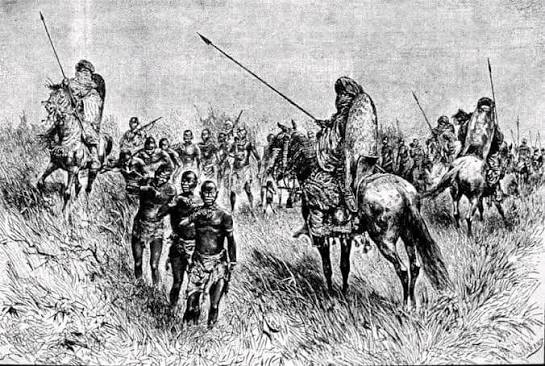
The Fulani–Yoruba Wars were among the most significant conflicts in nineteenth-century West African history. Fought over several decades, these wars transformed the political landscape of Yorubaland, led to the collapse of the once-powerful Old Oyo Empire, reshaped the boundaries of kingdoms, and contributed to the rise of new cities and political alliances.
Although often described simply as wars between the Fulani and the Yoruba, the conflicts were far more complex. They involved internal Yoruba political rivalries, religious reform movements, struggles for regional influence, and changing trade networks. Understanding these wars requires looking beyond a simple ethnic or religious narrative to appreciate the many forces at work.
Their consequences continue to influence the history and identity of south-western Nigeria today.
The Decline of the Oyo Empire
By the late eighteenth century, the Old Oyo Empire had begun to weaken.
Several factors contributed to its decline:
* Political disputes within the royal court. * Power struggles among leading chiefs. * Succession crises. * Pressure from neighbouring states. * Reduced central control over distant territories.
Although Oyo remained influential, these internal problems made it increasingly vulnerable to external threats.
The Rise of Ilorin
One of the key developments leading to the wars was the rise of Ilorin.
Originally an important frontier town of the Oyo Empire, Ilorin was governed by the military commander Afonja.
Following disagreements with the Alaafin, Afonja challenged the authority of Oyo and sought allies to strengthen his position. Among those who became influential in Ilorin was the Islamic scholar Shehu Alimi, whose followers gradually gained political influence in the city.
After Afonja's death, Ilorin evolved into an emirate aligned with the wider Fulani-led Sokoto Caliphate. This marked a major shift in the region's political balance and brought the city into conflict with neighbouring Yoruba states.
The Expansion of the Conflicts
As Ilorin's influence expanded, a series of military campaigns spread across northern Yorubaland.
These conflicts involved:
* Control of strategic towns. * Competition over trade routes. * Territorial expansion. * Political authority. * Alliances between different Yoruba kingdoms.
Rather than a single war, the Fulani–Yoruba Wars consisted of numerous campaigns fought over many years.
Different Yoruba kingdoms responded in different ways, sometimes cooperating with one another and sometimes pursuing their own political interests.
The Fall of Old Oyo
One of the most dramatic consequences of these conflicts was the abandonment of the old imperial capital.
Repeated attacks and growing insecurity eventually forced many inhabitants to leave Old Oyo, bringing an end to one of West Africa's greatest empires.
Although the Alaafin and many Oyo people later established a new capital further south, the political dominance that Oyo had once enjoyed was never fully restored.
The collapse of the empire created a power vacuum across much of Yorubaland.
The Rise of New Yoruba Powers
As the old imperial system declined, several new Yoruba states emerged.
Among the most important were:
* Ibadan, which developed into a powerful military city. * Abeokuta, founded as a refuge for people fleeing conflict. * Ijaye, which became an influential regional power for a time.
These new centres played major roles in shaping nineteenth-century Yoruba politics.
The Battle of Òṣogbo
A turning point came with the Battle of Osogbo.
In this battle, forces from several Yoruba states successfully resisted an invasion from Ilorin.
The victory had lasting significance because it:
* Halted further major southward expansion. * Boosted confidence among Yoruba states. * Encouraged greater military cooperation. * Helped preserve the independence of many southern Yoruba kingdoms.
The Battle of Òṣogbo remains one of the defining moments in Yoruba military history.
Social and Economic Consequences
The wars had profound effects on everyday life.
Many communities experienced:
* Population displacement. * Destruction of settlements. * Disruption of farming. * Changes to trade routes. * Family separation. * Increased migration.
At the same time, new towns grew rapidly as people sought safety and opportunities elsewhere.
These movements permanently altered the demographic map of Yorubaland.
The Road to Colonial Rule
The prolonged conflicts weakened many Yoruba states.
As warfare continued throughout much of the nineteenth century, European powers increased their political and commercial influence along the coast.
British officials later used diplomatic agreements, military intervention, and treaties to extend colonial authority over Yoruba territories.
By the beginning of the twentieth century, most of Yorubaland had become part of the British colonial administration.
The internal divisions created during the wars made resistance to colonial expansion more difficult.
Lessons from the Fulani–Yoruba Wars
The Fulani–Yoruba Wars offer important historical lessons.
They demonstrate that:
* Internal political divisions can weaken even the strongest states. * Alliances and diplomacy are as important as military strength. * Economic stability depends on political security. * Communities often show remarkable resilience after periods of conflict. * History is rarely shaped by a single cause or a single group.
The conflicts also highlight the importance of studying history with nuance, recognising the diverse motivations and experiences of the people involved.
Conclusion
The Fulani–Yoruba Wars marked the end of one era and the beginning of another in Yoruba history. They contributed to the decline of the Old Oyo Empire, transformed Ilorin into a major political centre, and gave rise to new Yoruba powers such as Ibadan and Abeokuta. These conflicts reshaped political boundaries, altered patterns of settlement, and influenced the future of south-western Nigeria.
More importantly, the wars reveal the complexity of history. They were not simply conflicts between two peoples but the result of intertwined political ambitions, internal rivalries, religious movements, and economic pressures. Their legacy continues to shape discussions of leadership, unity, identity, and resilience, making them one of the most significant chapters in the story of the Yoruba people and nineteenth-century West Africa.