Introduction
Among the many artistic traditions of the Yoruba people, few are as visually striking and culturally significant as Adire. Known for its rich indigo tones and intricate patterns, Adire is more than fabric. It is history woven into cloth, a form of storytelling expressed through dye, texture, and design.
For generations, Adire has reflected Yoruba creativity, craftsmanship, and identity. From traditional markets in Abeokuta to modern fashion runways around the world, this textile tradition continues to evolve while remaining deeply connected to its roots.
The Meaning and Origins of Adire
The word Adire comes from the Yoruba language. “Adi” means to tie, while “re” means to dye. Together, the name describes the resist dyeing techniques used to create patterns on cloth before it is dipped into indigo dye.
Adire is strongly associated with the Yoruba people of southwestern Nigeria, especially the city of Abeokuta, which became one of the most important centers of Adire production.
Historically, women played a central role in the craft. They cultivated indigo plants, prepared dyes, designed patterns, and traded finished fabrics in local and regional markets. Over time, Adire became both an artistic tradition and an important economic activity.
The Indigo Dye Tradition
At the heart of Adire is indigo, a natural dye extracted from plants. The deep blue color associated with Adire carries both aesthetic and cultural significance.
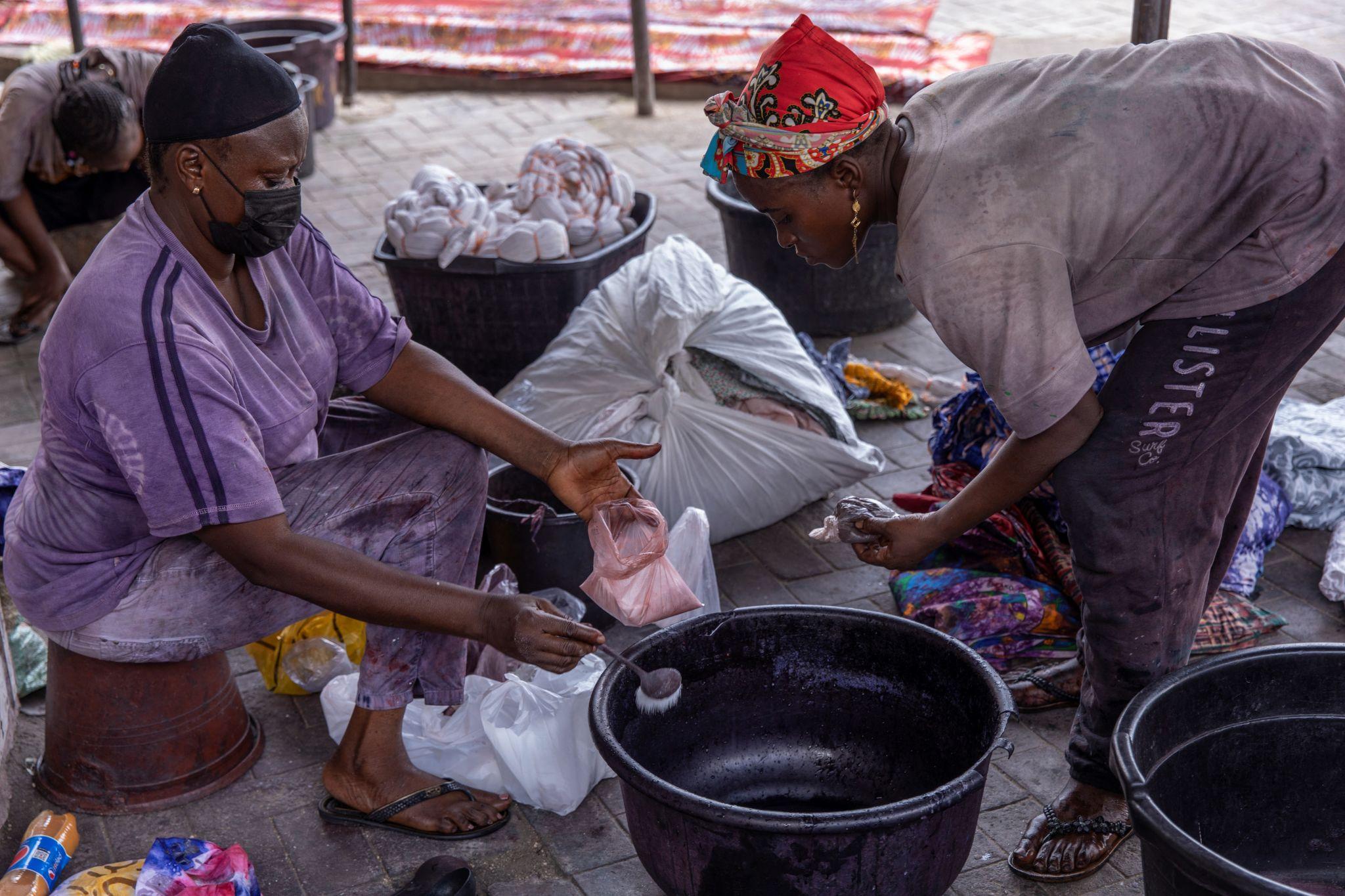
The dyeing process is careful and time-intensive. Cloth is prepared using different resist methods that prevent certain areas from absorbing dye. Once the patterns are secured, the fabric is dipped repeatedly into indigo baths until the desired richness of color is achieved.
After drying and washing, the hidden patterns emerge, creating bold designs that are never completely identical. This uniqueness is part of Adire’s beauty. Every piece carries the touch and imagination of its maker.
Techniques and Styles of Adire
Over time, Yoruba artisans developed several techniques, each producing distinctive effects and patterns.
Adire Oníkò
This method involves tying sections of cloth with raffia or thread before dyeing. The tied areas resist the dye, creating circular or abstract patterns when opened.
Adire Alábẹ̀rẹ́
In this style, the fabric is stitched carefully before dyeing. Once the threads are removed, detailed linear designs appear across the cloth.
Adire Ẹlẹ́kọ
Perhaps the most intricate form, Adire Ẹlẹ́kọ uses cassava paste painted onto fabric to create patterns. The paste acts as a resist, preserving areas beneath it from the indigo dye.
These methods require patience, precision, and artistic vision, making Adire both a technical and creative craft.
Symbolism and Cultural Meaning
Adire patterns are not merely decorative. Many carry symbolic meanings inspired by nature, daily life, proverbs, and social experiences.
Some motifs represent prosperity, protection, or harmony, while others reflect animals, plants, or historical events. Through these designs, cloth becomes a form of communication and cultural memory.
In Yoruba society, clothing has long been connected to identity and status. Wearing Adire often reflects pride in heritage and appreciation for craftsmanship.
Adire in Fashion and Modern Design
Today, Adire has moved beyond traditional wrappers and ceremonial clothing into contemporary fashion and global design. Nigerian designers are reimagining Adire in modern silhouettes, including jackets, dresses, suits, bags, and footwear.
Young creatives have embraced the fabric as a symbol of cultural pride and artistic innovation. In cities like Lagos, Adire is now seen in both luxury fashion spaces and everyday streetwear.
Its growing international recognition has also introduced global audiences to Yoruba textile artistry.
Economic and Cultural Revival
In recent years, there has been renewed interest in preserving and promoting Adire. Workshops, festivals, and training programs are helping younger generations learn the craft.
Governments, cultural organizations, and fashion entrepreneurs have also contributed to its revival, recognizing Adire as both a cultural treasure and an economic opportunity.
This resurgence has helped sustain local artisans while strengthening appreciation for indigenous African textiles.
Conclusion
Adire is more than dyed fabric. It is a living art form shaped by history, skill, and imagination. Through indigo-stained hands and carefully crafted patterns, generations of Yoruba artisans have preserved a tradition that continues to inspire the world.
From the dye pits of Abeokuta to international fashion platforms, Adire remains a powerful expression of Yoruba creativity and identity.
It is proof that culture can be worn, touched, and carried forward, one pattern at a time.