Introduction
Long before European contact, the Yoruba had developed advanced knowledge of metallurgy and iron technology that played a crucial role in the growth of their civilisation. Iron transformed nearly every aspect of Yoruba life, from agriculture and warfare to architecture, trade, craftsmanship, and religious practice.
The ability to mine, smelt, and forge iron enabled Yoruba communities to produce stronger tools, cultivate larger areas of farmland, build thriving cities, and defend their kingdoms. Skilled blacksmiths became some of the most respected members of society, while iron itself came to symbolise both technological achievement and spiritual power.
Today, archaeological discoveries and oral traditions continue to reveal the sophistication of Yoruba ironworking and its importance in the wider history of West African civilisation.
The Arrival of Iron Technology
Iron technology reached many parts of West Africa during the first millennium BCE, although scholars continue to debate exactly where and how ironworking first developed on the continent. By the first millennium CE, Yoruba communities were already making extensive use of iron.
Archaeological evidence from sites across Yorubaland indicates that iron production had become well established long before the rise of the great Yoruba kingdoms.
Iron allowed communities to produce stronger and more durable tools than those made from stone or wood, supporting population growth and economic expansion.
The Process of Iron Smelting
The production of iron involved several specialised stages.
First, iron ore was collected from natural deposits. It was then heated inside clay furnaces fuelled by charcoal. By maintaining extremely high temperatures, smelters separated the metal from impurities, producing a solid mass of workable iron known as a bloom.
This bloom was repeatedly heated and hammered by skilled blacksmiths until it became suitable for making tools, weapons, and other objects.
The entire process required considerable technical knowledge, experience, and teamwork.
The Role of the Blacksmith
Blacksmiths occupied an honoured position in Yoruba society.
They were responsible for producing:
* Farming implements. * Hunting equipment. * Household tools. * Weapons. * Ceremonial objects. * Musical instruments. * Building hardware.
Because their work combined technical skill with specialised knowledge, blacksmiths often belonged to respected family lineages that passed their craft from one generation to the next.
Ògún: The Patron of Iron and Technology
Among the Yoruba, iron was not viewed solely as a practical material. It also held profound spiritual significance through its association with Ògún, the Òrìṣà of iron, craftsmanship, technology, hunting, and warfare.
Blacksmiths, hunters, soldiers, and many artisans traditionally honoured Ògún, recognising iron as both a source of livelihood and a sacred gift. Festivals dedicated to Ògún continue to be celebrated in many Yoruba communities today, reflecting the enduring connection between technology and spirituality.
Iron and Agriculture
Iron transformed agriculture throughout Yorubaland.
Iron tools such as:
* Hoes. * Cutlasses. * Axes. * Digging implements.
allowed farmers to clear forests more efficiently, cultivate larger fields, and improve crop production.
Greater agricultural productivity supported population growth and enabled the emergence of larger towns and cities such as Ile-Ife and the Old Oyo Empire.
Iron in Warfare
Iron also played a central role in the defence of Yoruba kingdoms.
Blacksmiths produced:
* Spears. * Swords. * Arrowheads. * Knives. * Protective equipment.
The availability of reliable iron weapons strengthened military forces and contributed to the expansion of powerful states such as the Old Oyo Empire.
Iron and Trade
Iron products became valuable items of trade throughout West Africa.
Merchants exchanged:
* Farming tools. * Hunting equipment. * Household utensils. * Weapons. * Decorative metal objects.
Trade in iron goods helped connect Yoruba communities with neighbouring peoples, contributing to regional economic growth and cultural exchange.
Iron in Architecture and Daily Life
Iron technology supported many aspects of daily life.
Metal tools enabled craftsmen to:
* Build houses. * Carve wood. * Produce furniture. * Construct canoes. * Manufacture farming equipment.
Iron nails, blades, chisels, and other implements improved the efficiency and quality of construction across Yorubaland.
Archaeological Evidence
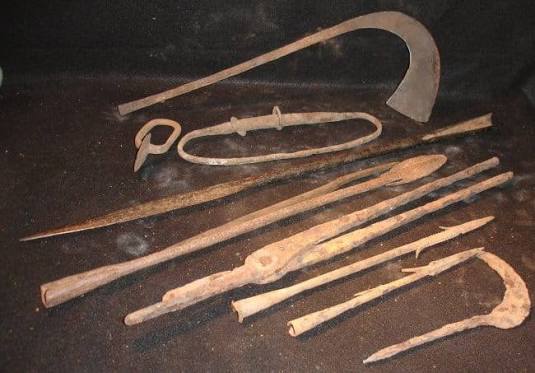
Archaeologists have uncovered evidence of ancient ironworking at numerous sites in and around Yorubaland.
These discoveries include:
* Smelting furnaces. * Iron slag. * Ore fragments. * Forging tools. * Finished iron objects.
Such finds demonstrate that Yoruba metallurgy was highly developed centuries before European colonisation and formed part of a wider tradition of technological innovation across West Africa.
Legacy of Yoruba Iron Technology
Although industrial manufacturing has replaced many traditional methods, Yoruba blacksmithing remains an important cultural heritage.
Traditional ironworking continues in some communities, while festivals honouring Ògún celebrate the enduring significance of craftsmanship, labour, and technological ingenuity.
The history of Yoruba metallurgy also challenges outdated assumptions that advanced metalworking in Africa depended on outside influence. Instead, it highlights the creativity and technical expertise that developed within African societies over many centuries.
Conclusion
Ancient Yoruba metallurgy and iron technology were fundamental to the rise of one of Africa's greatest civilisations. Through the mastery of iron smelting and blacksmithing, Yoruba communities produced the tools, weapons, and equipment that supported agriculture, trade, construction, governance, and defence.
The work of skilled blacksmiths, guided by generations of practical knowledge and inspired by the cultural importance of Ògún, helped shape the growth of cities such as Ile-Ife and the Old Oyo Empire. Their achievements demonstrate that technological innovation was a defining feature of Yoruba civilisation long before European contact, leaving a legacy that continues to inspire pride and scholarly interest today.