Introduction
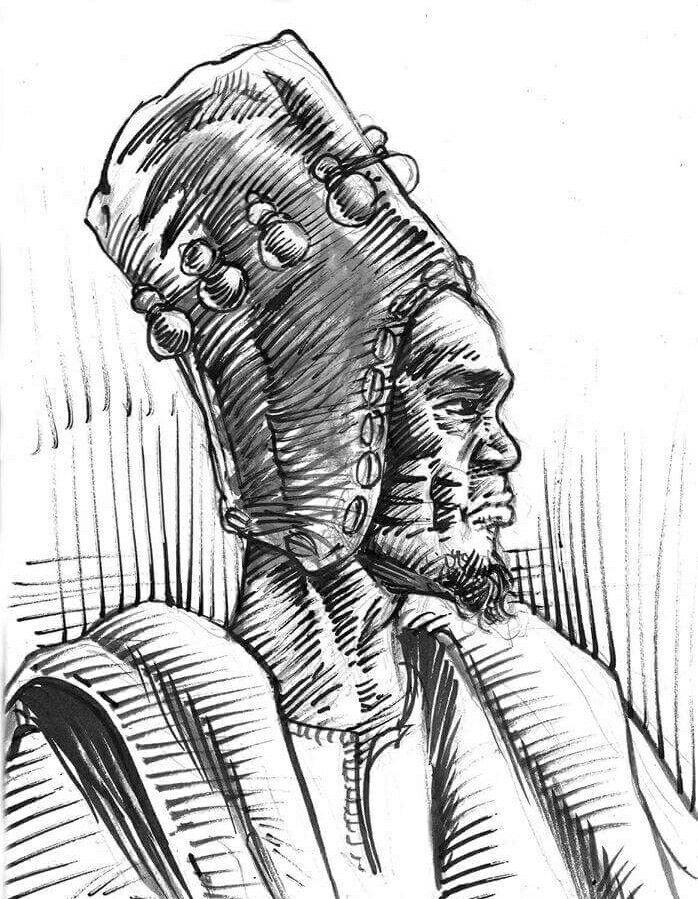
The history of the Old Oyo Empire is filled with powerful kings, fearless warriors, brilliant statesmen, and political intrigues that shaped the destiny of Yorubaland. Among the most controversial and unforgettable figures in this history is Bashorun Gaa — a man remembered as both a political genius and a feared tyrant. His story is one of ambition, influence, manipulation, and the dangerous consequences of unchecked power.
Bashorun Gaa remains one of the most discussed personalities in Yoruba political history because he challenged the authority of the Alaafin, controlled the Oyo Mesi, and allegedly orchestrated the downfall of several kings. Even centuries later, his name still symbolizes political dominance and fear in Yoruba culture.
Who Was Bashorun Gaa?
Bashorun Gaa was a prominent statesman and military leader in the Old Oyo Empire during the eighteenth century. The title “Bashorun” was not a personal name but a political office. In the Oyo governmental structure, the Bashorun served as the head of the Oyo Mesi, the powerful council of kingmakers and principal chiefs who advised the Alaafin.
The Oyo Empire operated with a sophisticated political system that balanced royal authority with institutional checks and balances. Although the Alaafin was the supreme ruler, he could not govern absolutely. The Oyo Mesi had the authority to challenge or even force the removal of an Alaafin who was considered tyrannical or incompetent. This system helped maintain political stability for many years.
Gaa rose to prominence during the reign of Alaafin Labisi around the mid-eighteenth century. Historical traditions describe him as highly intelligent, spiritually feared, militarily skilled, and politically ambitious. Over time, he became more powerful than many Alaafins themselves.
The Political Structure of the Oyo Empire
To understand Bashorun Gaa’s influence, one must first understand how the Oyo Empire was governed.
The empire was one of the most organized states in precolonial West Africa. Its administration included:
* The Alaafin — the king and supreme ruler * The Oyo Mesi — seven hereditary kingmakers and advisers * The Ogboni — a spiritual and judicial council representing the people * The Aare Ona Kakanfo — the military commander of the empire
The Bashorun stood at the center of political power because he led the Oyo Mesi and acted as the principal adviser to the Alaafin. In periods of political weakness, the Bashorun could become extremely influential.
Bashorun Gaa exploited this political structure masterfully. Rather than serving merely as an adviser, he became the true power behind the throne.
Rise to Power
According to Yoruba oral traditions and historical accounts, Gaa became Bashorun under Alaafin Labisi. During this period, the Oyo Empire was at the height of its military and political expansion, controlling vast territories and receiving tribute from neighboring states such as Dahomey and Popo.
Gaa reportedly used a combination of political strategy, fear, military support, and spiritual influence to consolidate authority. Many traditions describe him as a man believed to possess strong mystical powers, which increased his reputation among both allies and enemies.
As his influence grew, he began interfering directly in royal succession. Several Alaafins who resisted his dominance were removed from power.
Historical narratives commonly claim that Bashorun Gaa played a role in the deaths or forced suicides of multiple Alaafins, including:
* Alaafin Labisi * Alaafin Awonbioju * Alaafin Agboluaje * Alaafin Majeogbe
The traditional Yoruba political process allowed the Oyo Mesi to send symbolic items, such as an empty calabash or parrot eggs, to an Alaafin as a sign that he was expected to abdicate and commit ritual suicide. Gaa reportedly weaponized this constitutional mechanism for personal gain.
Rule Through Fear
Bashorun Gaa’s reign of influence became associated with fear and intimidation. Oral histories portray him as a ruthless figure who eliminated opposition and ensured loyalty through terror.
Many accounts claim that no one dared challenge him openly because he controlled key political institutions within Oyo. Even members of the royal family reportedly feared him. His family and loyal supporters also gained influence throughout the empire, further strengthening his political network.
His dominance revealed an important weakness in the Oyo political system: the balance designed to prevent tyranny could itself be manipulated by powerful political actors.
Rather than protecting the kingdom from abusive rulers, the institutions of government temporarily became tools for one man’s ambition.
Alaafin Abiodun and the Fall of Gaa
Eventually, resistance emerged against Bashorun Gaa.
Alaafin Abiodun, one of the rulers installed during Gaa’s period of influence, gradually began plotting against him. Historical traditions suggest that Abiodun initially pretended to submit to Gaa’s authority while secretly building alliances.
Abiodun later secured military support from powerful forces outside Gaa’s control, including the Aare Ona Kakanfo. This alliance shifted the balance of power dramatically.
Gaa was eventually captured after a confrontation with forces loyal to Alaafin Abiodun. Yoruba oral tradition describes his downfall as severe and symbolic. His family compound was reportedly destroyed, and many of his supporters were killed. Accounts of his execution differ in detail, but all agree that his death marked the end of his terrifying political dominance.
The fall of Bashorun Gaa became a lasting warning in Yoruba political memory about the dangers of excessive ambition and authoritarian control.
Impact on the Oyo Empire
Although Gaa’s political career demonstrated remarkable intelligence and influence, historians and oral traditions often associate his actions with long-term instability in the Oyo Empire.
The repeated removal of Alaafins weakened royal authority and deepened political divisions within the empire. Trust between the monarchy and the Oyo Mesi deteriorated, creating instability that later contributed to Oyo’s decline.
The empire would continue to face internal conflicts, succession struggles, and external pressures in the years that followed.
Some historians argue that the crisis created during Gaa’s era exposed structural weaknesses that later accelerated the collapse of the Old Oyo Empire in the nineteenth century.
Bashorun Gaa in Yoruba Culture and Popular Memory
Bashorun Gaa remains a powerful cultural figure in Yoruba storytelling, theatre, films, and oral tradition.
His story has inspired books, historical discussions, stage dramas, and modern films because it combines politics, spirituality, betrayal, and ambition. In Yoruba society, his name often symbolizes the abuse of power and the fear that comes when institutions fail to restrain ambitious leaders.
Recent productions and documentaries have renewed public interest in his story, especially among younger generations interested in Yoruba history and heritage.
You can also explore dramatized interpretations here:
Bashorun Gaa: The “Wicked Prime Minister” of the Old Oyo Empire
Bashorun Gaa in Yoruba | Full Movie | epic historical drama
Lessons from Bashorun Gaa’s Story
The story of Bashorun Gaa teaches several important lessons about leadership and governance:
* Political institutions can be manipulated when power lacks accountability * Fear may secure temporary obedience but rarely lasting stability * Ambition without restraint can destabilize even the strongest kingdoms * Strong governance requires balance between authority and responsibility
His legacy remains complex. Some remember him as a defender of constitutional authority against weak kings, while others remember him as a tyrant who abused the political system for personal control.
Conclusion
Bashorun Gaa occupies a unique place in Yoruba history as one of the most feared and influential political figures of the Old Oyo Empire. His rise demonstrated the sophistication of Oyo’s political structure, while his fall exposed its vulnerabilities.
Centuries later, his name still echoes through Yoruba historical memory as a symbol of power, political manipulation, and the consequences of unchecked authority. His story remains one of the most dramatic chapters in the history of the Oyo Empire and continues to fascinate historians, storytellers, and lovers of Yoruba culture around the world.