Introduction
The name Oduduwa occupies a central place in Yoruba history, culture, and tradition. According to Yoruba oral traditions, Odùduwà is the founding ancestor of many Yoruba kingdoms and the first sacred ruler of Ile-Ife, from whom numerous royal dynasties trace their descent.
But an important historical question often arises: Who lived in Ile-Ife before Odùduwà?
The answer is both fascinating and complex. While oral traditions focus primarily on Odùduwà's arrival and legacy, archaeology, linguistics, and historical research indicate that the region was inhabited long before the period traditionally associated with him. Although many details remain uncertain, historians have assembled a growing body of evidence that helps illuminate this earlier history.
The Difference Between Tradition and History
To understand the period before Odùduwà, it is important to distinguish between oral tradition and historical research.
Yoruba oral traditions preserve:
* Sacred origins. * Royal genealogies. * Cultural values. * Community memory.
Historical research draws on:
* Archaeology. * Linguistics. * Carbon dating. * Comparative historical analysis. * Material culture.
These approaches answer different questions. Rather than contradicting one another, they often provide complementary perspectives on the past.
Evidence of Earlier Settlements
Archaeological excavations show that people were living in and around Ile-Ife centuries before the emergence of the royal traditions associated with Odùduwà.
Researchers have uncovered evidence of:
* Permanent settlements. * Domestic pottery. * Iron-smelting activities. * Farming communities. * Craft production.
Some of these settlements date to around the first millennium CE, demonstrating that Ile-Ife was already developing as a populated community long before it became a celebrated royal centre.
Who Were These Early People?
One of the biggest historical questions is the identity of these early inhabitants.
The honest answer is that historians do not know their specific names or political organisation.
However, researchers believe they were likely:
* Early Yoruba-speaking communities or their linguistic ancestors. * Farming populations. * Ironworkers. * Potters. * Skilled craftspeople.
There is currently no archaeological evidence suggesting that the area was uninhabited before Odùduwà or that a completely unrelated civilisation occupied the site.
Instead, the available evidence points to gradual cultural development over many centuries.
What Does the Name "Odùduwà" Represent?
Among historians, there are several interpretations of Odùduwà's historical significance.
Some scholars suggest that Odùduwà may have been:
* A historical ruler. * The founder of a royal dynasty. * A symbolic ancestral figure. * A title adopted by an influential leader. * A representation of the political unification of existing communities.
Because no contemporary written records survive from the period traditionally associated with Odùduwà, historians cannot definitively confirm which interpretation is correct.
Regardless of these debates, Odùduwà remains the central ancestral figure in Yoruba historical tradition.
Archaeology and the Rise of Ife
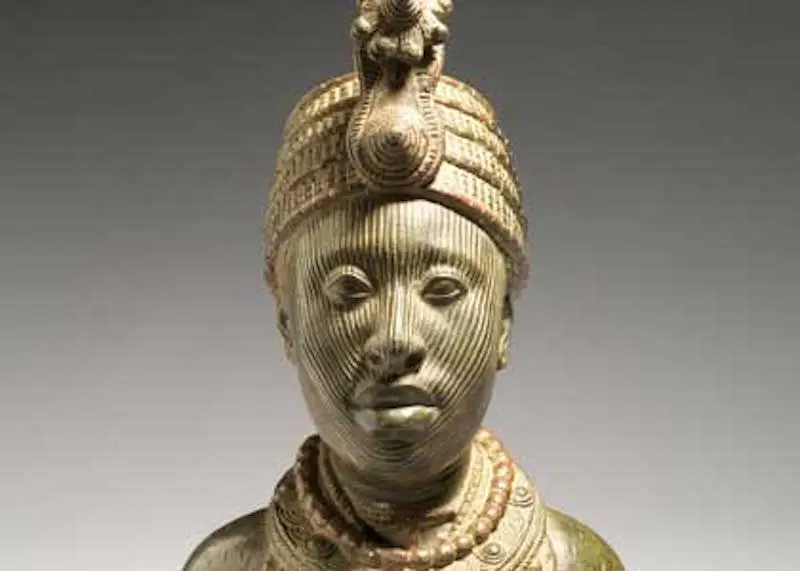
Archaeological discoveries reveal that between approximately the 11th and 15th centuries, Ile-Ife experienced remarkable growth.
Evidence includes:
* Sophisticated urban planning. * Bronze casting. * Terracotta sculpture. * Glass bead production. * Long-distance trade. * Religious and ceremonial centres.
These developments suggest that the city became one of the most advanced urban centres in West Africa during this period.
Many historians believe that the royal traditions surrounding Odùduwà likely reflect this era of political consolidation and state formation.
Oral Traditions About Earlier Inhabitants
Some Yoruba oral traditions mention that communities already existed in Ile-Ife before Odùduwà's arrival.
These traditions refer to earlier inhabitants such as:
* Indigenous families. * Priests. * Hunters. * Community leaders.
Rather than describing Odùduwà as arriving in an empty land, some accounts portray him as becoming a leader among already established communities.
Different Yoruba traditions preserve different versions of these events, and no single narrative is universally accepted.
What Historians Cannot Yet Say
Despite decades of research, many questions remain unanswered.
Historians cannot yet say with certainty:
* The exact date of Odùduwà's lifetime. * Whether Odùduwà was one individual or represents multiple historical figures. * The precise political structure of Ile-Ife before his time. * The names of the earliest rulers before the Odùduwà dynasty. * How every oral tradition fits into the archaeological record.
These uncertainties are normal in the study of ancient history, particularly where written records are limited.
Why This Question Matters
Exploring the period before Odùduwà enriches our understanding of Yoruba civilisation.
It shows that:
* Civilisations develop over long periods. * Archaeology and oral tradition both contribute valuable knowledge. * Ancient Ile-Ife was shaped by generations of people. * Historical research continues to uncover new evidence. * Respect for tradition and scientific inquiry can coexist.
Rather than diminishing Odùduwà's importance, these discoveries place his story within the broader development of one of Africa's oldest urban traditions.
Conclusion
The question of what existed before Oduduwa does not have a simple answer, but archaeology and historical scholarship provide important insights. The evidence indicates that Ile-Ife was already home to settled farming communities, skilled craftspeople, and ironworkers centuries before the emergence of the royal traditions associated with Odùduwà. These early inhabitants laid the foundations for the city's later rise as one of Africa's greatest centres of art, religion, and political organisation.
At the same time, Yoruba oral traditions continue to honour Odùduwà as the founding ancestor of many Yoruba kingdoms and the central figure in the establishment of Ife's royal dynasty. Rather than seeing archaeology and tradition as opposing accounts, many historians view them as complementary sources that illuminate different aspects of the past. Together, they reveal a civilisation whose roots stretch deep into history, long before the names of its earliest rulers were recorded.