Introduction
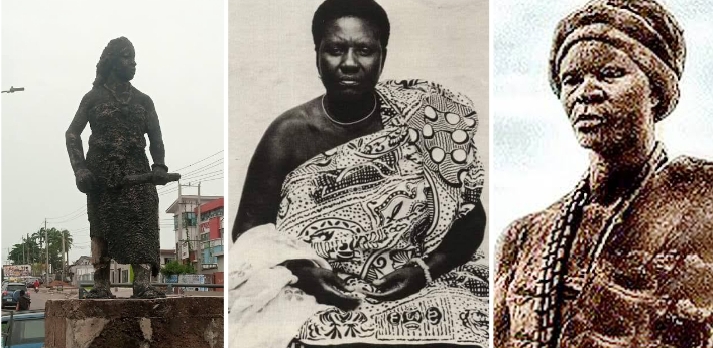
Few figures in Yoruba history inspire as much fascination and controversy as Efunsetan Aniwura. Depending on who tells her story, she was either a ruthless tyrant whose cruelty knew no bounds or an extraordinary woman whose strength threatened a society deeply shaped by male authority.
She was a wealthy merchant, a political leader, a slave owner, and one of the most influential women of nineteenth-century Yorubaland. She accumulated immense wealth through trade and agriculture, commanded hundreds of dependants, and rose to occupy one of the highest positions available to women in Ibadan society.
Yet the same woman who shattered barriers would later become remembered in popular imagination as a symbol of fear and despotism.
Was Efunsetan Aniwura truly the monster later generations described?
Or was her reputation shaped by the anxieties of a patriarchal society uneasy with powerful women?
The truth, as is often the case in history, lies somewhere between admiration and condemnation.
This is the story of Efunsetan Aniwura: her rise, her rule, and her ruin.
A Woman Born Into an Uncertain Age
Efunsetan Aniwura was born in the early nineteenth century, a period marked by warfare and political upheaval across Yorubaland.
The old Oyo Empire was declining. Civil wars reshaped communities. Refugees moved from one settlement to another in search of safety.
Out of this turbulent environment emerged \\Ibadan>, a rapidly growing military city populated by warriors, traders, craftsmen, and migrants from different parts of Yorubaland.
It was a society where ambition could transform lives.
Efunsetan seized that opportunity.
The Rise of a Merchant Queen
Unlike many women of her era, Efunsetan built an economic empire of astonishing scale.
She traded extensively in:
* Agricultural produce * Tobacco * Cloth * Livestock * Imported goods
She also controlled large farms worked by enslaved labourers, reflecting the realities of nineteenth-century West African societies, where slavery formed part of both domestic and commercial systems.
Tradition holds that her enterprises employed hundreds of people.
Her wealth became legendary.
Travellers spoke of her prosperity.
Neighbours marvelled at her influence.
She was not merely successful.
She was one of the wealthiest individuals in Ibadan.
Becoming the Ìyálóde
Efunsetan eventually attained the prestigious title of Ìyálóde, the recognised leader of women within Ibadan's political structure.
The office granted significant authority.
The Ìyálóde represented women's interests in civic affairs.
She advised political leaders.
She influenced commercial activities.
She commanded social respect.
For a woman to occupy such a position in nineteenth-century Yorubaland demonstrated extraordinary ability.
Efunsetan had succeeded in a world dominated by powerful men.
She became living proof that women could shape politics, economics, and public life.
Yet power often attracts resentment.
And admiration can easily turn into suspicion.
Grief and Transformation
According to oral traditions, tragedy profoundly altered Efunsetan's character.
Some accounts suggest that she suffered the devastating loss of her only child.
The grief reportedly transformed her outlook.
The generous and ambitious merchant increasingly became known for severity and distrust.
Stories emerged describing harsh punishments within her household.
Dependants feared her temper.
Servants obeyed without question.
Whether these accounts fully reflect historical reality remains debated.
Some scholars argue that later storytellers exaggerated aspects of her cruelty.
Others believe the traditions preserve genuine memories of a ruler whose authority became increasingly oppressive.
Whatever the truth, Efunsetan's public image began to change.
Tyrant or Misunderstood Leader?
The question that continues to divide historians is simple.
Who was Efunsetan Aniwura?
Traditional narratives often portray her as ruthless.
She is accused of extreme punishments and intolerance towards perceived disobedience.
These stories became deeply embedded in Yoruba popular culture.
However, modern scholars urge caution.
Many historical records concerning powerful women were written or transmitted within patriarchal contexts.
Women who exercised authority in ways similar to male rulers were sometimes judged more harshly.
Actions tolerated in men could become evidence of cruelty in women.
This does not mean Efunsetan was innocent of wrongdoing.
Rather, it reminds us that history is shaped by those who tell it.
Understanding the past requires examining both the accusations and the biases behind them.
Conflict with Ibadan's Leadership
As Efunsetan's influence expanded, tensions grew between her and Ibadan's ruling elite.
Her wealth translated into political leverage.
Her independence challenged expectations.
Some accounts suggest that she resisted the authority of powerful military leaders.
Others indicate that rivalries and personal disputes intensified over time.
Eventually, her relationship with the political establishment deteriorated.
Among those associated with the conflict was Aare Latoosa, one of the most influential figures of the period.
The confrontation would have fatal consequences.
The Fall of Efunsetan
The end of Efunsetan Aniwura remains one of the most dramatic episodes in Yoruba history.
Traditional accounts generally agree that she died in 1874.
However, the circumstances of her death differ.
Some narratives claim that agents acting on the orders of her political enemies orchestrated her assassination.
Others present variations of the story, reflecting the complexities of oral tradition.
Regardless of the precise details, her death marked the downfall of one of the most powerful women Yorubaland had ever known.
The merchant queen.
The Ìyálóde.
The feared ruler.
The woman who refused to conform.
The Legacy of Efunsetan Aniwura
Efunsetan's legacy continues to provoke discussion.
She represents:
* The possibilities of female achievement in pre-colonial Africa. * The dangers of unchecked authority. * The complexity of judging historical figures. * The influence of gender on historical memory. * The resilience required to succeed in turbulent times.
Her life has inspired books, stage plays, films, and academic studies.
Each generation reinterprets her story according to its own concerns.
To some, she is a cautionary tale.
To others, she is an icon of female agency.
Perhaps she is both.
History, Myth, and Memory
Like many celebrated figures from Yoruba history, Efunsetan exists at the intersection of documented history and oral tradition.
Certain facts remain clear.
She was real.
She was wealthy.
She became Ìyálóde of Ibadan.
She wielded extraordinary influence.
Beyond these facts lies a landscape shaped by memory, interpretation, and debate.
The challenge is not to reduce her to either saint or villain.
It is to recognise her humanity.
She lived in a difficult age.
She exercised immense power.
She made choices whose consequences continue to shape how she is remembered.
Conclusion
The story of Efunsetan Aniwura is one of ambition, brilliance, controversy, and tragedy.
She rose from the uncertainties of nineteenth-century Yorubaland to become one of the most powerful women in Ibadan. Through intelligence, enterprise, and determination, she built wealth and secured a place within the highest levels of society.
Yet power brought scrutiny.
Grief altered perceptions.
Conflict invited enemies.
And history transformed her into one of Yoruba civilisation's most contested figures.
Was she a tyrant?
Was she a victim of patriarchal memory?
Was she both a remarkable leader and a flawed human being?
The answers may never be entirely certain.
What remains undeniable is that Efunsetan Aniwura defied the expectations of her time. She challenged the limits imposed upon women, commanded respect in a male-dominated society, and left behind a legacy that refuses to fade.
Centuries later, her story still compels us to ask difficult questions about power, gender, justice, and the complicated nature of human greatness.