Introduction
Among the many colorful cultural celebrations in Nigeria, few events capture the spirit, elegance, and history of Lagos quite like the Eyo Festival. Known for its striking white masquerades, flowing processions, traditional music, and royal significance, the festival stands as one of the most iconic cultural traditions of the Yoruba people, especially among the indigenous people of Lagos Island.
Often referred to as the “Adamu Orisha Play,” the Eyo Festival is more than just a public celebration. It is a sacred cultural institution deeply connected to Lagos history, traditional spirituality, royal customs, and community identity. Whenever the white clad Eyo masquerades flood the streets of Lagos, the city transforms into a living expression of heritage and tradition.
For generations, the festival has remained a symbol of honor, remembrance, unity, and cultural pride.
The Origin of the Eyo Festival
The Eyo Festival originated from the traditional culture of the Awori and Isale Eko people of Lagos. Historical accounts trace its roots to the ancient traditions connected with royal ceremonies and the honoring of important chiefs and kings.
The festival is believed to have evolved from older masquerade traditions associated with secret societies and spiritual rites in Lagos. Over time, it became closely linked with the installation and funeral rites of Obas and high ranking chiefs.
Traditionally, the festival is organized to:
Honor the passing of a king or chief
Celebrate the installation of a new monarch
Commemorate important historical events
Preserve indigenous Lagos culture
Although the Eyo Festival has spiritual and ceremonial origins, it has also become one of the most recognized public cultural events in Nigeria.
Who Are the Eyo Masquerades?
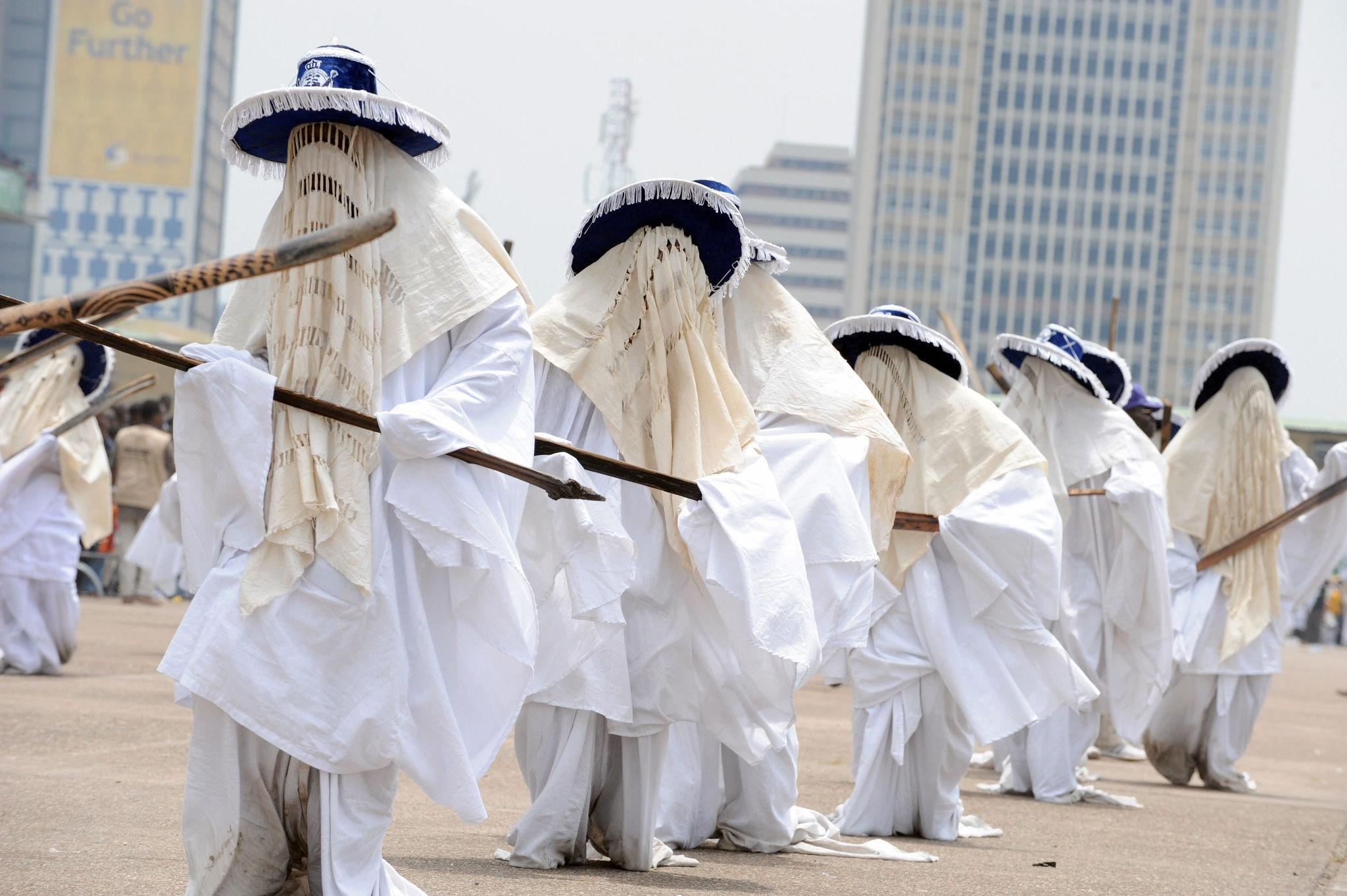
The most recognizable part of the festival is the appearance of the Eyo masquerades themselves.
The masquerades are traditionally dressed in:
Flowing white robes
White hats
Colorful sashes
Face coverings
Long staffs known as opambata
Their appearance creates a powerful visual spectacle across Lagos Island.
Each group of masquerades belongs to a specific Eyo society or family lineage. Different groups can often be identified through their hat colors and ceremonial roles.
The white clothing symbolizes purity, spirituality, and reverence for tradition.
During the festival, thousands of masquerades move through the streets in organized processions while singing, dancing, chanting, and blessing spectators.
The Spiritual and Royal Significance
Although modern audiences often view the Eyo Festival as entertainment, the event carries deep spiritual and royal importance.
The festival traditionally serves as a bridge between:
The living and the ancestors
Traditional authority and the community
Cultural memory and modern society
The Eyo masquerades are regarded with great respect because they symbolize ancestral spirits and cultural guardians.
Certain customs are strictly observed during the festival:
People remove hats or head coverings when greeting Eyo masquerades
The masquerades should not be treated disrespectfully
Specific roads and spaces become sacred processional routes
These traditions reinforce the spiritual dignity of the celebration.
The Five Major Eyo Groups
The festival is organized through five major Eyo groups, each with historical responsibilities and ceremonial functions.
These include:
Adimu
Laba
Oniko
Ologede
Agere
Among them, Adimu is regarded as the most senior and spiritually significant group.
Each society participates according to a traditional hierarchy and performs specific ritual duties during the festival period.
The Festival Atmosphere
On the day of the festival, Lagos Island becomes completely transformed.
Major streets are filled with:
Traditional drumming
Cultural performances
Crowds of spectators
Royal processions
Food vendors
Music and dance
Families, tourists, photographers, and cultural enthusiasts gather to witness the grand display.
The energy of the festival combines celebration with deep respect for tradition.
The sound of drums, chants, and ceremonial greetings creates an unforgettable atmosphere that reflects the cultural heartbeat of Lagos.
Eyo and the Identity of Lagos
The Eyo Festival is deeply tied to the identity of Lagos itself.
Long before Lagos became Nigeria’s commercial capital and modern megacity, it was a traditional Yoruba settlement with its own systems of kingship, spirituality, and cultural institutions.
The festival helps preserve:
The history of Lagos Island
Indigenous Yoruba traditions
Royal customs
Community identity
Collective memory
For many Lagosians, Eyo is not simply an event. It is a reminder of the city’s origins and cultural roots.
Influence on Modern Culture
The visual impact of the Eyo Festival has influenced modern Nigerian art, fashion, tourism, and entertainment.
The white flowing masquerade costume has become one of the most recognizable cultural images associated with Lagos and Nigeria internationally.
The festival has appeared in:
Music videos
Documentaries
Fashion photography
Tourism campaigns
Films and television productions
Many creatives draw inspiration from the elegance and symbolism of the Eyo masquerades.
Tourism and Global Recognition
Today, the Eyo Festival attracts attention from visitors around the world.
Tourists visit Lagos to experience:
Traditional performances
Historical processions
Cultural music
Local cuisine
Indigenous spirituality
Photography and visual storytelling
The festival also contributes to cultural tourism and helps promote awareness of Yoruba heritage internationally.
Challenges Facing Traditional Festivals
Like many indigenous cultural traditions, the Eyo Festival faces modern challenges.
Urbanization, globalization, and changing lifestyles have affected how younger generations engage with traditional customs.
There are also concerns about:
Commercialization of cultural events
Loss of traditional knowledge
Declining understanding of spiritual significance
Pressure from modern city development
However, traditional leaders, historians, cultural organizations, and community elders continue working to preserve the authenticity and dignity of the festival.
Why the Eyo Festival Matters
The Eyo Festival matters because it represents:
Cultural continuity
Respect for ancestry
Historical identity
Community pride
Preservation of indigenous heritage
In a rapidly modernizing world, traditions like Eyo help communities remain connected to their history and values.
The festival also challenges outdated stereotypes by showcasing the richness, organization, and sophistication of African cultural institutions.
Conclusion
The Eyo Festival remains one of the grandest and most important cultural traditions in Lagos and the wider Yoruba world. With its majestic white masquerades, royal symbolism, spiritual significance, and vibrant public celebrations, the festival stands as a living expression of history and identity.
More than a spectacle, Eyo is a celebration of heritage, memory, and cultural pride passed down across generations.
As Lagos continues to grow into one of Africa’s largest global cities, the Eyo Festival remains a powerful reminder that beneath the modern skyline lies a deep and enduring cultural legacy that continues to shape the soul of the city.