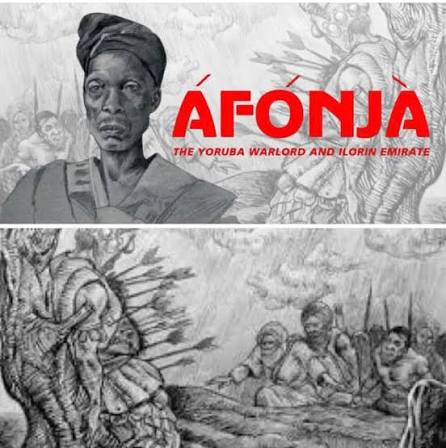
Introduction
The collapse of the Old Ọ̀yọ́ Empire in the early nineteenth century remains one of the most significant events in Yoruba history. Although several factors contributed to the decline of the once powerful empire, the actions of Afonja, the Aare Ona Kakanfo (Generalissimo) of Ọ̀yọ́, played a crucial role in accelerating the empire's disintegration.
It is important, however, to understand that Afonja did not single-handedly destroy Old Ọ̀yọ́. His rebellion took place against a background of internal political struggles, weakening military institutions, succession disputes, and growing external pressures. Nevertheless, his decisions set in motion events that permanently altered the history of Yorubaland.
The Oyo Empire Before Afonja
By the late eighteenth century, the Oyo Empire had begun to experience internal difficulties.
Although earlier rulers such as Alaafin Abíọdún had presided over periods of prosperity, the military strength and political cohesion of the empire had weakened.
Several problems affected the kingdom:
* Rivalries among chiefs. * Struggles between the Alaafin and influential nobles. * Declining military discipline. * Conflicts over succession. * Pressure from neighbouring powers.
Despite these challenges, Ọ̀yọ́ remained a respected empire. However, cracks had begun to appear in its political foundations.
Who Was Afonja?
Afonja was the Aare Ona Kakanfo, the highest military commander of the empire.
Traditionally, the holder of this office was responsible for leading military campaigns and defending the kingdom.
The position carried enormous prestige and power.
Afonja established himself in Ilorin, which served as an important frontier town of the empire.
As Aare Ona Kakanfo, he commanded troops and enjoyed considerable influence.
However, tensions eventually developed between him and the reigning Alaafin, Alaafin Aole.
Conflict with Alaafin Aole
According to Yoruba historical traditions, Alaafin Aole ordered Afonja to attack Apomu, a town associated with the Alaafin's maternal relatives.
Afonja regarded the command as unjust and refused to carry it out.
This act of disobedience created a serious conflict between the king and his commander.
The disagreement escalated into open hostility.
Rather than submit to the authority of the Alaafin, Afonja chose rebellion.
His actions challenged the unity of the empire and weakened central authority.
Eventually, Alaafin Aole was compelled to abdicate.
According to tradition, before his death, he pronounced a curse upon the Yoruba people, declaring:
> "Yoruba will not unite again."
Whether historical or symbolic, this story reflects the profound crisis facing the empire.
Afonja Declares Independence
After breaking with the Alaafin, Afonja effectively transformed Ilorin into an independent power.
This decision represented a major blow to the unity of Ọ̀yọ́.
Instead of serving as a loyal military commander, he became a rival to the empire itself.
To strengthen his position, Afonja recruited warriors from different backgrounds.
Among those who joined him were Fulani Islamic scholars and followers who had settled in the region.
One of the most prominent among them was Shehu Alimi.
Initially, these alliances helped Afonja consolidate power.
However, events would soon move beyond his control.
The Role of Shehu Alimi and the Fulani Forces
Shehu Alimi was an Islamic scholar whose influence grew steadily in Ilorin.
His followers became increasingly powerful.
Over time, the balance of power shifted away from Afonja and towards the Fulani community.
The alliance that Afonja had formed to strengthen his position gradually became a source of danger.
Eventually, Afonja himself was overthrown and killed.
After his death, Ilorin evolved into a Fulani emirate aligned with the Sokoto Caliphate.
This development permanently removed Ilorin from the control of the Oyo Empire.
The Fall of Old Ọ̀yọ́
The loss of Ilorin exposed the empire to attacks from the north.
Raids and invasions intensified.
Without strong military leadership and internal unity, Ọ̀yọ́ found itself increasingly vulnerable.
By the 1830s, the old capital had been abandoned.
The once mighty empire that had dominated much of West Africa had collapsed.
Its people migrated southwards, contributing to the rise of new Yoruba cities such as:
* Ibadan * Abeokuta * Ogbomoso * Osogbo * Ijaye
Thus, the end of Old Ọ̀yọ́ marked not the end of the Yoruba people, but the beginning of a new political era.
Did Afonja Alone Cause the Collapse?
Historians generally agree that Afonja was not solely responsible.
Several factors contributed to the empire's decline:
* Internal political instability. * Rivalries among chiefs. * Weakening military institutions. * Economic changes. * External invasions. * The rise of the Sokoto Caliphate.
However, Afonja's rebellion and his alliance with forces that eventually escaped his control accelerated the process.
His actions transformed a political dispute into a crisis that shattered the empire's unity.
Lessons from the Story of Afonja
Personal Ambition Can Weaken Institutions
Afonja's rebellion demonstrated how individual ambitions can undermine larger political structures.
Internal Division Creates Vulnerability
The empire's enemies succeeded partly because the Yoruba states were already divided.
Alliances Must Be Carefully Managed
The forces Afonja invited to strengthen his position eventually displaced him.
Strong Institutions Matter
The decline of Ọ̀yọ́ revealed the dangers of weakened political and military institutions.
Collapse Can Lead to Renewal
Although Old Ọ̀yọ́ fell, new Yoruba cities emerged and preserved Yoruba civilisation.
Historical Legacy
The legacy of Afonja remains controversial.
Some view him as a rebel whose decisions contributed significantly to the destruction of the empire.
Others see him as a victim of political conflicts and a product of broader historical forces.
Whatever interpretation one adopts, his story remains inseparable from the fall of Old Ọ̀yọ́.
His life illustrates how the decisions of individuals can influence the course of history, especially during periods of political instability.
Conclusion
Afonja's contribution to the collapse of Old Ọ̀yọ́ was profound, though not exclusive. His conflict with Alaafin Aole, declaration of independence, and alliance with forces that later surpassed his authority accelerated the decline of an empire already weakened by internal problems.
The fall of Old Ọ̀yọ́ reshaped Yorubaland and gave rise to new centres of power that would preserve Yoruba identity and culture. The story of Afonja therefore, serves as both a historical lesson and a reminder that unity, strong institutions, and wise leadership are essential for the survival of any civilisation.
Today, the ruins of Old Ọ̀yọ́ and the history of Afonja continue to remind the Yoruba people of both the glory of the past and the consequences of division.