Introduction
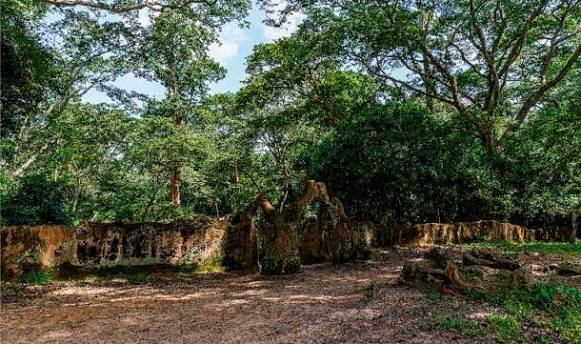
Long before large cities and powerful kingdoms emerged across Yorubaland, forests played a central role in the lives of the Yoruba people. They provided food, water, medicine, timber, and protection, making them ideal locations for early settlements. Over time, many forests also became places of spiritual significance, where communities established shrines, held ceremonies, and preserved sacred traditions.
In Yoruba history and tradition, sacred forests were more than natural landscapes. They were places where the physical and spiritual worlds were believed to meet, where communities honoured their ancestors, worshipped the Òrìṣà, and laid the foundations of towns that would later grow into flourishing kingdoms. While archaeology shows that settlements developed for practical reasons such as access to resources and security, oral traditions often remember these forests as the birthplace of communities and centres of divine guidance.
Why Early Settlers Chose Forests
The forests of southwestern Nigeria offered everything early communities needed to survive.
They provided:
* Fertile land for farming. * Fresh water from rivers and streams. * Timber for building homes. * Wild fruits and edible plants. * Medicinal herbs. * Game for hunting. * Natural protection from enemies.
These advantages encouraged people to establish permanent settlements that gradually expanded into villages and towns.
Forests as Sacred Spaces
Beyond their practical value, certain forests came to be regarded as sacred.
These groves were often associated with:
* Particular Òrìṣà. * Founding ancestors. * Royal lineages. * Community rituals. * Seasonal festivals. * Traditional laws protecting the environment.
Access to some sacred forests was governed by customs intended to preserve their sanctity and ecological balance.
The Founding of Communities
Many Yoruba oral traditions describe founders arriving in forested areas before establishing permanent settlements.
According to these traditions, founders would:
* Identify a suitable location. * Clear portions of the forest for homes and farms. * Establish shrines. * Mark community boundaries. * Create gathering places. * Organise leadership structures.
Over generations, these settlements developed into organised towns with markets, palaces, and public spaces.
Sacred Forests and Ilé-Ifẹ̀
In Yoruba tradition, Ile-Ife occupies a unique place as the ancestral and spiritual homeland of the Yoruba people.
The surrounding landscape has long contained sacred groves and ritual sites connected with royal traditions and the worship of various Òrìṣà. These sacred places continue to play important roles in festivals and ceremonies, reflecting the close relationship between the natural environment and Yoruba spirituality.
The Osun-Osogbo Sacred Grove
Perhaps the most famous sacred forest in Yorubaland is the Osun-Osogbo Sacred Grove.
Located along the Osun River, the grove is one of the last surviving examples of a sacred forest that once surrounded many Yoruba settlements.
The grove contains:
* Shrines. * Sculptures. * Sacred pathways. * Ritual spaces. * Ancient trees.
Today it is recognised as a UNESCO World Heritage Site and remains an important centre of Yoruba cultural and spiritual heritage.
Protecting Nature Through Tradition
Sacred forests also served as early forms of environmental conservation.
Traditional customs often discouraged:
* Unauthorised tree cutting. * Hunting within sacred areas. * Pollution of streams. * Destruction of shrines. * Uncontrolled farming inside protected groves.
These practices helped preserve biodiversity long before modern conservation laws were introduced.
Centres of Learning and Ceremony
Sacred forests were places where important cultural knowledge was preserved.
Within these spaces, communities held:
* Festivals. * Initiation ceremonies. * Oral history recitations. * Traditional music and dance. * Religious observances. * Meetings of elders.
These gatherings strengthened communal identity and ensured that traditions were passed from one generation to the next.
Archaeology and Oral Tradition
Archaeological research confirms that many early Yoruba settlements developed near forests and water sources because of their practical advantages.
Oral traditions, meanwhile, often explain these same places through stories of founders, ancestors, and divine guidance.
Rather than contradicting one another, these perspectives offer complementary insights. Archaeology helps us understand how communities developed materially, while oral tradition preserves their cultural memory, identity, and values.
Sacred Forests Today
Although urbanisation has reduced the number of sacred forests, several continue to survive.
Today they serve as:
* Cultural heritage sites. * Centres for traditional festivals. * Places of historical research. * Tourist attractions. * Protected ecological reserves. * Symbols of Yoruba identity.
Communities, traditional institutions, and conservation organisations continue to work together to protect these remarkable landscapes.
The Legacy of Sacred Forests
The sacred forests of Yorubaland represent the deep relationship between people, nature, and culture. They remind us that the earliest Yoruba communities depended on the environment not only for survival but also for spiritual inspiration and social organisation.
These forests nurtured the growth of settlements, preserved biodiversity through traditional conservation practices, and became enduring symbols of identity and continuity.
Conclusion
Sacred forests played a foundational role in the emergence of Yoruba communities. They provided fertile land, water, security, and natural resources that supported early settlement, while also becoming centres of worship, cultural transmission, and communal life. As villages expanded into great kingdoms, these forests remained places where history, spirituality, and tradition were preserved.
Sites such as the Osun-Osogbo Sacred Grove continue to demonstrate the enduring importance of these landscapes. By protecting sacred forests and the traditions associated with them, the Yoruba have preserved not only remarkable ecosystems but also an essential part of one of Africa's oldest and most influential civilisations.