Introduction
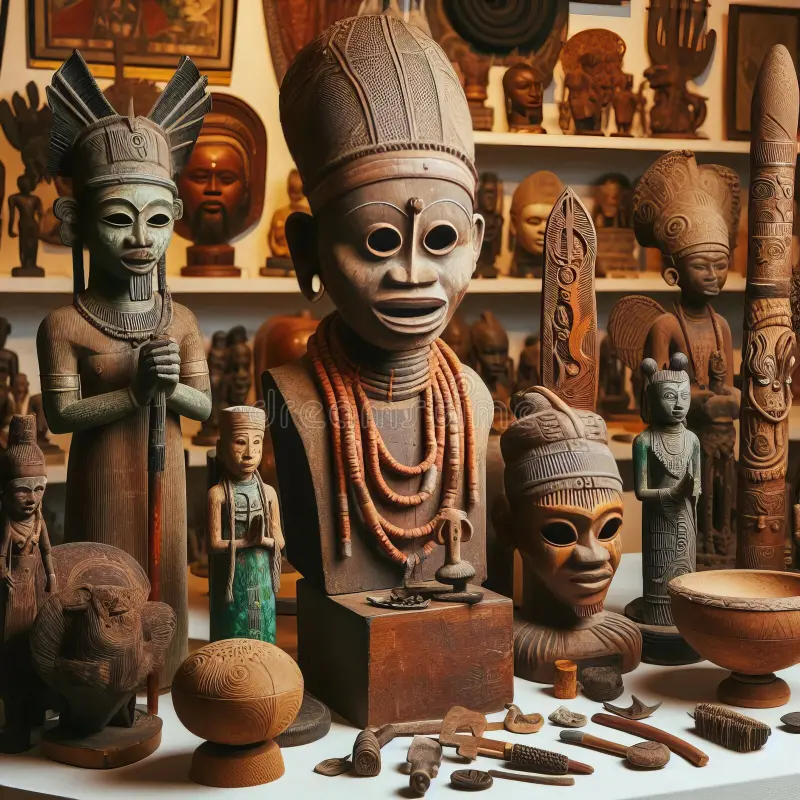
Yoruba artefacts are preserved today in museums across Nigeria, Europe, North America, and other parts of the world. These collections include bronze and brass castings, terracotta sculptures, carved objects, textiles, ceremonial works, and objects connected with royal, religious, and everyday life.
Preservation is not simply about placing an object inside a glass case. Museums use conservation, documentation, controlled storage, research, and increasingly, digital technology to protect fragile objects and preserve the knowledge connected to them.
1. Conservation Begins With Protecting the Object
Museums carefully examine artefacts to understand the materials from which they were made and the condition they are in. A wooden ìbejì figure, for example, requires different care from an Ifẹ̀ terracotta sculpture or a copper alloy casting.
Conservators may carry out careful cleaning, stabilisation and environmental monitoring to reduce damage caused by dust, insects, excessive light, humidity, or changes in temperature. The British Museum's records for a Yoruba ritual object, for instance, document conservation work including surface cleaning carried out in 2018.
2. Documentation Creates a Permanent Record
Before an artefact can be properly studied and managed, museums document it.
This may include recording:
* Its name and description. * Material and method of production. * Place of origin. * Estimated age. * Measurements. * Photographs. * Condition. * Ownership and acquisition history. * Known cultural or historical significance.
The growing importance of documentation can be seen in the collaboration between the Metropolitan Museum of Art and Nigeria's National Commission for Museums and Monuments, which includes cataloguing and digitisation work aimed at strengthening documentation of Nigerian collections.
3. Climate Controlled Storage Protects Fragile Heritage
Not every artefact can remain permanently on public display.
Many objects spend most of their lives in carefully managed storage, where museums attempt to reduce environmental conditions that can cause deterioration.
This is especially important for materials such as:
* Wood. * Textile. * Leather. * Ivory. * Pigment. * Organic materials.
Objects made from metal and terracotta have different conservation needs, which means preservation is often tailored to the individual artefact rather than following one universal method.
4. Museums Preserve the Story, Not Just the Object
An artefact without context can easily become nothing more than an attractive object.
For this reason, museums increasingly study questions such as:
Who made it?\ Where did it come from?\ How was it used?\ What did it mean within Yoruba society?\ How did it enter the museum collection?
The British Museum, for example, holds thousands of objects associated with Yoruba peoples, including works connected with groups such as Ifẹ̀, Ọ̀yọ́, Ìjẹ̀bú, Ẹ̀gbá and Ondo. Its current work also includes provenance research and attempts to improve understanding of the histories and origins of objects within its collections.
5. Digital Technology Is Creating New Archives
Modern preservation increasingly involves high resolution photography, digital catalogues, imaging and online databases.
This means that researchers, students and members of the Yoruba diaspora can sometimes study objects without physically travelling to the museum where they are kept.
Digitisation is particularly important because it creates additional records of artefacts and can make collections more accessible to scholars and source communities. The Met and Nigeria's NCMM have specifically identified cataloguing and digitisation as part of their collaborative work.
6. Research Helps Museums Understand Yoruba Civilisation
Preservation also involves continuous research.
A Yoruba object may be re-examined decades after it entered a museum collection. New archaeological evidence, scientific analysis or historical research can change what scholars know about its date, origin or cultural significance.
For example, the British Museum's research on Lower Niger copper alloy objects has highlighted how some works have historically been misidentified or grouped too broadly, demonstrating why museum collections must continually be re-examined rather than treated as permanently understood.
7. Museums Around the World Hold Important Yoruba Collections
Institutions with significant Yoruba material include the British Museum, which lists thousands of Yoruba related objects in its collection, the Metropolitan Museum of Art, and the Smithsonian National Museum of African Art, whose holdings include a substantial group of Yoruba artworks across materials such as beadwork, ceramics, copper alloy, iron, ivory and wood.
These collections allow Yoruba artistic traditions to be studied on an international scale. For example, the Met holds Yoruba works ranging from stone sculpture to ceremonial objects, while the British Museum documents artefacts including ìbejì figures, textiles and ritual objects.
8. Nigerian Museums Remain Central to Preservation
It is equally important to remember that Yoruba heritage is not preserved only outside Africa.
Nigeria's National Commission for Museums and Monuments is responsible for the management, documentation, conservation and presentation of national cultural heritage, while museums and heritage institutions across Nigeria preserve objects within their cultural and historical landscapes.
Some of the most important objects remain in Nigeria. The original Ifẹ̀ head associated with the Olókun Grove, for example, is in the collection of the National Museum in Ifẹ̀, while the British Museum holds a cast made from the original.
9. Preservation Is Also About Collaboration
Today, museums are increasingly working with Nigerian institutions, scholars and cultural experts.
These partnerships can involve:
* Loans and exhibitions. * Conservation training. * Digitisation. * Archaeological research. * Collection documentation. * Educational programmes. * Knowledge exchange.
The collaboration between the Met and Nigeria's NCMM is one example of this changing approach. Their agreement has included exchanges of expertise and plans connected with loans, documentation and capacity building.
10. The Question of Repatriation
The preservation of Yoruba and other Nigerian heritage abroad also raises important questions about ownership, colonial history and the return of cultural property.
Some artefacts entered foreign collections through colonial expeditions, unequal systems of collecting, missionary networks, or purchases made under historical conditions that are now being re-examined.
As a result, preservation today is no longer only about keeping an object physically safe. It also involves asking whether communities should have greater access to their heritage and whether certain objects should be returned.
This conversation is part of a wider global movement to rethink the relationship between museums and the communities from which collections originated.
11. Why Preservation Matters for the Future
A Yoruba artefact may be hundreds of years old, but it can still teach modern generations about:
* Ancient technology. * Religious traditions. * Political systems. * Fashion and textiles. * Artistic techniques. * Family structures. * Royal authority. * Yoruba philosophy.
An Ifẹ̀ sculpture, an ìbejì figure, an adìrẹ textile or a ceremonial object is therefore more than an old object.
It is evidence of human creativity and a connection between generations.
Conclusion
Museums around the world preserve Yoruba artefacts through conservation, documentation, research, controlled storage, digitisation and public education. Yet the most important modern development may be the growing recognition that preserving Yoruba heritage should also involve the people and communities whose history those objects represent.
The future of preservation is therefore not simply about keeping artefacts safely behind glass.
It is about ensuring that Yoruba people, especially younger generations, can continue to study, understand, question and reconnect with the cultural knowledge contained within them.
Because an artefact may survive for centuries, but its true preservation depends on something even more important: whether future generations still understand its story.