Introduction
Long before refrigerators, freezers and modern food processing factories, Yoruba communities developed practical ways of keeping food for longer periods. These methods were built around careful observation of the environment, seasonal changes, available materials and generations of experience.
Food preservation was more than a way of preventing waste. It supported farming communities, helped households prepare for periods when particular foods were scarce and allowed important foods to be transported and traded over longer distances. Many traditional methods also changed the taste, texture and character of the food, creating foods that became an important part of Yoruba cuisine.
It is important to recognise that these techniques were not always exclusively Yoruba. Many were shared across different communities in Nigeria and West Africa. However, they became deeply established within Yoruba food culture.
Sun Drying
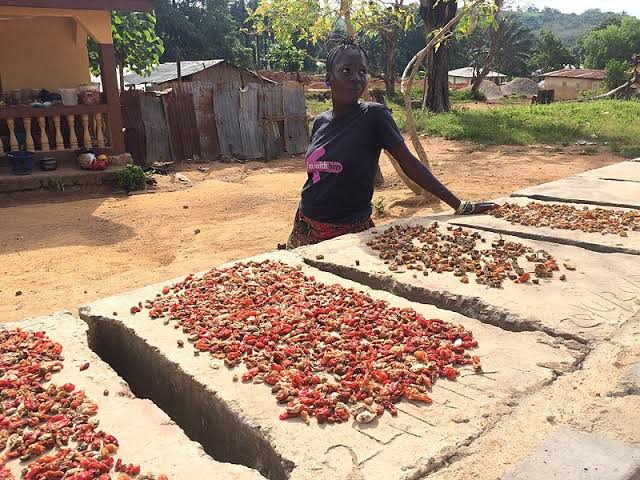
Drying is one of the oldest and simplest methods of preserving food. Fresh food contains moisture that supports the growth of microorganisms responsible for spoilage. Removing much of that moisture can make food last considerably longer.
Yoruba communities used sunlight to dry different agricultural products, including cassava products, vegetables, fruits and other foods. Cassava could be processed into products such as lafun, in which the cassava is fermented and subsequently dried before being milled into flour. Studies of traditional lafun production in southwestern Nigeria describe fermentation followed by sun drying as an important part of the process.
Drying was particularly useful during periods of strong sunshine because it required little specialised equipment. However, traditional sun drying depended heavily on weather conditions and cleanliness, which could affect the quality and safety of the finished product.
Smoking
Smoking was another important preservation technique, especially for foods such as fish and meat.
The food was exposed to smoke and heat, which helped remove moisture and could slow spoilage. Traditional Nigerian food processing research documents the use of smoke drying for meat and fish as a way of extending shelf life while maintaining characteristic flavour.
Smoking also gave food a distinctive taste and aroma. For communities living near rivers, lagoons and other fishing areas, preserving fish was especially important because fresh fish could spoil quickly without refrigeration.
The technique was not simply about keeping food for longer. It transformed fresh food into a product that could be stored, transported and consumed later.
Fermentation
Fermentation is one of the most interesting forms of indigenous food preservation.
Instead of trying to stop all microbial activity, fermentation uses controlled microbial processes to transform food. The process can change its flavour, texture, smell and keeping quality.
Yoruba cuisine contains several important fermented foods. Iru, made from fermented African locust beans, is a well known example. Cassava products such as lafun and fufu also involve fermentation.
Research on traditional fermented foods shows that fermentation can contribute to preservation by changing the chemical conditions of food and reducing some compounds associated with spoilage or toxicity. In cassava processing, fermentation is particularly important because it contributes to the reduction of cyanogenic compounds.
Fermentation therefore demonstrates that indigenous food knowledge was not simply based on trial and error. It involved practical knowledge of transformation, timing and environmental conditions that had been passed from generation to generation.
Processing Cassava for Longer Storage
Cassava became one of the most important food crops in southwestern Nigeria, although it is important to remember that cassava itself originated in South America and was introduced to Africa after contact with the Americas.
Yoruba communities and other West African societies developed several ways of processing cassava into forms that could be stored for longer.
Gari is one of the best known examples. Cassava is processed, fermented and then roasted or fried, producing a relatively dry product that can be stored and transported more easily than fresh cassava. The Food and Agriculture Organization describes traditional gari production as combining frying and drying, with moisture being substantially reduced during processing.
Lafun provides another example. Cassava is fermented and dried before being milled into flour. Because much of the moisture has been removed, the finished product can be stored for considerably longer than fresh cassava.
These techniques turned a highly perishable root into products that could remain useful beyond the immediate harvest period.
Salting
Salt has also been used traditionally to help preserve foods, particularly fish and meat.
Salt reduces the amount of water available to microorganisms and can therefore slow spoilage. In traditional food systems, salting could be combined with drying or smoking to create additional protection.
This combination illustrates an important principle of indigenous preservation. A single method was not always used on its own. Food could be salted and dried, smoked and dried, or fermented and dried.
Storage of Grains and Dry Foods
Preservation did not end once food had been dried or processed. Proper storage was equally important.
Traditional communities developed storage practices and containers suitable for keeping grains and other dry foods away from moisture, insects and other causes of deterioration.
Research into traditional grain storage systems in Nigeria and India has found that indigenous storage structures can be relatively inexpensive and environmentally friendly while helping to protect stored food from insect infestation.
Knowledge about where to store food, how dry it should be and how to protect it from pests was therefore an important part of the wider preservation system.
Indigenous Knowledge and the Seasons
Successful food preservation required an understanding of the seasons.
People needed to know when crops were harvested, when fish were plentiful, when sunlight was suitable for drying and when foods needed to be processed quickly before they spoiled.
This meant that preservation was closely connected to agriculture and environmental knowledge. Farmers and food processors had to understand not only the food itself but also the conditions under which it could be safely processed and stored.
Traditional food preservation was therefore part of a larger system of knowledge about land, weather, crops, animals and human consumption.
Women and the Preservation of Food
Women played an important role in many traditional food processing activities across southwestern Nigeria. Tasks associated with cassava processing, fermentation, drying and preparation were often carried out within household and community systems in which knowledge was passed between generations.
Food processing could also provide an economic opportunity. Products such as gari and other processed foods could be sold locally, allowing food preservation to become connected with household income and community trade.
The preservation of food was therefore not only a domestic responsibility. It could also contribute to local economies.
Preservation as a Form of Indigenous Technology
Traditional food preservation deserves to be recognised as a form of indigenous technology.
The people who developed these techniques did not have modern food laboratories or electrical refrigeration, yet they understood practical principles that remain important today. They knew that moisture encouraged spoilage, that heat could reduce moisture, that fermentation could transform food and that appropriate storage could protect dried products.
Modern food science can now explain many of these processes using microbiology, chemistry and food technology. This does not diminish the value of the traditional knowledge. Instead, scientific research can help us understand why some traditional practices worked and how they can be improved safely.
Preserving the Knowledge
Modern refrigeration has changed the way many people store food, but traditional preservation knowledge remains culturally important.
It tells us how Yoruba communities adapted to their environment and made practical use of the resources available to them. It also reminds younger generations that indigenous knowledge includes technology, experimentation, agriculture and environmental understanding.
There is an opportunity today to document these practices properly, record the Yoruba names associated with traditional foods and preserve the stories of the people who still remember how they were carried out.
A Heritage of Ingenuity
Yoruba food preservation traditions reveal a culture that understood the importance of making the most of available resources.
Through drying, smoking, fermentation, salting, roasting, processing and careful storage, communities could transform perishable foods into products that lasted longer and could travel further.
These methods were shaped by local environments and shared with neighbouring cultures, but they became an important part of Yoruba food heritage.
Preserving these traditions is therefore about more than preserving old recipes. It is about preserving knowledge of agriculture, seasons, craftsmanship, community life and indigenous technology.
The lesson remains relevant today: good food preservation begins with understanding the food, respecting the environment and using knowledge wisely.