Introduction
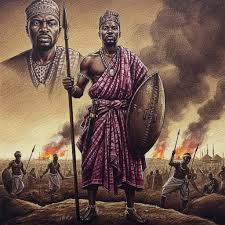
In the turbulent nineteenth century, as old kingdoms struggled to preserve their authority and new political realities emerged across Yorubaland, one man stood at the centre of a conflict that would alter the course of Yoruba history.
He was fearless, uncompromising, and fiercely devoted to the traditions he believed defined the very soul of his people.
His name was Kurunmi.
To some, Kurunmi was a hero who defended constitutional principles and ancestral customs against political convenience. To others, he was a stubborn warlord whose refusal to compromise brought devastation to his people.
Yet, regardless of perspective, few can deny his importance.
His story is one of honour and tragedy, courage and pride, conviction and consequence. It is the story of a warrior who dared to challenge the most powerful forces of his age.
It is the story of Kurunmi of Ìjàyè.
The Rise of a Warrior
Kurunmi emerged during one of the most unstable periods in Yoruba history.
The once-mighty Oyo Empire, which had dominated much of the region for centuries, was weakening under the weight of internal struggles, external pressures, and political fragmentation.
Amid this uncertainty, local military leaders gained increasing influence.
Kurunmi distinguished himself through bravery, discipline, and strategic skill.
His reputation grew steadily until he was appointed Aare Ọ̀nà Kakanfò, the highest military title in Yorubaland.
The holder of this office served as the commander of the Yoruba armies and was expected to defend the interests of the kingdom with unwavering courage.
It was an honour reserved for extraordinary individuals.
Kurunmi embraced it wholeheartedly.
The Powerful Town of Ìjàyè
Kurunmi established his base in Ijaye, which developed into one of the most influential military and commercial centres of its time.
Under his leadership, Ìjàyè prospered.
Merchants travelled through its markets.
The warriors pledged loyalty to their chief.
Its strategic location strengthened its political significance.
Kurunmi governed with authority and commanded enormous respect among his followers.
To many, he represented stability in an era of uncertainty.
Yet destiny would soon place him in direct opposition to the evolving politics of Yorubaland.
A Kingdom Divided
The roots of the conflict lay in a succession dispute within Oyo.
According to long-standing tradition, when an Alaafin died, his eldest son was expected to die with him.
This custom prevented direct hereditary succession and was intended to protect the kingdom from excessive concentration of power.
When Alaafin Atiba approached the end of his reign, however, he made an unprecedented decision.
He sought to ensure that his son, Alaafin Adelu, would succeed him.
For many, this represented a practical adaptation to changing times.
For Kurunmi, it was a dangerous violation of ancestral law.
He reportedly declared:
> "If the father dies, the son dies. If the son becomes king after his father, then I also shall become king after my father."
To Kurunmi, this was not merely a political disagreement.
It was a question of principle.
If tradition could be abandoned so easily, what would become of the foundations upon which society rested?
The Road to War
Kurunmi refused to recognise Adelu's legitimacy.
His opposition quickly escalated into open rebellion.
What began as a constitutional dispute soon transformed into one of the most significant conflicts of nineteenth-century Yorubaland.
Alliances formed rapidly.
Several Yoruba states sided with the Alaafin.
Others sympathised with Kurunmi's defence of tradition.
Among those who opposed Ìjàyè were powerful forces from Ibadan, whose military strength had grown considerably.
The stage was set for war.
The Ìjàyè War
The conflict that followed, known as the Ijaye War, lasted from 1860 to 1862.
It was brutal.
Communities suffered immense hardship.
Farms were abandoned.
Trade routes became dangerous.
Families were displaced.
Kurunmi fought with remarkable determination.
Despite being confronted by a coalition of opponents, he refused to surrender.
He believed deeply in the cause for which he had taken up arms.
However, conviction alone could not overcome overwhelming odds.
The military strength of his enemies gradually eroded Ìjàyè's resistance.
Losses mounted.
Resources dwindled.
The once-powerful stronghold faced collapse.
The Tragic Fall of Kurunmi
As the war turned against him, tragedy struck close to home.
Several of Kurunmi's sons reportedly died during the conflict.
The personal cost of resistance became unbearable.
Eventually, Ìjàyè fell.
Accounts differ regarding the precise circumstances of Kurunmi's death.
Some traditions suggest he died by suicide rather than face capture.
Others indicate that illness and grief overwhelmed him in his final days.
Whatever the exact details, his death marked the end of an era.
The man who had challenged an empire was gone.
The town he had built lay in ruins.
Yet his story endured.
Hero, Rebel, or Tragic Figure?
Kurunmi's legacy remains complex.
To admirers, he was a principled leader who defended constitutional order and refused to compromise his beliefs.
To critics, his rigidity prolonged conflict and contributed to unnecessary suffering.
Perhaps he was both.
History often resists simple categories.
The same qualities that inspire admiration—courage, conviction, steadfastness—can, when carried to extremes, produce devastating consequences.
Kurunmi embodies this tension.
He reminds us that noble intentions do not always lead to favourable outcomes.
Lessons from Kurunmi's Story
The story of Kurunmi offers enduring lessons:
* Principles matter, especially during periods of uncertainty. * Leadership requires courage, but also flexibility. * Tradition provides identity and continuity, yet societies must navigate change carefully. * Political disputes can carry devastating human consequences. * Even the strongest individuals cannot escape the cost of prolonged conflict.
These lessons remain relevant in every generation.
History and Memory
Much of what is known about Kurunmi comes from oral traditions, missionary records, and nineteenth-century accounts.
One of the most influential literary interpretations appears in Kurunmi, in which Ola Rotimi explores the moral and political complexities of the warrior's life.
Through scholarship, literature, and storytelling, Kurunmi's memory has been preserved as one of the defining figures of Yoruba history.
His life continues to provoke debate because it raises timeless questions.
When should tradition yield to change?
How far should a leader go in defence of principle?
What is the price of refusing to compromise?
Conclusion
The story of Kurunmi of Ìjàyè is among the most powerful narratives in Yoruba history.
He rose from warrior to Aare Ọ̀nà Kakanfò, transformed Ìjàyè into a formidable centre of influence, and stood against forces far greater than himself in defence of what he believed was right.
His resistance reshaped the political landscape of Yorubaland and revealed both the strength and vulnerability of human conviction.
Kurunmi was not a flawless hero, nor was he simply a villain of history.
He was a man of immense courage and unwavering principle, caught in a moment when old traditions collided with changing realities.
Centuries later, his story continues to resonate because it reflects a universal truth.
The greatest struggles are often not between good and evil, but between competing visions of what justice, loyalty, and duty demand.
And in that difficult space between conviction and compromise, the legacy of Kurunmi still speaks.