Introduction
Marriage has long been regarded as one of the most important institutions in Yoruba society. Traditionally, it is viewed not simply as a union between two individuals but as the coming together of two families, lineages, and, in some cases, entire communities. Across Yorubaland, marriage ceremonies celebrate love, responsibility, continuity, and the preservation of cultural heritage.
Although all Yoruba subgroups share common traditions rooted in their shared ancestry, each kingdom and region has developed distinctive marriage customs, greetings, ceremonial practices, and symbolic rituals. These differences reflect the rich cultural diversity that exists within the wider Yoruba civilisation.
The Meaning of Marriage in Yoruba Culture
Traditionally, marriage was understood as a lifelong partnership built upon mutual respect, cooperation, and family unity.
Marriage was expected to:
* Unite two extended families. * Continue family lineages. * Strengthen community relationships. * Encourage mutual support. * Promote stability within society.
For this reason, families often played an active role in marriage arrangements and celebrations.
Common Customs Shared Across Yorubaland
Despite regional differences, many Yoruba communities share several important marriage traditions.
These commonly include:
* Family introductions. * Formal engagement ceremonies. * Exchange of symbolic gifts. * Presentation of kola nuts. * Blessings and prayers from elders. * Traditional music and dancing. * Sharing meals with family and guests.
These customs emphasise unity, goodwill, and respect between both families.
Marriage Among the Oyo Yoruba
Among the Oyo Yoruba, marriage ceremonies are often known for their elegance and emphasis on royal traditions.
Some notable features include:
* Elaborate Aṣọ Òkè attire. * Formal greetings between families. * The groom's respectful prostration before the bride's family. * Blessings from elders. * Praise poetry performed by drummers and praise singers.
Respect for family elders remains central throughout the ceremony.
Marriage Among the Ijẹ̀bú
The Ijẹ̀bú are known for ceremonies that emphasise hospitality, family honour, and community participation.
Traditional Ijẹ̀bú weddings often feature:
* Careful observance of family protocols. * Richly embroidered traditional clothing. * Cultural songs and dances. * Generous hospitality for guests. * Blessings from both families.
While practices differ between communities and families, respect and dignity remain key themes.
Marriage Among the Ẹ̀gbá
Among the Ẹ̀gbá of Abeokuta, marriage ceremonies traditionally place strong emphasis on extended family relationships.
Common features include:
* Public introduction of both families. * Ceremonial prayers. * Presentation of gifts. * Traditional drumming. * Community celebration.
Marriage is regarded as an event that strengthens social bonds throughout the wider family.
Marriage Among the Èkìtì
Among the Èkìtì people, traditional weddings are often characterised by simplicity, dignity, and deep respect for elders.
Important elements include:
* Family consultations. * Traditional prayers. * Exchange of symbolic gifts. * Community feasting. * Blessings for fertility, prosperity, and peace.
As in other Yoruba communities, elders play an important role in guiding the proceedings.
Marriage Among the Ìjẹ̀ṣà
The Ìjẹ̀ṣà people of Ilesa maintain many traditional customs while incorporating distinctive local cultural expressions.
Ceremonies may include:
* Traditional praise songs. * Family blessings. * Symbolic gift presentations. * Colourful dancing. * Community celebrations.
These events highlight both family unity and regional identity.
Marriage Among the Ondo and Akure Yoruba
Among the Yoruba communities of Ondo and Akure, marriage customs generally follow broader Yoruba traditions while reflecting local customs and family practices.
These may include:
* Formal introductions. * Exchange of gifts. * Traditional attire. * Prayers offered by elders. * Music, dancing, and communal celebrations.
Local traditions add unique cultural expressions without changing the fundamental values of Yoruba marriage.
Symbolic Wedding Items
Many traditional items used during Yoruba marriage ceremonies carry symbolic meanings.
Examples include:
* Kola nuts – hospitality, unity, and goodwill. * Alligator pepper – sincerity and blessings. * Honey – sweetness in married life. * Palm wine – celebration and fellowship. * Yams – prosperity and abundance.
The exact items and their presentation vary across families and regions.
Traditional Attire
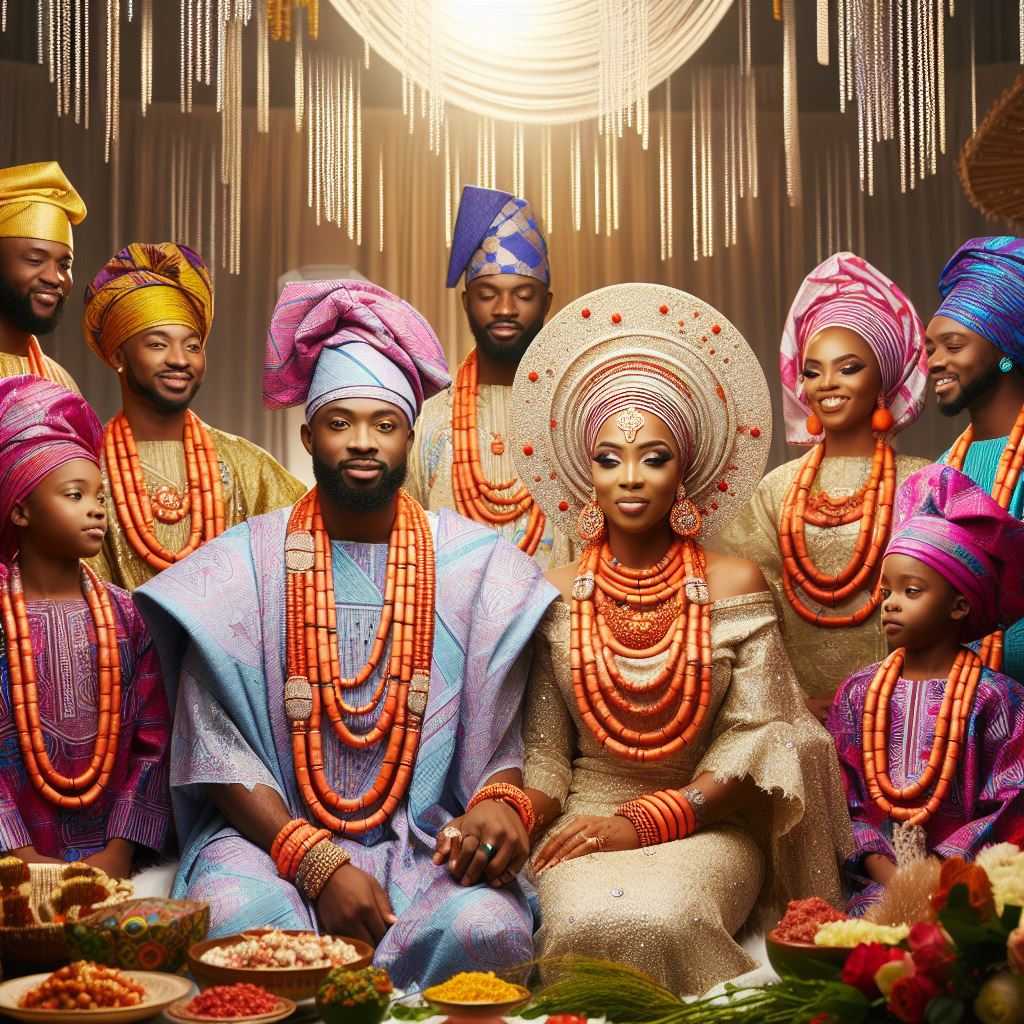
Traditional wedding attire is one of the most recognisable aspects of Yoruba marriage.
Brides commonly wear:
* Aṣọ Òkè. * Gèlè (head tie). * Ìpèlẹ̀ (shoulder sash). * Coral or beaded jewellery.
Grooms often wear:
* Agbádá. * Bùbá. * Ṣọ̀kòtò. * Traditional caps matching the family's chosen colours.
These garments celebrate Yoruba craftsmanship and cultural identity.
Marriage in Contemporary Yoruba Society
Today, many Yoruba couples combine traditional customs with religious and civil ceremonies.
A modern marriage may include:
* Family introduction. * Traditional engagement. * Religious wedding in a church or mosque. * Civil registration. * Wedding reception.
While contemporary celebrations often reflect changing lifestyles, many families continue to preserve traditional customs that honour their heritage.
The Enduring Legacy
Marriage customs remain among the most cherished expressions of Yoruba culture. Although individual practices vary across Oyo, Ijẹ̀bú, Ẹ̀gbá, Èkìtì, Ìjẹ̀ṣà, Ondo, Akure, and other Yoruba subgroups, they all reflect shared values of respect, family unity, hospitality, and communal responsibility.
These ceremonies continue to strengthen family relationships and preserve cultural traditions, ensuring that each new generation remains connected to its heritage.
Conclusion
Marriage customs across the different Yoruba subgroups illustrate both the unity and diversity of Yoruba civilisation. While each region has developed distinctive ceremonial practices, all share a common understanding of marriage as a sacred union that binds families, honours ancestors, and strengthens the community.
Whether celebrated in Oyo, Ijẹ̀bú, Ẹ̀gbá, Èkìtì, Ìjẹ̀ṣà, Ondo, or Akure, traditional Yoruba marriages continue to embody the enduring values of love, respect, cooperation, and cultural continuity. They remain vibrant expressions of a heritage that has been passed down through generations and continues to thrive in modern society.