Introduction
In Yoruba spirituality, one concept stands above all others: Olódùmarè.
Olódùmarè is understood as the Supreme Being, the ultimate source of existence, wisdom, and cosmic order. Unlike many religious systems where the supreme deity is frequently depicted in human form, Yoruba thought describes Olódùmarè in a more abstract and transcendent way, beyond full human comprehension.
To speak of Olódùmarè is to speak of the origin of life itself, the force behind creation, and the authority from which all spiritual powers flow.
Yet Olódùmarè is not distant or disconnected. In Yoruba belief, the divine is deeply involved in existence, operating through a structured spiritual universe filled with Òrìṣà, ancestors, and cosmic principles.
The Nature of Olódùmarè
Olódùmarè is not portrayed as a physical being in the Yoruba tradition. Instead, Olódùmarè is understood as:
* The source of all creation * The sustainer of the universe * The ultimate authority in existence * The one beyond human limitation and form
In Yoruba metaphysical thought, Olódùmarè exists beyond Òrun (the spiritual realm), while humans live in Ayé (the physical world).
Unlike deities in anthropomorphic traditions, Olódùmarè does not require physical temples or direct ritual communication in the same way the Òrìṣà do. Instead, Olódùmarè is approached through reverence, prayer, and moral living.
Olódùmarè and the Structure of the Universe
Yoruba cosmology describes existence as a structured universe composed of interconnected realms.
Òrun (Spiritual Realm)
This is the invisible realm where:
* Olódùmarè resides in transcendence * Òrìṣà operate as divine forces * Ancestors continue existence
Ayé (Physical Realm)
This is the world of humans, nature, and material life.
The relationship between these realms is not separation but interaction. Actions in Ayé have spiritual consequences in Òrun, and spiritual forces influence life on Earth.
Olódùmarè stands as the origin point of both realms.
Olódùmarè and the Òrìṣà
In Yoruba religion, Olódùmarè does not act alone in daily cosmic governance.
Instead, Olódùmarè delegates aspects of divine responsibility to the Òrìṣà, spiritual forces that govern natural and moral aspects of existence.
Examples include:
* Ṣàngó – justice, thunder, authority * Ọ̀ṣun – fertility, love, rivers * Ọ̀gún – iron, war, technology * Ọbàtálá – purity, creation, ethics
These Òrìṣà are not independent gods in competition with Olódùmarè. Rather, they are extensions of divine order.
Olódùmarè is the ultimate source, while the Òrìṣà are manifestations of divine functions within creation.
Olódùmarè in Creation Narratives
In Yoruba creation stories, Olódùmarè is the initiator of existence.
One well-known narrative describes how Olódùmarè entrusted Ọbàtálá with the task of creating land on the primordial waters, using sacred materials provided from the divine realm.
Another tradition speaks of divine beings descending from the heavens to shape the earth under Olódùmarè’s authority.
These stories are not simply literal accounts but philosophical expressions of:
* Order emerging from chaos * Divine intelligence guiding creation * The sacred responsibility of existence
Olódùmarè remains the unseen origin behind all creative acts.
Moral Order and Human Responsibility
In Yoruba thought, Olódùmarè is not only the creator but also the foundation of moral order.
Human beings are expected to live according to principles that reflect balance and harmony.
Key values include:
* Respect for elders * Truthfulness * Responsibility * Community harmony * Honour and integrity
Although Olódùmarè is not always seen as directly intervening in every event, the moral structure of existence is believed to originate from divine order.
Consequences of actions are often understood as part of this cosmic balance.
Olódùmarè and Ifá Wisdom
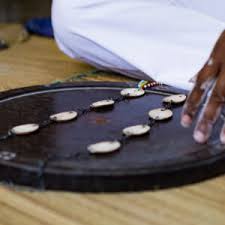
A major way Yoruba people engage with spiritual understanding is through Ifá, a system of wisdom and divination.
Ifá is believed to be inspired by divine knowledge ultimately rooted in Olódùmarè.
Through Ifá, practitioners seek guidance on:
* Life decisions * Health and destiny * Community challenges * Moral conduct
The spiritual custodian of Ifá wisdom is Orunmila, who is regarded as the witness to human destiny.
Through Ifá, the will of Olódùmarè is interpreted rather than directly spoken.
Olódùmarè in Daily Life
For many Yoruba people, belief in Olódùmarè is not abstract theology but lived experience.
Expressions such as gratitude, prayer, and moral reflection often reference the Supreme Being indirectly.
Common ideas include:
* Life is sustained by divine will * Blessings come from a higher source * Destiny is guided beyond human control
Even in contemporary urban settings, many Yoruba individuals maintain a sense of spiritual connection to Olódùmarè through daily language, prayer, and cultural practices.
Olódùmarè and Other African Spiritual Systems
The influence of Yoruba spirituality extends beyond West Africa.
Through the transatlantic slave trade, Yoruba religious ideas spread to:
* Brazil (Candomblé) * Cuba (Santería) * Trinidad and Tobago * Parts of the United States
In these traditions, the concept of a supreme divine source closely related to Olódùmarè remains central, even as practices evolved in new cultural environments.
This global presence highlights the resilience of Yoruba cosmology.
Conclusion
Olódùmarè represents the highest principle in Yoruba religion: the origin of existence, the source of cosmic order, and the foundation of moral life.
Yet Olódùmarè is not distant or removed from human experience. Instead, divine presence is understood through a layered spiritual system that includes the Òrìṣà, ancestral spirits, and Ifá wisdom.
Rather than focusing on rigid definitions, Yoruba spirituality embraces a worldview where the divine is both transcendent and immanent, beyond form yet deeply connected to life.
In understanding Olódùmarè, we are not only studying a religious concept. We are engaging with a profound philosophical system that explains existence, guides behaviour, and connects humanity to the universe.
It is a worldview shaped by centuries of reflection, storytelling, and lived experience — one that continues to influence millions of people across Africa and the diaspora today.