Introduction
Before the arrival of British colonial rule, the Yoruba people had already developed one of the most sophisticated political and governance systems in Africa. Across the ancient kingdoms and city-states of Yorubaland, governance was organised through structured monarchies, councils of chiefs, age-grade systems, military institutions, market administrations, and powerful spiritual authorities.
Far from being chaotic or primitive, pre-colonial Yoruba governance was highly organised, constitutional in nature, and built on checks and balances that limited absolute power. Leadership was deeply connected to culture, spirituality, accountability, and communal responsibility.
The Yoruba political system influenced trade, diplomacy, urban planning, warfare, justice, religion, and social order for centuries before European colonisation.
The Origins of Yoruba Political Organisation
The Yoruba trace their ancestral origin to Ile-Ife, regarded as the spiritual cradle of the Yoruba civilisation.
According to Yoruba tradition, Oduduwa became the progenitor of many Yoruba kingdoms after establishing authority in Ile-Ife. From there, descendants and princes spread across Yorubaland to establish major kingdoms such as Oyo, Ijebu, Ekiti, Ondo, Ketu, Egba, and others.
Each kingdom developed its own administrative structure while maintaining cultural and spiritual links to Ile-Ife.
The Yoruba political landscape was therefore not a single empire alone, but a network of interconnected kingdoms and city states sharing language, religion, customs, and ancestry.
The Oba: The King as Political and Spiritual Leader
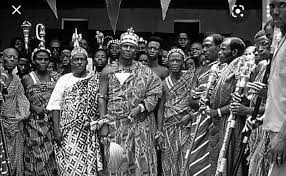
At the centre of Yoruba governance stood the Oba, the traditional ruler of a kingdom or town.
The Oba was not merely a political figure. He was also seen as a spiritual custodian of the people, traditions, and ancestral heritage.
Different Yoruba kingdoms had different royal titles:
* The Alaafin in Oyo * The Ooni in Ile-Ife * The Awujale in Ijebu land * The Alake in Egba land * The Deji in Akure * The Olubadan in Ibadan
Although kings wielded enormous influence, most Yoruba monarchs did not rule absolutely. Their powers were balanced by councils, chiefs, religious institutions, and public opinion.
This system prevented dictatorship and encouraged collective governance.
Checks and Balances in Yoruba Governance
One remarkable feature of pre-colonial Yoruba governance was the existence of constitutional restraints on royal authority.
In many kingdoms, councils of chiefs advised and monitored the king.
The Oyo Mesi in the Oyo Empire
The Oyo Empire developed one of the most advanced governance systems in West Africa.
The Alaafin of Oyo was powerful, but he could not govern alone. The Oyo Mesi, a council of seven principal chiefs led by the Bashorun, acted as political advisers and constitutional watchdogs.
If an Alaafin became tyrannical, corrupt, or incompetent, the Oyo Mesi could demand his abdication.
One famous symbol of this process was the sending of an empty calabash or parrot’s eggs to the king, a sign that he was expected to step down.
This demonstrated that even kings were accountable under Yoruba political tradition.
The Ogboni Society
Another important institution in Yoruba governance was the Ogboni society.
The Ogboni were influential elders and spiritual authorities responsible for maintaining justice, tradition, and ethical conduct within society.
They often acted as a balance against royal excesses and were respected for wisdom and experience.
In some kingdoms, major political decisions required consultation with the Ogboni.
The society also played judicial roles, helping settle disputes and preserve social harmony.
Governance Through Councils and Chiefs
Yoruba kingdoms operated through layered systems of administration.
Chiefs supervised different sectors of governance including:
* War and defence * Trade and taxation * Agriculture * Religious affairs * Palace administration * Market regulation * Community security
These chiefs often came from noble families or distinguished lineages and were selected based on experience, loyalty, or hereditary rights.
Local governance also existed at community and quarter levels, where family heads and compound leaders settled disputes and coordinated communal activities.
The Military Organisation of Yoruba Kingdoms
Military administration was an important part of governance, especially in powerful kingdoms like Oyo and Ibadan.
The Oyo Empire became famous for its cavalry army, which expanded Yoruba influence across large parts of West Africa between the seventeenth and eighteenth centuries.
Military leaders held political influence and often served in royal councils.
In Ibadan, military success became the basis of political authority during the nineteenth century. Powerful war chiefs governed the city through a military based political system rather than hereditary monarchy.
Women in Yoruba Governance
Women also played important roles in pre colonial Yoruba political systems.
One of the most powerful female political offices was the Iyalode.
The Iyalode represented the interests of women in political affairs and often held significant influence in palace and community matters.
Yoruba women were also economically powerful through trade and market systems.
Market leaders supervised commercial activities, settled disputes among traders, and coordinated taxation and regulations.
This gave women both economic and political relevance in society.
The Yoruba Judicial System
Justice in pre colonial Yorubaland combined customary law, moral values, and spiritual principles.
Disputes were settled at different levels:
* Family heads resolved domestic conflicts * Chiefs handled community disputes * Kings and councils dealt with major political or criminal matters
Judgments aimed not only to punish wrongdoing but also to restore harmony within the community.
Oaths, divination, witnesses, and traditional rituals were sometimes used during judicial processes.
Crimes such as theft, murder, betrayal, or sacrilege attracted severe penalties because they threatened communal stability.
Religion and Governance
Religion was inseparable from governance in Yoruba society.
The king was regarded as a sacred figure connected to the spiritual wellbeing of the kingdom.
Priests, diviners, and custodians of oriṣa worship held important advisory roles in governance.
Festivals, rituals, and sacred ceremonies reinforced political authority and social unity.
The Ifa divination system was especially respected for guidance on leadership, conflict resolution, and decision making.
The Oyo Empire: A Model of Political Sophistication
Among Yoruba states, the Oyo Empire stood out as one of the most politically sophisticated.
At its height between the seventeenth and eighteenth centuries, Oyo controlled extensive trade routes and exercised influence over neighbouring territories.
Its governance structure included:
* The Alaafin as monarch * The Oyo Mesi as executive council * The Ogboni as spiritual and judicial authority * Provincial administrators * Military commanders * Taxation systems * Diplomatic networks
The system demonstrated advanced political organisation long before European colonial administration emerged in the region.
Urbanisation and City State Governance
Yoruba civilisation was highly urbanised compared to many other African societies of the time.
Cities such as Ibadan, Oyo-Ile, Ile-Ife, Ijebu-Ode, and Abeokuta developed complex administrative structures, roads, markets, and defensive systems.
Governance in these cities involved coordination between palace authorities, chiefs, military leaders, guilds, and market associations.
This urban sophistication impressed many early European visitors and historians.
Diplomacy and External Relations
Yoruba kingdoms maintained diplomatic and commercial relationships with neighbouring peoples, including the Nupe, Dahomey, Borgu, and Hausa states.
Envoys, tribute systems, alliances, and military treaties were part of interstate governance.
Trade networks connected Yorubaland to wider West African commerce involving kola nuts, textiles, leather goods, slaves, and agricultural products.
Political diplomacy was therefore an important feature of Yoruba statecraft.
The Impact of Colonialism on Yoruba Governance
British colonial rule disrupted many traditional Yoruba political systems.
Colonial authorities reduced the powers of traditional rulers and imposed indirect rule structures that altered existing governance institutions.
Some traditional systems survived, while others weakened significantly under colonial administration.
Nevertheless, many aspects of Yoruba governance continue to influence modern Nigeria today, especially in:
* Traditional leadership * Community conflict resolution * Chieftaincy institutions * Cultural festivals * Political consultation * Respect for elders and councils
Legacy of Pre-colonial Yoruba Governance
The governance systems developed by the Yoruba before colonialism remain among the most studied indigenous political structures in Africa.
Their legacy demonstrates that African societies had organised systems of administration, law, accountability, diplomacy, and constitutional order long before European intervention.
The Yoruba political model showed that leadership could combine monarchy, consultation, spirituality, accountability, and communal participation.
Modern discussions about governance, federalism, leadership ethics, and traditional authority in Nigeria still reflect many ideas rooted in Yoruba political heritage.
Conclusion
Pre-colonial Yoruba governance systems were sophisticated, organised, and deeply rooted in cultural values and collective responsibility. Through kingship institutions, councils of chiefs, judicial systems, women’s leadership, military organisation, and spiritual authority, the Yoruba created political systems that maintained stability and social order for centuries.
Far from the colonial stereotypes that once dismissed African societies as politically undeveloped, Yoruba civilisation demonstrated advanced governance structures comparable to many systems around the world during the same era.
The legacy of these institutions continues to shape Yoruba identity and Nigerian society today, reminding future generations of the political wisdom and administrative excellence that existed long before colonial rule arrived in Africa.