Introduction
Among the many legendary figures in Yorùbá history, few are as celebrated and admired as Queen Moremi Ajasoro. Revered as a symbol of courage, sacrifice, intelligence, and patriotism, Moremi occupies a special place in the history and oral traditions of Ile-Ife and the wider Yorùbá world.
Her story is one of bravery against oppression; a tale of a woman who risked everything, including personal happiness and motherhood, to save her people from fear and destruction. Passed down through generations in songs, oral poetry, festivals, and storytelling traditions, the legend of Moremi continues to inspire millions across Nigeria and beyond.
Today, she remains one of the most powerful female icons in African history and Yorùbá culture.
Who Was Queen Moremi?
According to Yorùbá oral tradition, Moremi Ajasoro was a noblewoman and queen in ancient Ile-Ife. She was married to Ọ̀rànmíyàn or, in some accounts, connected to the royal household of Ife during a period when the city faced repeated attacks from mysterious invaders.
These attackers were feared because they appeared terrifying and supernatural. They raided the city, destroyed properties, kidnapped people, and spread fear among the inhabitants of Ife.
At the time, the people of Ile-Ife did not understand who these invaders were or how to defeat them.
Moremi decided to uncover the secret behind the attacks.
The Mysterious Invaders
The attackers were believed to come from a neighboring group often referred to in oral traditions as the “Igbo” warriors of the forest (not necessarily referring to the modern ethnic group). They reportedly dressed in raffia costumes and frightening masks, making them appear like spirits rather than humans.
Because of this, many people in Ife feared them deeply and believed they possessed supernatural powers.
The city struggled repeatedly against these attacks, and panic spread throughout the kingdom.
Moremi’s Sacrifice and Strategy
Determined to save her people, Moremi made a spiritual vow to the Esinmirin River goddess. She promised that if the goddess helped her uncover the enemy’s secret and save Ile-Ife, she would make any sacrifice demanded afterward.
After making this vow, Moremi intentionally allowed herself to be captured during one of the invasions.
Inside the enemy camp, she observed their activities closely and eventually discovered the truth:
* The attackers were ordinary humans, not spirits * Their raffia costumes could easily catch fire * Fear was their greatest weapon
Using her intelligence and charm, Moremi gained the trust of the invaders and learned their military secrets.
Eventually, she escaped and returned to Ile-Ife with the information.
The Defeat of the Invaders
Armed with Moremi’s discoveries, the warriors of Ife prepared a counterattack.
When the invaders attacked again, the people of Ife used fire against the raffia costumes worn by the enemy warriors. The costumes ignited quickly, exposing the attackers and throwing them into confusion.
The mysterious invaders were defeated, and Ile-Ife was finally freed from fear and destruction.
Moremi became a hero celebrated throughout the kingdom for her courage, wisdom, and patriotism.
The Tragic Sacrifice
Although Moremi succeeded in saving her people, her story also carries deep sorrow.
After victory was achieved, the Esinmirin goddess demanded fulfillment of the vow Moremi had made. The sacrifice required was her only son, Olurogbo.
According to the legend, Moremi was heartbroken but honored her promise. Olurogbo was sacrificed, and the people of Ile-Ife mourned deeply with her.
The sacrifice became a powerful symbol of selflessness and devotion to one’s community.
In some versions of the story, the gods later restored Olurogbo or transformed him spiritually, reflecting themes of divine mercy and honor.
Moremi in Yorùbá Culture
Queen Moremi’s story has survived for centuries through:
* Oral traditions * Folk songs * Praise poetry (oríkì) * Festivals * Theatre and drama * Literature * Visual arts
She is remembered as:
* A symbol of bravery * A defender of her people * A model of female leadership * A representation of sacrifice for the common good
Her story is often taught to children and celebrated during cultural events across Yorùbáland.
The Moremi Statue in Ile-Ife
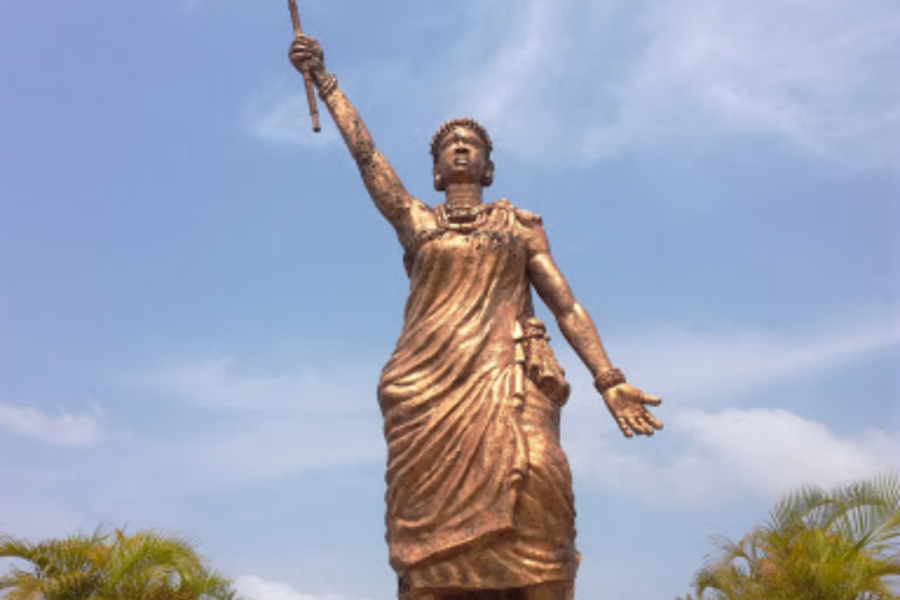
One of the most famous modern tributes to Moremi is the giant statue built in Ile-Ife.
The statue became widely known as one of the tallest statues in Nigeria and was designed to honor her enduring legacy in Yorùbá history.
The monument symbolizes:
* Courage * Resistance against oppression * Female heroism * Cultural pride
It also serves as an important tourist and historical landmark in Osun State.
Moremi and the Role of Women in African History
The story of Moremi challenges stereotypes that portray women in ancient African societies as passive or powerless.
Like other great African heroines, Moremi demonstrated:
* Leadership * Political influence * Strategic intelligence * Spiritual authority * Personal sacrifice
Her legend highlights the important roles women played in governance, warfare, diplomacy, and community survival in pre-colonial Africa.
Today, many Nigerians and Africans view Moremi as an icon of women’s empowerment and resilience.
Moremi in Modern Media and Education
Queen Moremi’s story continues to inspire modern creative works, including:
* Stage plays * Nollywood films * Cultural festivals * School textbooks * Art exhibitions * Music and poetry
Universities, historians, and cultural organizations also study her story as part of Yorùbá heritage and African oral history.
Her legend remains relevant because it speaks about:
* Patriotism * Sacrifice * Leadership * Community responsibility * Courage in difficult times
Historical Debate and Oral Tradition
Like many ancient African historical figures, separating legend from historical fact can be difficult because the story of Moremi was preserved mainly through oral tradition rather than written records.
Some historians debate which parts are symbolic, spiritual, or historical. However, regardless of historical uncertainty, Moremi’s importance in Yorùbá culture is undeniable.
Her story continues to function as:
* A moral lesson * A cultural identity marker * A symbol of resistance and unity
Why Queen Moremi Still Matters Today
Queen Moremi remains relevant in modern society because her story reflects timeless values:
* Standing against oppression * Using intelligence instead of fear * Sacrificing for the greater good * Protecting one’s people and culture
In a world facing social, political, and cultural challenges, Moremi’s legacy continues to inspire courage and collective responsibility.
Conclusion
Queen Moremi Ajasoro is far more than a legendary figure; she is one of the greatest heroines in Yorùbá history and African cultural memory.
Through bravery, wisdom, and sacrifice, she helped save Ile-Ife from destruction and became a lasting symbol of patriotism and resilience. Her story has endured for centuries because it speaks to universal human values — courage in the face of fear, love for one’s people, and the willingness to sacrifice for future generations.
Today, the name Moremi continues to shine as a beacon of strength, honor, and cultural pride in Yorùbáland and beyond.