Introduction
In traditional Yoruba society, drums were far more than musical instruments. They were powerful tools of communication, history, ceremony, and governance. Within the royal palace, drummers occupied respected positions because their performances carried messages, preserved traditions, and celebrated the dignity of the throne.
Royal drummers were not simply entertainers. They were historians, praise singers, messengers, and cultural custodians whose skills connected the ruler, the people, and the kingdom's ancestors. Through carefully mastered rhythms and the language of the talking drum, they helped shape daily life in the palace and played an essential role during important public occasions.
The Palace as a Centre of Music
Music was woven into the daily life of the Yoruba palace.
Royal musicians performed during:
* Morning audiences. * Meetings with chiefs. * Royal processions. * Festivals. * Coronations. * Religious ceremonies. * Visits from distinguished guests.
Drumming announced important events, welcomed visitors, and created an atmosphere of dignity and celebration within the palace.
The Talking Drum
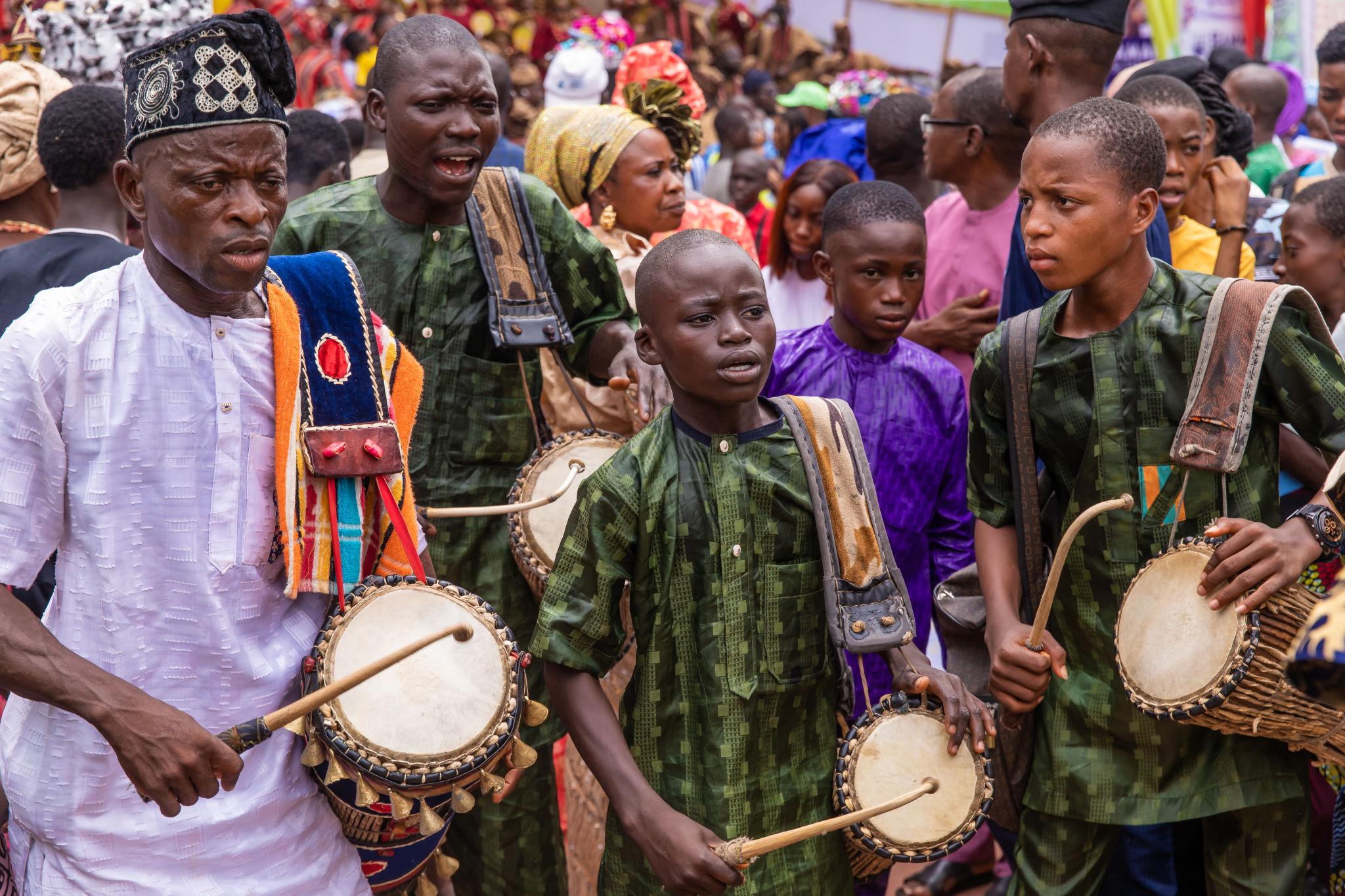
The most famous royal instrument is the dùndún, often called the talking drum.
Its hourglass shape and adjustable cords allow the drummer to change the pitch while playing. Because the Yoruba language is tonal, skilled drummers can imitate the rise and fall of spoken words, enabling the drum to "speak" names, greetings, proverbs, and praise poetry.
A master drummer could communicate complex messages that listeners familiar with the tradition could understand.
Keepers of Royal History
One of the most important duties of royal drummers was preserving history.
They performed oríkì, the praise poetry that celebrated:
* The royal family. * Past rulers. * Famous ancestors. * Military victories. * Founding traditions. * The achievements of the kingdom.
These performances helped ensure that historical knowledge was passed from one generation to the next, even before written records became common.
Announcing the King's Presence
Whenever a ruler appeared in public, royal drummers often accompanied the procession.
Their rhythms announced:
* The arrival of the king. * The beginning of important ceremonies. * Royal audiences. * State occasions. * Public celebrations.
The sound of the drums commanded attention and reminded everyone of the importance of the occasion.
Communication Without Words
Before modern communication technologies, drums helped convey information across communities.
Within and around the palace, drummers could signal:
* Ceremonial gatherings. * Public announcements. * The arrival of important visitors. * Emergencies. * Festival celebrations.
Although drums did not replace spoken communication, they formed an effective system of public signalling and ceremonial messaging.
Training a Royal Drummer
Becoming a royal drummer required years of dedication.
Apprentices learned:
* Drum construction. * Musical rhythms. * Yoruba tonal patterns. Praise poetry (oríkì*). * Palace etiquette. * Royal genealogy. * Ceremonial customs.
Many drummers came from families in which the profession had been handed down through generations, preserving both musical skill and historical knowledge.
Different Types of Palace Drums
Although the talking drum is the best known, Yoruba palace music included several different instruments.
Among them were:
* Dùndún, the family of talking drums. * Gángan, a smaller talking drum capable of producing speech-like tones. * Bàtá, double-headed drums associated with ceremonial and religious performances. * Larger support drums that provided rhythm and depth during royal events.
Each instrument had its own musical role and was played by trained specialists.
Drummers and Royal Ceremonies
Royal drummers were indispensable during major ceremonies such as:
* Coronations. * Annual festivals. * Installation of chiefs. * Royal weddings. * Traditional anniversaries. * Public blessings.
Their performances reinforced the dignity of the occasion and connected present-day celebrations with generations of royal tradition.
Respect and Privilege
Because of their knowledge and responsibilities, royal drummers were highly respected.
Many enjoyed privileges such as:
* Close access to the palace. * Participation in important ceremonies. * Recognition by rulers and chiefs. * The honour of preserving royal history.
Their role required not only musical ability but also wisdom, discipline, and a thorough understanding of palace customs.
The Legacy of Royal Drumming
Royal drumming remains an important part of Yoruba cultural life today.
Master drummers continue to perform at:
* Traditional festivals. * Palace ceremonies. * Cultural exhibitions. * Academic events. * International performances.
Their work has introduced Yoruba musical traditions to audiences around the world while helping to preserve an art form that has been practised for centuries.
Conclusion
Royal drummers were among the most valued members of the traditional Yoruba palace. Through the language of the talking drum, they announced ceremonies, preserved history, honoured rulers, and communicated messages that strengthened the bond between the palace and the people.
More than musicians, they were custodians of memory and culture, ensuring that the stories, achievements, and values of the kingdom were passed from one generation to the next. Their enduring legacy demonstrates the remarkable sophistication of Yoruba musical traditions and highlights the central role that sound, rhythm, and oral history have played in preserving one of Africa's richest cultural heritages.