Introduction
Royal succession has always been one of the most important institutions in Yoruba civilisation. It ensured the continuity of leadership, preserved the legitimacy of royal dynasties, and maintained political stability within each kingdom. Although many Yoruba kingdoms traced their ruling families to common ancestral traditions, there was no single method of choosing a king across all of Yorubaland.
Each kingdom developed its own succession customs based on its history, royal lineages, and political institutions. In some kingdoms, succession rotated among recognised ruling houses, while in others, kingmakers selected a candidate from eligible princes. Despite these differences, the process was generally guided by long-established customs rather than personal ambition alone.
Kingship Was Not Automatic
One common misconception is that the eldest son of a king automatically inherited the throne.
In most Yoruba kingdoms, this was not the case.
Instead, succession usually involved:
* Recognised royal families. * Eligible princes. * Councils of kingmakers. * Palace chiefs. * Established customary law.
This system was designed to ensure that the new ruler possessed not only royal ancestry but also the qualities expected of a monarch.
The Importance of Royal Lineages
Every Yoruba kingdom recognised particular royal families whose members were eligible to occupy the throne.
These ruling houses preserved:
* Royal ancestry. * Family traditions. * Historical legitimacy. * Succession rights.
Only individuals descended from these recognised dynasties could ordinarily be considered for kingship.
The Role of Kingmakers
Kingmakers played one of the most influential roles in the succession process.
Their responsibilities included:
* Confirming the eligibility of candidates. * Consulting customary traditions. * Assessing character and leadership qualities. * Supervising the selection process. * Protecting the integrity of the throne.
In many kingdoms, their decision was regarded as essential to the legitimacy of the new ruler.
Succession in Ilé-Ifẹ̀
In Ile-Ife, succession to the throne of the Ooni follows customs preserved by recognised royal houses and kingmakers.
Eligible princes are drawn from established ruling lineages that trace their ancestry through the traditional royal dynasty of Ife. The selection process involves consultation among traditional authorities and follows customary procedures that have evolved over many centuries.
The installation of the Ooni is accompanied by sacred rites that formally invest the monarch with the responsibilities of the office.
Succession in the Old Oyo Kingdom
The succession system of the Old Oyo Empire was one of the most structured in Yorubaland.
The Oyo Mesi, a council of senior chiefs, played a central role in selecting the Alaafin from among eligible princes belonging to the recognised royal line.
The Alaafin's authority was balanced by important constitutional institutions, reflecting the sophisticated political organisation of the Oyo Empire.
Succession in Ijebuland
The Awujale of Ijebu Ode is selected according to the customs of Ijebuland.
The process involves:
* Eligible ruling houses. * Traditional kingmakers. * Palace chiefs. * Established succession traditions.
The installation ceremonies reflect the unique cultural identity of the Ijebu people while preserving the continuity of their monarchy.
Succession in Ekiti and Ondo Kingdoms
Many kingdoms across Ekiti State and Ondo State also use systems based on recognised ruling houses and customary selection.
Although the specific procedures differ from one kingdom to another, common features include:
* Eligibility through royal descent. * Consultation with kingmakers. * Traditional rites of installation. * Public recognition by the community.
These variations reflect the diversity of political traditions across Yorubaland.
The Role of Character
Royal ancestry alone was not always considered sufficient.
Candidates were expected to demonstrate qualities such as:
* Wisdom. * Integrity. * Self-discipline. * Respect for tradition. * Leadership ability. * Good character.
The expectation that rulers should embody these virtues reinforced the Yoruba belief that kingship was a public trust rather than a personal privilege.
Installation and Coronation
Once selected, the future monarch underwent a series of traditional rites before formally ascending the throne.
These often included:
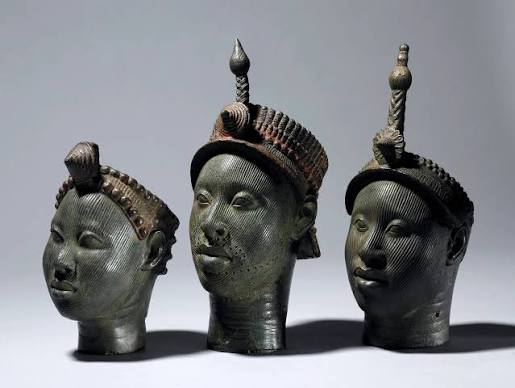
* Seclusion and preparation. * Instruction in royal customs. * Oaths of responsibility. * Ceremonial investiture. * Public presentation. * The wearing of the sacred Adé (royal crown).
The precise rites differ between kingdoms and are often regarded as sacred traditions preserved within each royal institution.
Modern Succession
Today, traditional succession continues across Yorubaland within the framework of Nigerian law.
Although state governments may formally recognise the appointment of traditional rulers, the selection itself generally follows the customary laws of each kingdom, often involving ruling houses, kingmakers, and traditional councils.
This combination of customary practice and legal recognition has allowed Yoruba monarchies to preserve their heritage while adapting to the modern constitutional system.
Unity Through Tradition
Despite differences between kingdoms, Yoruba succession systems share several common principles:
* Respect for royal ancestry. * Adherence to customary law. * Consultation rather than unilateral decision-making. * Recognition of kingmakers. * Sacred installation ceremonies. * Service to the community.
These principles have helped preserve the legitimacy and continuity of Yoruba monarchies for centuries.
Conclusion
Royal succession in the different Yoruba kingdoms reflects the richness and diversity of Yoruba political traditions. While kingdoms such as Ile-Ife, the Old Oyo Empire, Ijebu Ode, and numerous kingdoms across Ekiti and Ondo each developed their own methods of selecting rulers, they all shared a commitment to legitimacy, continuity, and responsible leadership.
Rather than relying solely on inheritance, Yoruba succession emphasised recognised royal lineages, the wisdom of kingmakers, and the moral character of candidates. These enduring traditions have enabled Yoruba monarchies to remain respected cultural institutions, preserving centuries of history while continuing to serve their communities in the modern era.