Introduction
For the Yoruba people, forests are far more than collections of trees, and trees are far more than natural resources. They are living parts of creation, places where the physical and spiritual worlds meet, where ancestors are remembered, divinities are honoured, and humanity is reminded of its responsibility to nature.
Long before the emergence of modern conservation movements, Yoruba communities protected certain forests because they were regarded as sacred. These landscapes were not only places of worship but also centres of biodiversity, traditional medicine, cultural education, and historical memory.
Similarly, particular tree species were treated with profound respect because of their associations with spiritual beliefs, healing practices, and community life. Their significance was rooted not only in religion but also in the practical understanding that healthy forests sustain healthy societies.
The sacred forests and trees of Yorubaland therefore represent one of the most enduring examples of the close relationship between culture and the natural environment.
The Yoruba View of Nature
In traditional Yoruba thought, nature is not viewed as separate from human life.
Mountains, rivers, trees, rocks, animals, and forests all possess significance within the wider order of creation.
The Yoruba worldview recognises that human beings depend upon nature for:
* Food * Water * Medicine * Shelter * Livelihood * Spiritual wellbeing
Respect for the environment was therefore both practical and spiritual.
Many natural places were protected because they were believed to possess special importance that demanded responsible stewardship.
Sacred Groves as Places of Worship
Across Yorubaland, certain forests became known as sacred groves.
These protected areas served as places where communities gathered for:
* Religious ceremonies. * Festivals. * Prayer. * Reflection. * Traditional rites. * Cultural celebrations.
Unlike ordinary forests, sacred groves were often governed by strict customary rules.
Cutting trees, hunting, or farming within these areas was frequently restricted or prohibited.
These customs helped preserve many forests for generations.
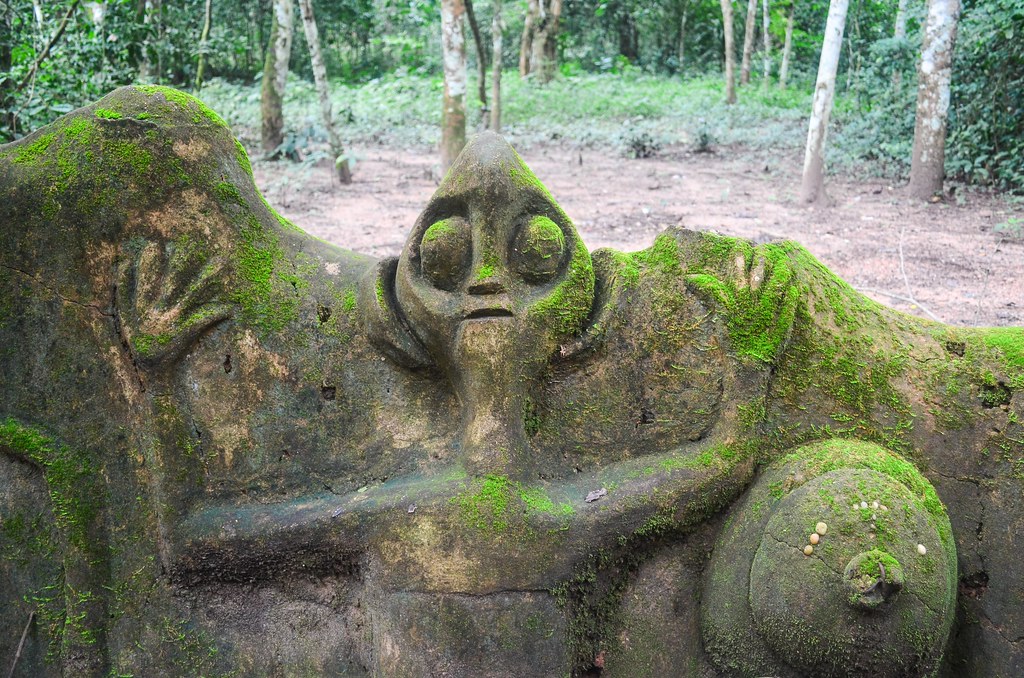
The most famous example is the Osun-Osogbo Sacred Grove, one of the last remaining examples of a once widespread network of sacred forests across Yorubaland.
The Osun-Osogbo Sacred Grove
Located along the banks of the Osun River, the Osun-Osogbo Sacred Grove remains one of Africa's most important cultural landscapes.
The grove contains:
* Ancient trees. * Shrines. * Sculptures. * Sacred pathways. * Ritual spaces.
It is closely associated with the worship of Osun, the Òrìṣà of rivers, fertility, beauty, and prosperity.
Each year, the Osun-Osogbo Festival attracts thousands of pilgrims, visitors, and researchers from around the world.
The grove has also gained international recognition for its cultural and ecological significance.
The Sacred Iroko Tree
Among the most respected trees in Yoruba tradition is the Irókò.
The iroko tree is admired for its immense size, longevity, and strength.
Traditional beliefs associate it with mystery and spiritual power.
For this reason:
* Ancient iroko trees were often treated with caution. * Communities avoided unnecessary destruction of mature trees. * Some trees became landmarks and gathering places.
Although beliefs concerning the iroko vary between communities, the tree remains one of the most culturally significant species in Yorubaland.
The Palm Tree: A Tree of Life
The oil palm occupies a special place in Yoruba society because of its extraordinary usefulness.
Almost every part of the tree serves a purpose.
It provides:
* Palm oil. * Palm kernel oil. * Palm wine. * Building materials. * Basketry materials. * Fuel.
Beyond its economic importance, palm products also feature in traditional ceremonies and cultural practices.
The palm tree illustrates how practical value and cultural significance often exist side by side.
Trees and Traditional Medicine
For generations, Yoruba healers developed extensive knowledge of medicinal plants found in forests.
Different parts of trees were used, including:
* Bark. * Leaves. * Roots. * Fruits. * Seeds.
Traditional practitioners studied:
* Healing properties. * Preparation methods. * Appropriate combinations. * Seasonal availability.
Many tree species remain important in indigenous healthcare today, and some continue to attract scientific research because of their medicinal potential.
Forests as Homes of Biodiversity
Sacred forests unintentionally became important conservation areas.
Because they were protected by cultural traditions, many groves preserved:
* Ancient trees. * Rare plant species. * Birds. * Small mammals. * Insects. * Medicinal plants.
Long before environmental science became a formal discipline, Yoruba customs helped maintain ecological diversity in these protected spaces.
Today, conservationists recognise that many sacred groves have preserved ecosystems that might otherwise have disappeared.
Trees in Festivals and Community Life
Large trees often served as important community landmarks.
They provided spaces for:
* Public meetings. * Storytelling. * Judicial proceedings. * Festivals. * Rest during travel.
Their broad canopies offered shelter from the tropical sun, while their longevity connected present generations with those who came before.
Many villages developed around these natural gathering places.
Traditional Conservation Practices
One of the most remarkable aspects of Yoruba environmental traditions is the use of customary law to protect nature.
Communities often established rules that prohibited:
* Unauthorised tree felling. * Hunting within sacred groves. * Farming in protected forests. * Destruction of ritual sites.
Although these practices were motivated by cultural and spiritual beliefs, they also contributed to sustainable environmental management.
Modern conservation experts increasingly recognise the value of such indigenous approaches to protecting natural heritage.
Sacred Forests in the Modern World
Urbanisation, agriculture, logging, and population growth have reduced many sacred forests across Yorubaland.
Nevertheless, important sites continue to survive through the efforts of:
* Traditional custodians. * Local communities. * Environmental organisations. * Cultural institutions. * Government agencies.
These efforts recognise that sacred forests preserve not only biodiversity but also language, history, art, ritual, and collective memory.
Lessons for Today
The Yoruba relationship with forests offers valuable lessons for the modern world.
It reminds us that environmental protection is not merely a scientific or political responsibility. It is also a cultural and moral one.
The idea that nature deserves respect because it sustains human life remains as relevant today as it was centuries ago.
By recognising the value of indigenous environmental knowledge, modern societies can draw inspiration from traditions that have long emphasised balance between people and the natural world.
Conclusion
Sacred trees and forests occupy a central place in Yoruba civilisation. They are places where history, spirituality, medicine, ecology, and community converge.
From the towering iroko tree to the internationally renowned Osun-Osogbo Sacred Grove, these natural landscapes have shaped Yoruba identity for generations. They have served as sanctuaries for worship, reservoirs of medicinal knowledge, centres of biodiversity, and symbols of humanity's enduring relationship with nature.
Their continued preservation is important not only for the Yoruba people but for the world as a whole. They demonstrate that cultural traditions can play a vital role in protecting the environment and that ancient wisdom often complements modern conservation efforts.
In every ancient tree and every protected grove lies a powerful reminder that civilisation flourishes when people honour both their ancestors and the natural world that sustains them.