Introduction
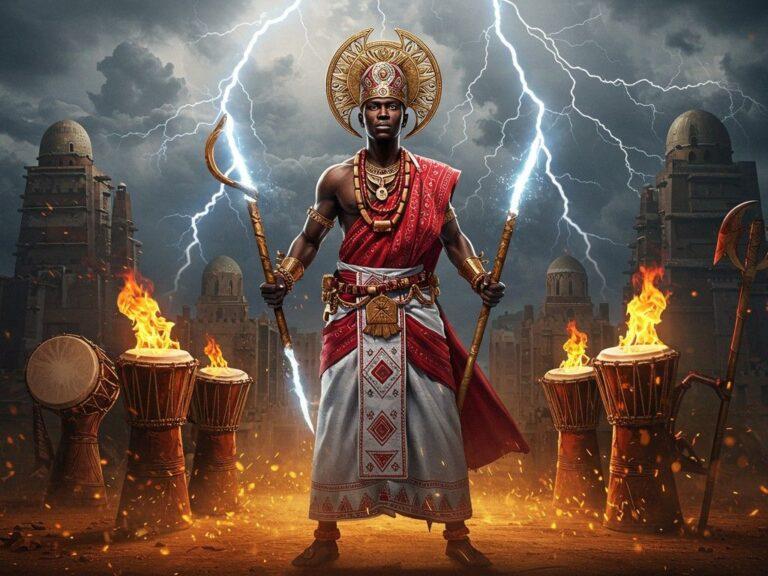
Among the most powerful and celebrated figures in Yoruba history and spirituality, few names command as much respect and fascination as Ṣàngó. Known as the god of thunder and lightning in Yoruba religion, Ṣàngó is also remembered in oral tradition as a historical ruler who once sat on the throne of the ancient Oyo Kingdom.
His story exists at the intersection of history, mythology, kingship, and spirituality. To some, Ṣàngó was a mighty Alaafin whose extraordinary power and fiery personality shaped the early Oyo Empire. To others, he became a divine force whose presence still lives through thunder, lightning, dance, drums, and sacred worship across the world.
Centuries after his reign, Ṣàngó remains one of the most influential and recognizable figures in Yoruba culture, with followers not only in Nigeria but also across Brazil, Cuba, Trinidad, Haiti, and the wider African diaspora.
Who Was Ṣàngó?
According to Yoruba oral tradition, Ṣàngó was the fourth Alaafin of Oyo, one of the most powerful kingdoms in pre-colonial West Africa. He is believed to have ruled during the early formative years of the Oyo Kingdom and was known for his bravery, military strength, charisma, and command over mystical powers.
Historical traditions describe him as a strong and feared ruler who expanded Oyo’s influence and commanded deep loyalty from his followers. However, he was also remembered for his temper and unpredictable nature.
Over time, stories surrounding his reign blended historical memory with spiritual mythology, eventually transforming him into one of the most important deities in Yoruba religion.
Ṣàngó as the God of Thunder and Lightning
In Yoruba spirituality, Ṣàngó became associated with thunder, lightning, fire, justice, masculinity, dance, and power.
He is believed to control:
Thunderstorms
Lightning strikes
Fire from the heavens
Divine punishment
Justice against liars and wrongdoers
Followers believe that lightning can represent Ṣàngó’s anger or spiritual presence. In traditional belief systems, objects struck by lightning are often treated with spiritual significance.
Ṣàngó is also connected with the double-headed axe, one of his most recognizable symbols. The axe represents balance, strength, authority, and divine justice.
The Story of Ṣàngó’s Powers
Many legends describe Ṣàngó as possessing extraordinary supernatural abilities. Oral traditions claim he could summon fire through incantations and command lightning from the sky.
One famous story tells of an accidental destruction caused by mystical fire linked to his powers. According to tradition, this tragedy contributed to political unrest and emotional turmoil during his reign.
Some accounts state that Ṣàngó later disappeared mysteriously or took his own life after losing support among his people. However, his followers refused to believe he had died and instead declared:
“Káwọ́ Kabíyèsí.”
Meaning: “The king did not hang.”
This phrase became part of Ṣàngó’s enduring mythology and spiritual identity.
Over time, he was deified and worshipped as an orisha rather than remembered only as a human ruler.
Ṣàngó Worship in Yoruba Religion
Ṣàngó is one of the most widely worshipped orishas in Yoruba spirituality.
Devotees honor him through:
Sacred drumming
Dance ceremonies
Offerings
Chants and praise poetry
Festivals
Spiritual initiation rites
Red and white are commonly associated with Ṣàngó, symbolizing fire, power, and spiritual balance.
His worship is energetic and dramatic, often involving powerful drum rhythms and intense dancing that reflect his fiery personality.
The Bata Drum and Ṣàngó
Music plays a central role in Ṣàngó worship, especially through the use of the bata drum.
The bata drum is sacred in Yoruba culture and closely associated with Ṣàngó ceremonies. Skilled drummers use rhythmic patterns to communicate praise, spiritual energy, and ceremonial messages.
The intensity of bata drumming reflects the strength and authority connected to Ṣàngó’s character.
In many traditional festivals, drumming and dance create a spiritual atmosphere believed to invite the presence of the deity.
Ṣàngó in the African Diaspora
Through the trans Atlantic slave trade, Yoruba spirituality spread across the Americas and Caribbean. Ṣàngó became one of the most important African spiritual figures preserved in diaspora traditions.
Today, he is worshipped in:
Candomblé in Brazil
Santería in Cuba
Trinidadian Orisha traditions
Other Afro Atlantic spiritual systems
In Cuba, Ṣàngó is especially popular and often associated with strength, masculinity, drumming, and kingship.
Despite centuries of displacement and colonial oppression, devotion to Ṣàngó survived and evolved across continents.
Ṣàngó and Justice
Beyond thunder and fire, Ṣàngó is strongly associated with justice and truth.
Traditional belief teaches that:
Liars fear Ṣàngó
Oath breakers risk divine punishment
Truth and courage are protected by his power
Because of this, Ṣàngó symbolizes moral authority and accountability in Yoruba spirituality.
His mythology often reminds people that power must be balanced with wisdom and responsibility.
Ṣàngó in Modern Culture
Ṣàngó remains highly influential in modern African and global culture.
His image appears in:
Literature
Films
Music
Visual art
Stage performances
Fashion and cultural festivals
Nigerian musicians, writers, and artists frequently reference Ṣàngó as a symbol of strength, rebellion, pride, and African identity.
His legacy also continues through annual festivals in parts of Yorubaland where worshippers celebrate his power with elaborate ceremonies and public gatherings.
Historical and Spiritual Significance
The story of Ṣàngó is important because it reflects how history and spirituality often merge in African traditions.
He represents:
Ancient Yoruba kingship
Military power
Spiritual transformation
Divine justice
Cultural continuity
Whether viewed as a historical ruler, a spiritual force, or both, Ṣàngó remains one of the most enduring symbols of Yoruba civilization.
The Legacy of Ṣàngó
Centuries after the rise of the Oyo Kingdom, Ṣàngó’s influence remains alive across generations.
His name continues to inspire:
Strength
Fearlessness
Leadership
Spiritual devotion
Cultural pride
For many Yoruba people and members of the African diaspora, Ṣàngó is not simply a mythological figure. He is a living spiritual presence and a reminder of ancestral power and resilience.
Conclusion
Ṣàngó stands as one of the greatest figures in Yoruba history and spirituality. As the legendary fourth Alaafin of Oyo and the revered god of thunder and lightning, he embodies power, mystery, leadership, and divine authority.
From the royal courts of ancient Oyo to modern spiritual communities across the world, his influence continues to shape culture, religion, music, and identity.
His story reminds us that African civilizations possessed rich spiritual traditions, powerful rulers, and complex philosophies long before colonial influence. Today, Ṣàngó remains a timeless symbol of strength, justice, and the enduring spirit of Yoruba heritage.