Introduction
Among the many legacies of the Yoruba people across the Atlantic, few are as enduring as the religion commonly known as Santería. Practised by hundreds of thousands of people in Cuba and by millions more across the Caribbean, North America, Latin America, and Europe, Santería is one of the clearest examples of how a people's spiritual heritage survived one of history's greatest tragedies.
Its origins lie in the forced migration of Yoruba-speaking Africans during the transatlantic slave trade. Torn from their homeland and transported to colonial Cuba, these men and women preserved their beliefs under extremely difficult circumstances. They adapted to a new environment, safeguarded their sacred traditions, and passed them to future generations.
Today, Santería remains deeply connected to Yoruba spirituality, preserving many of its beliefs, rituals, sacred songs, and reverence for the Òrìṣà, even after centuries of change.
The Arrival of the Yoruba in Cuba
Large numbers of Yoruba-speaking Africans arrived in Cuba during the late eighteenth and nineteenth centuries, particularly as the island's sugar economy expanded.
Many came from present-day southwestern Nigeria, parts of Benin, and neighbouring regions following conflicts associated with the decline of the Old Oyo Empire and the Yoruba civil wars.
Although enslaved Africans in Cuba represented many ethnic groups, the Yoruba became especially influential because they arrived in significant numbers and maintained strong cultural networks.
In colonial Cuba, Yoruba people became widely known as the Lucumí, a name derived from a greeting or expression used among Yoruba speakers. Over time, this name came to refer both to the people and to their religious tradition.
What Is Santería?
The religion commonly called Santería is more accurately known by many practitioners as Regla de Ocha or the Lucumí religion.
It is an Afro-Cuban religion rooted primarily in Yoruba spiritual traditions while also reflecting the historical circumstances of colonial Cuba.
Like traditional Yoruba religion, it recognises:
* A Supreme Creator. * The Òrìṣà as divine intermediaries. * Ancestor reverence. * Ritual offerings. * Sacred music and dance. * Divination. * Initiation into religious life.
Although the religion has evolved over centuries, its Yoruba foundations remain unmistakable.
Olódùmarè and the Òrìṣà
As in traditional Yoruba belief, Santería recognises Olódùmarè as the Supreme Being and ultimate source of creation.
Most rituals, however, focus on the Òrìṣà, who act as intermediaries between humanity and the Creator.
Many Yoruba Òrìṣà remain central to Santería, though their names are often adapted to Spanish pronunciation:
* Obatalá represents wisdom, peace, and creation. * Changó represents thunder, justice, courage, and kingship. * Ochún represents rivers, beauty, love, and prosperity. * Yemayá represents motherhood and the sea. * Ogún represents iron, work, protection, and technology. * Eleguá guards crossroads, beginnings, and communication.
Despite linguistic differences, these figures remain closely connected to their Yoruba origins.
Why the Name "Santería"?
The term Santería, meaning "the way of the saints", was originally used by outsiders, often in a dismissive way, because practitioners appeared to venerate Catholic saints.
This association developed during Spanish colonial rule when African religions faced restrictions.
To continue practising their faith, many Yoruba descendants associated certain Òrìṣà with Roman Catholic saints. This allowed traditional worship to continue under the appearance of Catholic devotion.
Examples include:
* Changó with Saint Barbara. * Ochún with Our Lady of Charity, Cuba's patron saint. * Yemayá with Marian figures associated with motherhood and protection. * Obatalá with Our Lady of Mercy in many traditions.
Today, many practitioners emphasise that the Òrìṣà and the Catholic saints are distinct spiritual figures, even where historical associations remain.
Music, Drumming, and Sacred Language
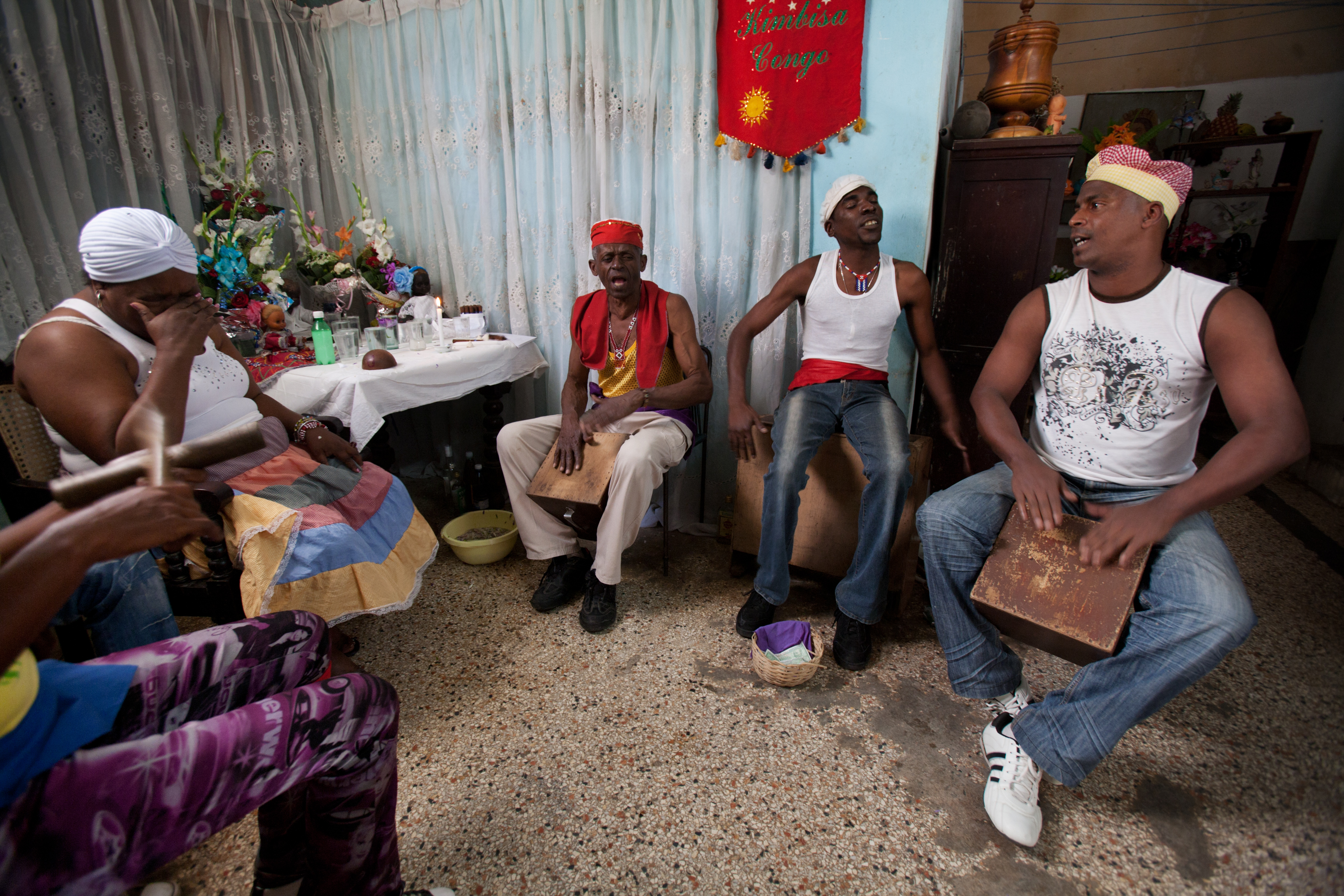
Music lies at the heart of Santería worship.
Ceremonies often feature the sacred Batá drums, whose rhythms accompany prayers, dances, and invocations.
Songs are frequently sung in Lucumí, a liturgical language derived largely from Yoruba.
Although everyday conversation is conducted in Spanish, many ritual chants preserve Yoruba vocabulary, pronunciation, and religious concepts that have survived for generations.
This remarkable continuity demonstrates the resilience of oral tradition.
Divination and Spiritual Guidance
Divination remains an essential aspect of spiritual life.
Some religious communities preserve Ifá divination through priests known as Babaláwo, continuing a tradition that originated in Yorubaland.
Others use sacred cowrie shells in systems of divination associated with particular Òrìṣà.
These practices seek guidance on matters such as:
* Health. * Family. * Livelihood. * Community responsibilities. * Personal decisions.
As in Yoruba tradition, divination is understood as a means of seeking wisdom rather than predicting an unchangeable future.
The Role of Community
Santería places great importance on community.
Religious families, often centred around experienced priests and priestesses, provide:
* Spiritual guidance. * Moral instruction. * Ritual education. * Social support. * Cultural continuity.
Knowledge is passed from one generation to the next through apprenticeship, observation, and participation in ceremonies.
This method of learning closely resembles traditional Yoruba patterns of religious education.
Santería Beyond Cuba
Following waves of Cuban migration during the twentieth century, Santería spread far beyond the island.
Today, thriving communities exist in:
* The United States. * Mexico. * Puerto Rico. * Venezuela. * Spain. * Canada. * Other parts of Latin America and Europe.
Many practitioners maintain strong cultural and spiritual connections with both Cuba and Yorubaland.
International conferences, cultural exchanges, and scholarly research continue to strengthen these relationships.
Yoruba Heritage Preserved Across the Atlantic
In recent decades, exchanges between Cuba and Nigeria have deepened.
Priests, musicians, linguists, historians, and cultural practitioners travel between the two regions to study shared traditions, compare rituals, and preserve historical knowledge.
These exchanges have highlighted the remarkable degree to which Yoruba beliefs have endured despite centuries of separation.
They also reinforce the understanding that Santería is part of a much broader Yoruba cultural legacy extending across the Atlantic.
Conclusion
Santería is one of the most enduring expressions of Yoruba civilisation outside Africa. Born during one of history's darkest periods, it transformed the pain of forced migration into a lasting spiritual tradition that continues to inspire millions of people.
Although shaped by Cuban history and influenced by centuries of cultural interaction, Santería preserves essential elements of Yoruba religion, including belief in Olódùmarè, devotion to the Òrìṣà, sacred drumming, divination, oral tradition, and communal worship.
Its continued vitality is a testament to the resilience of the Yoruba people and the enduring power of culture. Across oceans and generations, the voices of the ancestors continue to resonate in the songs, prayers, rhythms, and ceremonies of Santería, ensuring that the spiritual heritage of Yorubaland remains alive far beyond the shores of West Africa.