Introduction
Among the Yoruba people, music has always been more than entertainment. It is language, history, spirituality, and communication woven into rhythm and sound. Few cultural symbols represent this more powerfully than the talking drum, an instrument capable of imitating human speech through tone and rhythm.
For centuries, talking drums have carried messages across communities, praised kings and heroes, accompanied ceremonies, and preserved oral traditions. In Yoruba culture, the drum does not merely make sound. It speaks.
This remarkable musical tradition reflects the sophistication of Yoruba communication systems and the deep relationship between language and art.
The Yoruba Language and Tonal Speech
The ability of the talking drum to “speak” comes from the tonal nature of the Yoruba language. Yoruba words often change meaning depending on pitch and tone.
A single word pronounced with different tones can carry entirely different meanings. Because of this, skilled drummers learned to reproduce speech patterns by adjusting drum pitch and rhythm.
The result is an instrument capable of communicating phrases, greetings, praise poetry, and announcements in ways listeners can understand.
The Dùndún: The Famous Talking Drum
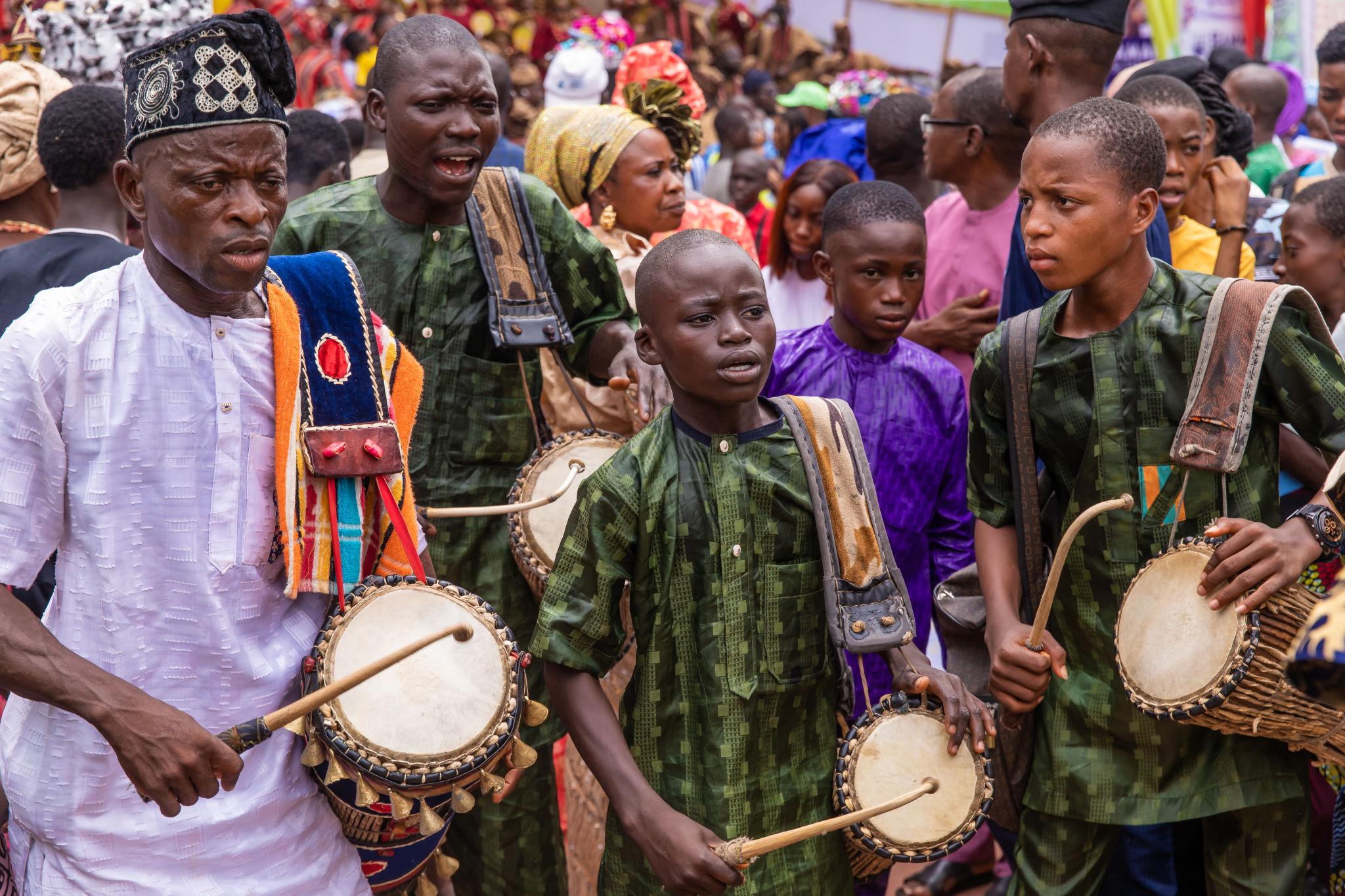
The most famous Yoruba talking drum is the Dùndún, an hourglass shaped drum with leather cords connecting both drumheads.
The drummer places the instrument under the arm and squeezes the cords while striking the drum with a curved stick. By tightening or loosening the cords, the pitch changes, allowing the drummer to imitate the tones of spoken Yoruba.
Master drummers spend years learning this art, developing the ability to communicate detailed expressions through rhythm and sound.
Communication Across Communities
Before modern communication technology, talking drums played practical roles in Yoruba society. Drummers could send messages across distances, announcing:
* Important meetings * Ceremonies and festivals * The arrival of visitors * Warnings and emergencies * Royal proclamations
In some communities, drums served as public broadcasters, spreading information quickly and effectively.
Because the messages often relied on poetic phrases and tonal accuracy, understanding them required cultural familiarity and attentive listening.
Praise Poetry and Royal Courts
Talking drums became especially important in royal courts and ceremonial spaces. Drummers performed praise poetry known as oríkì, celebrating the achievements, ancestry, and character of kings, chiefs, families, and individuals.
A skilled drummer could recite a person’s lineage and accomplishments entirely through drum language, creating performances that were both musical and deeply personal.
In Yoruba palaces, drummers often held respected positions because they preserved historical memory and reinforced social identity.
Spiritual and Ceremonial Importance
Drums also hold spiritual significance in Yoruba culture. Different rhythms are associated with particular ceremonies, festivals, and orishas.
In religious gatherings, drumming creates an atmosphere of connection between the physical and spiritual worlds. The rhythms guide dancers, support chants, and help sustain communal energy during worship and celebration.
The drum therefore becomes more than an instrument. It becomes a sacred voice within cultural and spiritual life.
The Bata Drum Tradition
Another important Yoruba drum tradition is the Bàtá ensemble. Bata drums are double headed drums known for their energetic rhythms and spiritual associations, especially in worship connected to Shango.
Bata drumming combines technical precision with deep cultural symbolism. The rhythms communicate emotion, ritual meaning, and social identity, influencing musical traditions far beyond Yorubaland.
Global Influence of Yoruba Drumming
Yoruba drumming traditions have traveled across the world through migration and the African diaspora. Elements of Yoruba rhythm and percussion can be found in musical traditions in Cuba, Brazil, the Caribbean, and modern global music.
Contemporary Nigerian genres, including Afrobeat and fusion music, continue to draw inspiration from talking drum techniques and rhythms. Artists frequently incorporate these sounds to connect modern creativity with cultural heritage.
The talking drum has therefore become both a traditional instrument and a global symbol of African musical innovation.
Preserving the Tradition
Today, cultural organizations, musicians, and traditional masters continue to preserve the art of talking drums through festivals, performances, and education.
Young drummers are being trained to understand not only rhythm but also the language, poetry, and cultural knowledge connected to the instrument.
This preservation is important because the talking drum represents more than music. It represents memory, identity, and one of the most unique communication systems in human history.
Conclusion
The Yoruba talking drum is one of Africa’s most extraordinary cultural achievements. Through rhythm and tone, it transforms music into language and communication into art.
For centuries, it has carried messages, honored leaders, preserved history, and connected communities through sound. Its voice continues to echo across ceremonies, festivals, and modern music around the world.
In every beat of the talking drum lives the spirit of Yoruba creativity, intelligence, and cultural continuity.