Introduction
The Akoko people occupy a unique and often underexplored place within the cultural landscape of southwestern Nigeria. Found mainly in the northern part of Ondo State, with extensions into neighbouring Ekiti State and parts of Kogi borderlands, the Akoko are known for their hilltop settlements, agricultural resilience, and rich blend of cultural influences.
Unlike some Yoruba subgroups with strongly centralised kingdoms, Akoko communities developed as a collection of semi-independent towns and villages, each with its own traditions, yet connected through shared language patterns, ancestry narratives, and cultural practices.
Their heritage reflects both adaptation to geography and centuries of interaction with neighbouring Yoruba and non-Yoruba peoples.
Geography and Early Settlement
The Akoko region is characterised by its hilly and rocky terrain, which significantly shaped the development of its settlements.
Early inhabitants settled on elevated grounds for several reasons:
* Defence against external attacks * Fertile valleys for farming * Access to fresh water sources * Natural isolation for community autonomy
These geographical conditions encouraged the growth of independent communities rather than large centralised kingdoms.
As a result, Akoko land became a mosaic of distinct but culturally related towns.
Origins and Identity
The origins of the Akoko people are shaped by multiple historical narratives.
Many Akoko communities identify broadly with the Yoruba cultural sphere and trace ancestral links to migrations from Ile-Ife, regarded as the spiritual cradle of Yoruba civilisation.
At the same time, oral traditions suggest a mixture of influences, including:
* Early Yoruba settlers * Indigenous hill communities * Interactions with neighbouring ethnic groups
This blending of origins contributed to a diverse but interconnected identity.
Unlike highly centralised kingdoms, Akoko identity is often expressed at the town level rather than through a single overarching monarchy.
Political Structure and Leadership
Akoko society is organised into numerous independent towns, each governed by its own traditional ruler.
These rulers are known by different titles depending on the community, but they all function as custodians of tradition and local governance.
Key features of Akoko political structure include:
* Decentralised leadership * Strong role of elders and councils * Town-based autonomy * Communal decision-making systems
Rather than a single empire, Akoko represents a federation of culturally related communities.
This system allowed flexibility and resilience, especially in a region shaped by varying historical pressures.
Language and Cultural Expression
The Akoko people generally speak dialects closely related to Yoruba, although variations exist across towns due to historical isolation and external influences.
Language is preserved through:
* Oral storytelling traditions * Proverbs and idiomatic expressions * Family teachings * Community gatherings
These dialects reflect both Yoruba roots and local evolution shaped by geography and contact with neighbouring groups.
Despite variation, mutual intelligibility with broader Yoruba remains strong in many areas.
Economy and Livelihood
The economy of Akoko communities is primarily based on agriculture.
Common activities include:
* Yam and cassava farming * Maize cultivation * Palm produce harvesting * Small-scale animal husbandry * Local trade and crafts
The hilly terrain has encouraged subsistence farming, while fertile valleys support more intensive cultivation.
Markets serve as important social and economic centres where goods are exchanged and community ties are strengthened.
Religion and Spiritual Life
Like many Yoruba-related communities, Akoko spiritual life reflects a blend of traditions and religions.
Historically, belief systems included:
* Òrìṣà worship * Ancestor reverence * Sacred groves and shrines * Ifá divination practices
Over time, Christianity and Islam became widely adopted, often coexisting with older cultural traditions.
This layered religious landscape reflects the broader dynamics of Yoruba spiritual evolution.
Festivals and Cultural Identity
Festivals remain a vital expression of Akoko identity.
They serve to:
* Honour ancestors * Celebrate harvests * Strengthen community unity * Preserve oral traditions
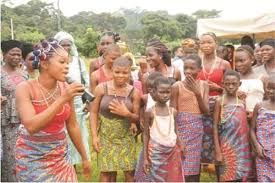
Cultural events often include drumming, masquerade performances, dance, and storytelling.
These festivals vary across towns, reflecting the diversity within Akoko land itself.
Akoko in Regional History
Akoko communities have historically interacted with larger Yoruba political entities such as the Oyo Empire, as well as neighbouring Ekiti and Ondo groups.
Due to their location on forested highlands and frontier zones, Akoko towns often played roles as:
* Buffer communities between regions * Trade link points * Strategic settlement zones
While not forming a large centralised empire, Akoko land contributed to regional stability and cultural exchange.
Modern Development and Identity
Today, Akoko communities are undergoing significant transformation.
Many residents are engaged in:
* Education and academia * Civil service and administration * Entrepreneurship and trade * Migration to urban centres in Nigeria and abroad
Despite modernisation, cultural identity remains strong, especially through festivals, family structures, and traditional institutions.
There is also growing interest in documenting and preserving Akoko history for future generations.
Conclusion
The Akoko people represent a rich and diverse cultural heritage shaped by geography, history, and adaptation.
Unlike centralised kingdoms, their identity is built on a network of independent communities connected by language, tradition, and shared experience.
From their hilltop settlements in present-day Ondo State to their cultural influence across southwestern Nigeria, the Akoko demonstrate how human societies can thrive through decentralisation, resilience, and cultural continuity.
Their story is not defined by empire or conquest, but by endurance, community, and the quiet strength of tradition preserved across generations.