Introduction
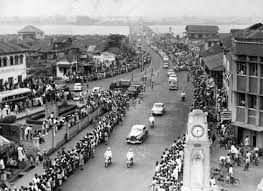
The story of Lagos is often told as a story of a global megacity, a place of finance, music, migration, and constant motion. But long before skyscrapers and highways, Lagos began as a network of small settlements built around water, fishing, farming, and trade.
At the heart of this earliest chapter are the Awori people, widely recognised as some of the earliest Yoruba settlers in the Lagos region.
Their history connects deeply with the broader Yoruba civilisation, especially traditions linked to Ile-Ife, and their migration helped shape what would eventually become one of Africa’s most important cities: Lagos.
To understand Lagos fully, you must first understand the Awori.
Who Are the Awori People
The Awori are a Yoruba subgroup primarily found in present day Ogun State and parts of Lagos State in southwestern Nigeria.
They are especially concentrated in towns such as:
* Ota * Ado Odo * Igbesa * Ishashi * Ikorodu outskirts and Lagos lagoon communities
Awori identity is strongly tied to water, land, and settlement along the lagoon and river systems that connect inland Yorubaland to the Atlantic coast.
They are known for:
* Fishing and farming traditions * Early settlement of lagoon areas * Strong cultural preservation * Deep-rooted Yoruba linguistic heritage
Migration from Ile Ife and Early Settlement
According to Yoruba oral tradition, the Awori trace their ancestral journey back to Ile-Ife, regarded as the spiritual origin of the Yoruba world.
It is believed that groups of migrants moved southward from Ife in search of fertile land, safety, and new opportunities. These journeys followed natural waterways such as rivers and creeks, eventually leading them into the lagoon region.
One of the most important traditions links Awori migration to early settlers who travelled through forest paths and water routes until they reached the coastal plains that would later become Lagos.
Over time, these settlers established communities that formed the foundation of Awori land.
The Awori and the Early Lagos Settlements
Before Lagos became a colonial port city, it was known as Eko, a settlement made up of small communities living along the lagoon.
Awori communities played a central role in this early formation.
These settlements were characterised by:
* Fishing villages along the lagoon * Farming communities on nearby plains * Canoe transport networks * Small trading posts
The geography of water shaped everything. Movement between communities happened by canoe, and trade flowed through waterways connecting inland Yoruba towns to the coast.
This early network laid the foundation for what later became Lagos Island and its surrounding regions.
Relationship with Other Yoruba Groups
The Awori did not exist in isolation.
They interacted with neighbouring Yoruba subgroups such as:
* Egba * Oyo * Ijebu * Ekiti
They also had contact with neighbouring non Yoruba groups, especially through coastal trade networks.
These interactions shaped Awori society in important ways:
* Cultural exchange * Trade partnerships * Political alliances * Intermarriage
Despite external influences, the Awori maintained a strong Yoruba identity grounded in language and tradition.
Awori Influence on the Formation of Lagos
As Lagos evolved from a cluster of settlements into a more structured kingdom, Awori communities remained deeply embedded in its development.
The early political structure of Lagos was influenced by a combination of:
* Indigenous Awori settlers * Migrants from Benin Kingdom influence period * Later political developments under local rulers
Over time, the monarchy of Lagos emerged, and the title of the Oba of Lagos became central to the city’s identity.
However, Awori heritage remained foundational, especially in surrounding areas and older settlement zones.
Many historians recognise that without Awori settlement patterns, Lagos would not have developed the way it did.
Language and Cultural Identity
The Awori speak a dialect of Yoruba that is closely related to other southwestern Yoruba varieties, but with distinct local expressions shaped by geography and contact with other groups.
Cultural identity is preserved through:
* Oral traditions * Proverbs and storytelling * Naming ceremonies * Family lineage systems * Festivals and community gatherings
Despite urbanisation, many Awori communities continue to maintain strong ties to their language and heritage.
Religion and Traditional Beliefs
The spiritual life of the Awori reflects the broader Yoruba religious worldview.
Historically, belief systems included:
* Òrìṣà worship * Ancestor reverence * Ifá divination * Sacred groves and water spirit traditions
With time, Christianity and Islam became widely practiced, especially in urban Lagos and surrounding areas.
Today, many Awori families navigate a blend of spiritual traditions and modern religious identities.
Economy and Early Trade Networks
The Awori economy was historically shaped by their environment.
Key activities included:
* Fishing in lagoons and rivers * Farming in fertile plains * Palm oil production * Canoe-based transport * Local and regional trade
Their position along waterways made them important participants in regional commerce long before Lagos became a global trade hub.
These early economic systems later influenced the commercial character of modern Lagos.
Modern Awori Identity
Today, Awori people live in both rural and urban environments.
Many are found in:
* Lagos metropolitan areas * Ogun State communities * Diaspora communities across Nigeria and abroad
Modern Awori identity is shaped by:
* Education and professional life * Urbanisation and migration * Cultural preservation efforts * Continued respect for traditional institutions
Despite rapid urban growth, many Awori communities still recognise and honour their ancestral heritage.
Conclusion
The story of the Awori people is inseparable from the story of Lagos itself.
From early migration traditions linked to Ile Ife, to the establishment of fishing and farming settlements along the lagoon, the Awori laid the groundwork for one of the most influential cities in Africa.
Lagos did not emerge in isolation. It grew from generations of settlement, interaction, and adaptation, with the Awori playing a central role in its earliest formation.
Today, as Lagos continues to expand into a global megacity, the Awori heritage remains an important reminder of the city’s roots in water, community, and Yoruba civilisation.
Their story is not just about origins.
It is about continuity.
It is about how ancient settlements evolve into modern cities without losing the memory of where they began.