Introduction
The histories of the Benin Kingdom and the Yoruba world are deeply intertwined, shaped by migration, shared traditions, and centuries of cultural exchange. Far from existing in isolation, these societies influenced one another in governance, art, spirituality, and identity.
Understanding this connection offers a richer view of West African history, revealing how neighboring civilizations built relationships that still echo today.
Origins and Early Links
At the heart of Yoruba origin narratives lies Ile-Ife, often regarded as the cradle of Yoruba civilization. It is here that traditions speak of divine kingship, sacred authority, and the emergence of early political systems.
According to both Yoruba and Edo oral histories, a significant connection between Ife and Benin emerged through the figure of Oranmiyan, a prince of Ife and descendant of Oduduwa.
Tradition holds that Oranmiyan was sent to Benin during a period of political instability. Though his time there was brief, he played a key role in establishing a new royal lineage. His son, Eweka I, is often regarded as the first Oba of Benin in its dynastic form.
This moment is widely seen as a bridge between Yoruba and Benin political history.
Kingship and Political Structure
Both societies developed sophisticated systems of governance centered on sacred kingship.
In Benin, the ruler is known as the Oba, a figure of immense spiritual and political authority. Similarly, in Yoruba land, the Oba serves as both a political leader and a custodian of culture and tradition.
While each system evolved uniquely, the idea of a divine or semi divine ruler connects them. Rituals, court structures, and the use of chiefs and councils reflect parallels that suggest shared influences and mutual adaptation over time.
Even today, the reverence for kingship in both cultures highlights a common philosophical foundation.
Art, Symbolism, and Cultural Expression
One of the most striking connections between Benin and Yoruba civilization can be seen in their artistic achievements.
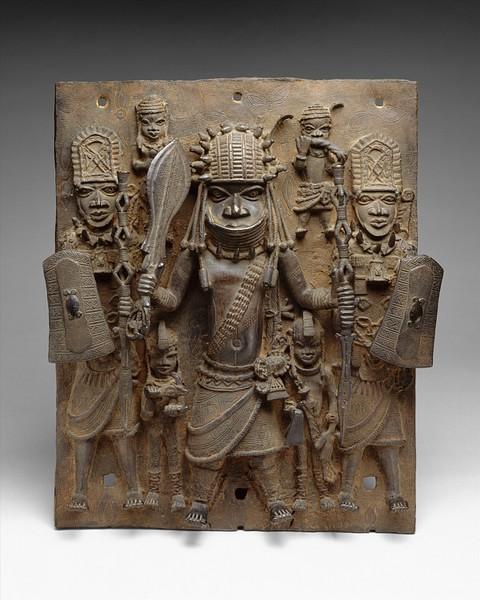
The Benin Bronzes are globally renowned for their craftsmanship, detail, and historical significance. These works often depict court life, rituals, and the authority of the Oba.
Similarly, Ife is famous for its naturalistic terracotta and bronze sculptures, which demonstrate a high level of technical sophistication and aesthetic realism.
Some scholars have suggested that artistic knowledge and techniques may have traveled between these regions, particularly during periods of political contact. While each tradition is distinct, their excellence points to a shared environment of innovation and cultural pride.
Language, Religion, and Shared Beliefs
Although the Yoruba and Edo languages belong to different linguistic groups, cultural exchange has led to overlapping ideas and practices.
Both societies traditionally practiced systems of belief that emphasized:
* Ancestor veneration * Spiritual intermediaries * Rituals for balance and protection
In Yoruba religion, devotion to oriṣa such as Ogun, Sango, and others plays a central role. In Benin, spiritual systems also involve deities, ancestors, and ritual specialists who maintain harmony between the physical and spiritual worlds.
These shared worldviews highlight a broader West African philosophy centered on balance, respect, and interconnectedness.
Trade, Interaction, and Influence
Geographical proximity encouraged interaction between the Benin Kingdom and Yoruba territories. Trade routes facilitated the movement of goods such as ivory, pepper, textiles, and art.
But beyond material exchange, ideas also traveled. Political structures, artistic techniques, and cultural practices were shared, adapted, and transformed over time.
These interactions helped shape both societies, contributing to their growth and resilience.
Colonial Encounters and Historical Disruption
The arrival of European colonial powers disrupted these long standing systems.
The Benin Expedition of 1897 led to the destruction of Benin City and the looting of thousands of artworks, many of which remain in foreign museums today.
Yoruba regions also experienced colonial restructuring, altering traditional governance and social systems.
Despite these disruptions, both cultures have preserved their heritage, adapting to modern realities while maintaining strong ties to their past.
Legacy and Contemporary Relevance
Today, the connections between the Benin Kingdom and Yoruba civilization remain a subject of cultural pride and scholarly interest.
Festivals, museums, and academic research continue to explore these shared histories. In cities like Benin City and Ile Ife, traditions are preserved and celebrated, keeping the legacy alive for future generations.
These links remind us that African civilizations have long histories of interaction, complexity, and achievement that deserve recognition and respect.
Conclusion
The story of the Benin Kingdom and Yoruba connections is not one of separation, but of relationship. It is a story shaped by migration, leadership, creativity, and exchange.
From the legacy of Oranmiyan to the artistic brilliance of both cultures, these histories reveal a shared past that continues to influence the present.
In understanding this connection, we gain more than historical knowledge. We gain insight into the strength, unity, and richness of West African heritage.