Introduction
In Yoruba thought, few ideas are as powerful and far-reaching as Àṣẹ (Aṣẹ).
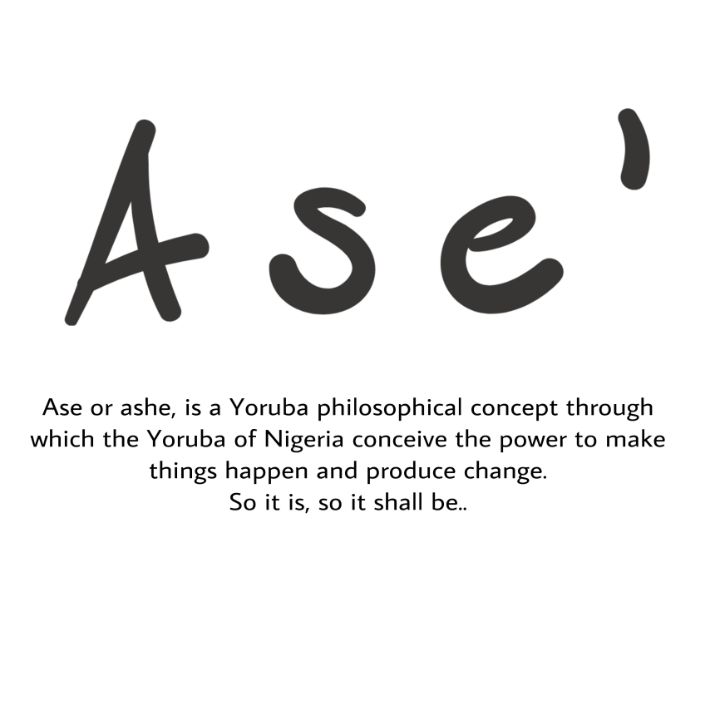
It is not simply a word, and it is not easily translated into a single English concept. Àṣẹ refers to the sacred power to make things happen, the force of manifestation, authority, command, and divine flow that moves through the universe.
To speak of Àṣẹ is to speak about how reality itself responds to intention, speech, action, and spiritual alignment.
It is the energy behind words, the authority behind kingship, the power behind prayer, and the force that allows life to unfold.
In short, Àṣẹ is the “life force of existence in motion.”
What Exactly Is Àṣẹ?
Àṣẹ is often described as:
* The power to make things happen * The authority behind spoken words * The energy of divine command * The force of creation and transformation
In Yoruba worldview, nothing happens by accident alone. Events unfold because Àṣẹ has been activated through speech, intention, destiny, or divine will.
When someone says “Àṣẹ” at the end of a prayer, it is not a casual response. It is a declaration that what has been spoken should come into reality.
It means: “So let it be fulfilled.”
Àṣẹ and Olódùmarè
In Yoruba spirituality, the ultimate source of Àṣẹ is Olodumare.
Olódùmarè is understood as the origin of all existence, and Àṣẹ flows from this supreme source into the universe.
From Olódùmarè, Àṣẹ is distributed into:
* The Òrìṣà (divine forces) * Ancestors * Nature * Human beings
This means every being possesses a degree of Àṣẹ, but not equally.
Àṣẹ is therefore both divine inheritance and spiritual responsibility.
Àṣẹ and the Òrìṣà
Each Òrìṣà expresses a particular form of Àṣẹ in the universe.
For example:
* Ṣàngó carries the Àṣẹ of thunder, justice, and authority * Ọ̀ṣun carries the Àṣẹ of fertility, love, and sweetness of life * Ọ̀gún carries the Àṣẹ of iron, labour, and technology * Ọbàtálá carries the Àṣẹ of purity, creation, and ethical order
These are not separate gods competing for power. Instead, they are expressions of different dimensions of Àṣẹ operating in the world.
Through them, divine energy becomes visible in nature and human experience.
Àṣẹ in Speech and Language
One of the most important aspects of Àṣẹ is its connection to speech.
In Yoruba thought, words are not empty sounds. They are active forces.
This is why:
* Blessings are spoken carefully * Curses are believed to carry consequences * Proverbs are respected as wisdom carriers * Prayers are treated as creative acts
When a respected elder or spiritual figure speaks, their words are believed to carry greater Àṣẹ because of experience, spiritual alignment, and moral authority.
Language is therefore not just communication. It is creation in motion.
Àṣẹ and Human Beings
Every human being is believed to possess Àṣẹ.
However, its strength and expression can vary depending on:
* Character (iwa) * Spiritual alignment * Wisdom and life experience * Moral behaviour * Connection to destiny
This means Àṣẹ is not only spiritual—it is also ethical.
A person who lives with integrity, respect, and balance is believed to have clearer, more effective Àṣẹ.
In contrast, actions that disrupt harmony are seen as weakening one’s spiritual flow.
Àṣẹ and Destiny (Ìpín)
In Yoruba philosophy, Àṣẹ is closely connected to destiny (Ìpín).
Before entering the world, it is believed that each person chooses or receives a destiny under divine order.
However, Àṣẹ determines how that destiny unfolds.
This means:
* Destiny provides direction * Àṣẹ provides the power to fulfil it
Through wisdom, discipline, and spiritual awareness, a person can align their Àṣẹ with their destiny and live a fulfilled life.
This is where Orunmila becomes important, as Ifá is consulted to understand destiny and guidance.
Àṣẹ in Ritual and Spiritual Practice
Àṣẹ is actively engaged in rituals, ceremonies, and spiritual practices.
These include:
* Ifá divination sessions * Naming ceremonies * Festivals and communal rites * Blessings and prayers * Ancestral honouring
Rituals are not merely symbolic. They are believed to activate or direct Àṣẹ toward specific outcomes.
This is why timing, words, objects, and ritual precision are important in Yoruba tradition.
Àṣẹ in Nature and the Universe
Àṣẹ is not limited to humans or spirits. It exists throughout nature.
It flows through:
* Rivers and oceans * Wind and air * Trees and forests * Stones and earth * Sunlight and storms
This worldview reflects a deeply interconnected universe where everything carries spiritual significance.
Nature is not separate from divinity. It is one of its most visible expressions.
Àṣẹ in Contemporary Life
Even in modern times, the concept of Àṣẹ continues to influence Yoruba culture.
You hear it in:
* Prayers at home * Church and mosque expressions * Traditional ceremonies * Social media and everyday speech
It has also travelled globally with the Yoruba diaspora, influencing spiritual systems such as Candomblé and Santería in the Americas.
Despite modernisation, Àṣẹ remains a living concept that bridges tradition and contemporary life.
Conclusion
Àṣẹ is more than a philosophical idea. It is a way of understanding reality itself.
It explains how words become action, how intention becomes outcome, and how divine energy flows through all things.
Rooted in Yoruba cosmology and ultimately connected to Olódùmarè, Àṣẹ reflects a worldview where existence is active, interconnected, and deeply meaningful.
To understand Àṣẹ is to understand that life is not passive. It is creative.
Every thought, every word, every action carries power.
And in that sense, Yoruba thought teaches a profound truth:\ human beings are not just observers of reality—they are participants in its continual creation.