Introduction
The origins of the Yoruba people remain one of the most fascinating subjects in African history. While Ile-Ife is widely regarded in Yoruba tradition as the ancestral homeland and spiritual centre of the Yoruba people, archaeological and historical evidence suggests that the region now known as Yorubaland was inhabited by human communities long before Ilé-Ifẹ̀ emerged as a major urban and political centre.
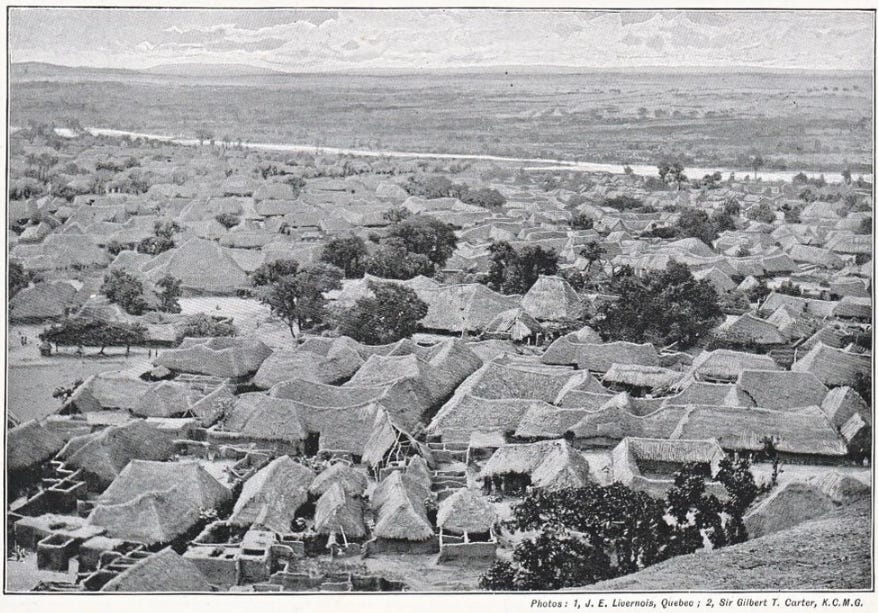
These early settlements consisted of farming villages, iron-working communities, and trading centres that gradually evolved over many centuries. Rather than appearing suddenly, Yoruba civilisation developed through a long process of migration, technological innovation, environmental adaptation, and cultural exchange.
Human Occupation Before Yoruba Kingdoms
Archaeological evidence shows that southwestern Nigeria has been inhabited for thousands of years.
Before organised Yoruba kingdoms emerged, the region was home to communities that:
* Practised hunting and gathering. * Cultivated crops. * Raised livestock. * Produced stone and later iron tools. * Established permanent villages.
These early populations laid the foundations upon which later Yoruba civilisation would develop.
The Transition to Permanent Settlements
As agriculture became more established, communities increasingly settled in permanent locations.
They often chose sites that offered:
* Fertile soil. * Reliable water sources. * Forest resources. * Access to trade routes. * Natural protection.
Over time, these villages expanded, attracting craftsmen, traders, and religious specialists.
Early Iron Technology
One of the most significant developments in the region was the adoption of iron technology.
Iron tools enabled communities to:
* Clear dense forests more efficiently. * Expand agriculture. * Produce stronger farming implements. * Manufacture hunting weapons. * Develop specialised crafts.
The spread of ironworking contributed significantly to population growth and the formation of larger settlements.
Connections with the Nok Culture
Some scholars have explored possible cultural and technological connections between the Nok culture and later societies in southwestern Nigeria.
The Nok culture, which flourished roughly between 1500 BCE and 500 CE, is renowned for its remarkable terracotta sculptures and early ironworking.
However, there is currently no conclusive archaeological evidence proving a direct ancestral relationship between the Nok people and the Yoruba. Most historians therefore treat such links with caution while recognising that technological knowledge may have spread across different regions through interaction and exchange.
Villages Before the Rise of Ilé-Ifẹ̀
Before Ilé-Ifẹ̀ became a major urban centre, numerous smaller communities existed throughout present-day southwestern Nigeria.
These settlements were characterised by:
* Family compounds. * Farming. * Hunting. * Pottery production. * Ironworking. * Local trade. * Religious practices centred on community shrines.
Many gradually expanded into larger towns as populations increased.
The Emergence of Ilé-Ifẹ̀
Between approximately the first and early second millennium CE, Ile-Ife developed into one of West Africa's most influential urban centres.
Archaeological discoveries reveal:
* Planned streets. * Skilled bronze and brass casting. * Terracotta sculpture. * Extensive bead production. * Long-distance trade. * Monumental architecture.
These findings indicate that Ilé-Ifẹ̀ became a sophisticated political, artistic, and religious centre rather than the very first place where people lived in the region.
Oral Tradition and Historical Evidence
Understanding early Yoruba history requires balancing two important sources of knowledge.
Oral traditions preserve cultural memory, royal genealogies, and accounts of origins, including traditions associated with Oduduwa.
Archaeology, meanwhile, provides material evidence through excavations, artefacts, settlement remains, and scientific dating.
These sources answer different kinds of questions and are often considered together to build a fuller picture of Yoruba history.
Trade Before Urban Kingdoms
Even before the rise of large kingdoms, communities exchanged goods across the region.
Items traded included:
* Pottery. * Food crops. * Iron tools. * Salt. * Beads. * Animal products. * Forest resources.
These networks encouraged cooperation, cultural exchange, and the growth of larger settlements.
From Villages to Kingdoms
As populations expanded and political institutions became more organised, many villages evolved into towns and eventually into kingdoms.
This gradual transformation led to the emergence of influential centres such as:
* Ile-Ife * Oyo * Ijebu Ode * Owo
Each developed its own political traditions while sharing many cultural features associated with Yoruba civilisation.
Why This History Matters
Studying the earliest settlements helps us understand that Yoruba civilisation emerged through centuries of gradual development rather than a single historical event.
It also highlights:
* The ingenuity of early farming communities. * The importance of technological innovation. * The growth of trade networks. * The evolution of political organisation. * The richness of Yoruba cultural heritage.
This broader perspective complements, rather than replaces, the traditions that have been preserved through generations.
Conclusion
The earliest settlements of the Yoruba existed long before Ile-Ife rose to prominence as a celebrated centre of kingship, religion, and art. Archaeological evidence points to thousands of years of human occupation in southwestern Nigeria, where farming villages, iron-working communities, and trade networks gradually evolved into increasingly complex societies.
While Yoruba oral tradition honours Ilé-Ifẹ̀ as the ancestral homeland and spiritual heart of the Yoruba people, archaeology shows that the foundations of Yoruba civilisation were laid by earlier communities whose innovations in agriculture, metallurgy, and settlement made the later achievements of Ilé-Ifẹ̀ possible. Together, oral tradition and archaeological research provide a richer and more balanced understanding of the deep and remarkable history of the Yoruba people.