Introduction
When people think about the history of Yoruba writing, they often jump straight to the modern alphabet and the familiar letters ẹ, ọ, ṣ. But Yoruba literacy has a much longer and more complicated story.
Before the standardised Yoruba orthography developed in the nineteenth and twentieth centuries, Yoruba knowledge was transmitted primarily through oral traditions, while written Yoruba gradually emerged through contact with Arabic writing, European missionaries, printing, and linguistic scholarship.
This history is important because modern Yoruba spelling was not created overnight. It was the result of attempts to answer a difficult question:
How do you accurately represent a tonal African language using a writing system originally developed for another language?
Before Writing: The Oral World
For centuries, much of Yoruba knowledge was preserved orally.
History, genealogy, religious knowledge, poetry, proverbs, songs and political traditions could be transmitted through:
* Oríkì — praise poetry. * Òwe — proverbs. * Àlọ́ — folktales. * Ìjálá — hunters' poetry. * Ifá — a large oral literary corpus. * Songs and performance. * Genealogical recitations.
This does not mean Yoruba society lacked sophisticated systems of knowledge. Rather, knowledge was stored primarily in human memory and repeated through performance.
Did Ancient Yoruba Have a Native Writing System?
This is one of the most important questions to approach carefully.
There is no broadly accepted evidence of a pre-colonial indigenous Yoruba writing system comparable to Egyptian hieroglyphs or the later Latin-based Yoruba alphabet.
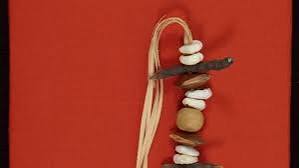
Symbols, marks, objects, patterns, and visual representations existed in Yoruba material culture, but it would be misleading to automatically classify every traditional symbol as a writing system.
A writing system must systematically represent language.
Therefore, claims that ancient Yoruba possessed a fully developed lost alphabet should be treated cautiously unless supported by strong historical and archaeological evidence.
Arabic Writing and Ajami
One important stage in the history of written Yoruba involved Arabic script.
Across West Africa, Arabic literacy became established through Islamic scholarship and networks of trade and religious learning.
Some African languages were subsequently represented using modified Arabic scripts, commonly referred to as Ajami.
Yoruba was among the languages for which Arabic-based writing was used in some contexts, although its development was not as extensive or standardised as Ajami traditions in some other West African languages.
The major challenge was obvious: Arabic script was designed for Arabic phonology, while Yoruba contains sounds and tonal distinctions that require different representations.
The Problem of Representing Yoruba Sounds
Yoruba contains sounds that are not represented conveniently by a basic English alphabet.
Consider:
e and ẹ
o and ọ
s and ṣ
These distinctions are meaningful.
The dots beneath ẹ and ọ, and the mark beneath ṣ, were therefore crucial developments in representing Yoruba accurately.
But sound representation was only part of the challenge.
Yoruba is tonal, meaning pitch can distinguish meaning. A practical writing system therefore also needed a way of representing tone.
Missionaries and the Beginning of Systematic Yoruba Writing
The nineteenth century brought a major transformation.
Christian missionaries began working extensively among Yoruba-speaking communities and developed systems for writing Yoruba using the Roman/Latin alphabet.
One of the most important figures in this process was Samuel Ajayi Crowther, a Yoruba linguist, clergyman, and later the first African Anglican bishop.
Crowther and other missionaries worked to translate Christian texts and produce educational materials in Yoruba.
This created a practical need for a consistent written form of the language.
Samuel Ajayi Crowther and Yoruba Translation
Crowther's work was particularly significant because translation required more than simply replacing English words with Yoruba words.
Translators needed to represent:
* Yoruba vocabulary. * Yoruba grammar. * Yoruba sounds. * Yoruba sentence structure. * Yoruba tonal distinctions.
The publication of Yoruba religious texts helped establish conventions that would influence later Yoruba literacy.
This was a turning point: Yoruba increasingly became a written literary language rather than primarily an oral language.
The Birth of Yoruba Orthographic Conventions
The early Latin-based systems were not identical to today's standard Yoruba orthography.
Different writers and institutions experimented with ways to represent Yoruba sounds.
Over time, conventions emerged for distinguishing sounds such as:
ẹ / e
ọ / o
ṣ / s
and for indicating tones.
This process took decades.
There was no single moment when someone simply "invented the Yoruba alphabet."
Instead, modern orthography emerged through experimentation, education, publishing, linguistic analysis, and standardisation.
Why Tone Marks Became Essential
Yoruba's tonal system presented an especially difficult problem.
The language has three basic tones:
High: á\ Mid: a\ Low: à
Without tone marks, different words can appear identical in writing even when their pronunciation and meaning differ.
For example, a learner reading Yoruba without tone marks may see a sequence of letters and have insufficient information to reproduce the intended pronunciation.
Tone marking therefore became an important feature of formal Yoruba writing.
Early Yoruba Books
Once a workable writing system existed, Yoruba publishing expanded.
Printed materials included:
* Religious texts. * Schoolbooks. * Dictionaries. * Grammars. * Newspapers. * Literary works. * Translations.
The growth of printing was enormously important because it transformed written Yoruba from something produced by a relatively small number of scholars into a medium through which much larger communities could access information.
Newspapers and the Growth of Yoruba Literacy
Newspapers played a particularly important role in the development of Yoruba literacy.
They created spaces for Yoruba to be used for:
* News. * Political discussion. * Public debate. * Religious commentary. * Literature. * Social criticism.
This helped demonstrate that Yoruba was capable of functioning as a language of public intellectual life, not merely as a language spoken at home.
Yoruba Literature Before Standardisation
As literacy expanded, Yoruba writers increasingly produced original literature.
One of the most famous later figures was D. O. Fágúnwà, whose works demonstrated the possibilities of Yoruba as a literary language.
Writers could now use written Yoruba to preserve stories that had previously circulated mainly through oral traditions while also creating entirely new literary works.
This created an important bridge between oral culture and written literature.
Oral Tradition Did Not Disappear
The arrival of writing did not replace oral culture.
Instead, the two systems began interacting.
A traditional story could be:
told → recorded → printed → taught → retold
A proverb could move from an elder's speech into a book.
A praise poem could be documented and studied.
An Ifá verse could be transcribed.
Writing therefore became another method of preserving Yoruba knowledge rather than simply destroying the oral tradition.
The Role of Linguists
Linguists played an increasingly important role in analysing Yoruba.
They studied:
* Phonology. * Grammar. * Vocabulary. * Tone. * Dialect differences. * Word formation. * Sentence structure.
This research helped refine written conventions and eventually contributed to the standard form of Yoruba taught in schools and used in publishing.
Dialects Complicated Standardisation
Yoruba is not completely uniform across all communities.
There are varieties associated with areas such as:
* Ọ̀yọ́. * Ìjẹ̀bú. * Ẹ̀gbá. * Ìjẹ̀ṣà. * Ẹ̀kìtì. * Ondo. * Àkúrẹ́.
Differences can occur in vocabulary, pronunciation, tone patterns, and grammatical usage.
Creating a standard written form therefore involved choosing conventions that could represent a broad Yoruba-speaking community while not perfectly capturing every local variety.
From Experimentation to Modern Orthography
By the twentieth century, Yoruba orthography had become increasingly standardised.
The system familiar today uses the Latin alphabet together with additional characters and diacritics to represent Yoruba sounds and tones.
The modern system includes letters such as:
Ẹ ẹ
Ọ ọ
Ṣ ṣ
alongside tone marks such as:
á
à
while the mid tone is generally unmarked.
This system makes Yoruba considerably more precise in writing than simply using the 26-letter English alphabet.
What Changed With Modern Orthography?
Modern orthography made it much easier to:
* Teach Yoruba in schools. * Produce dictionaries. * Publish books. * Translate literature. * Document oral traditions. * Record names accurately. * Study Yoruba linguistically. * Preserve texts for future generations.
It transformed Yoruba into a language that could operate effectively across both oral and written environments.
The Bigger Story
The history of Yoruba writing is therefore not simply a story about an alphabet.
It is a story about the transition from a predominantly oral knowledge system into a culture where oral and written forms coexist.
The process involved:
Oral traditions → Arabic-script experiments → Latin-based transcription → missionary publications → printing → linguistic study → standardisation → modern Yoruba orthography
Each stage contributed something different.
Conclusion
Before modern Yoruba orthography existed, Yoruba knowledge was preserved primarily through an extraordinarily rich oral tradition of poetry, proverbs, genealogy, storytelling, songs, Ifá, praise poetry, and performance.
Written Yoruba emerged gradually, influenced by broader West African literacy traditions and particularly by the nineteenth-century use of the Latin alphabet by missionaries and African scholars such as Samuel Ajayi Crowther.
The modern Yoruba writing system was ultimately shaped by the need to accurately represent the language's distinctive sounds and tones.
So when we write Yorùbá today, the marks on the page represent more than spelling conventions. They are the result of a long historical journey from memory and performance to manuscripts, printing, literacy, and modern language standardisation.