Introduction
The nineteenth century was one of the most turbulent periods in Yoruba history. What had once been the mighty Ọ̀yọ́ Empire, one of the most powerful states in West Africa, gradually descended into internal crises, political rivalries, and external pressures that would eventually reshape the Yoruba world.
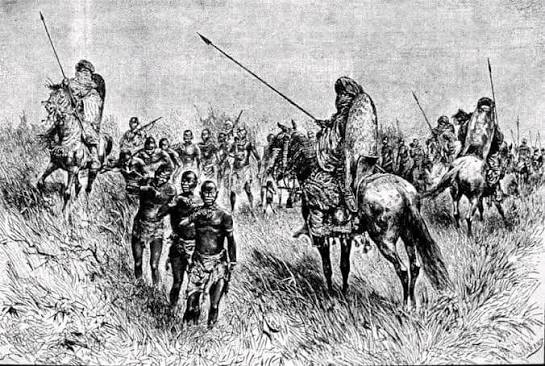
Among the most significant events of this period were the conflicts commonly referred to as the Fulani-Yoruba Wars. These struggles were not simply wars between two ethnic groups. Rather, they involved political rivalries, religious movements, internal divisions within the Ọ̀yọ́ Empire, and the expansion of the Sokoto Caliphate through Ilorin.
The consequences of these conflicts transformed Yorubaland forever. They contributed to the collapse of the Old Ọ̀yọ́ Empire, led to the rise of new Yoruba powers such as Ibadan, and altered the political and social landscape of southwestern Nigeria.
The Decline of the Ọ̀yọ́ Empire
By the late eighteenth century, the Ọ̀yọ́ Empire had begun to weaken.
Several factors contributed to this decline:
* Internal political disputes between the Alaafin and powerful chiefs. * The increasing influence of the Basọ̀run and the Oyo Mesi. * Succession crises. * Economic difficulties. * Attacks from neighbouring groups. * The weakening of central authority.
As the empire weakened, provincial territories became more independent, and internal conflicts increased.
This instability created conditions that outside forces could exploit.
The Rise of Ilorin
One of the most important figures in this story was Afonja, the Aare Ona Kakanfo and military commander stationed in Ilorin.
Afonja eventually rebelled against the authority of the Alaafin. Seeking support, he allied himself with Muslim scholars and warriors, including the Fulani Islamic cleric Shehu Alimi.
This alliance initially strengthened Afonja's position. However, events would soon move beyond his control.
After Afonja's death, the descendants and followers of Shehu Alimi established Fulani political control over Ilorin. The city became aligned with the expanding Sokoto Caliphate.
Ilorin, once a Yoruba frontier town, gradually transformed into an emirate linked politically and religiously with Sokoto.
The Fulani Expansion into Yorubaland
During the early nineteenth century, the Sokoto Caliphate expanded across large parts of northern Nigeria.
Ilorin became an important base for military campaigns into Yoruba territories.
Several towns faced attacks, including:
* Old Ọ̀yọ́ * Ẹgba territories * Ijẹbu regions * Ekiti communities * Ijesaland
These campaigns were motivated by a combination of political ambition, territorial expansion, and the broader Islamic reform movement associated with the Sokoto jihad.
However, it is important to recognise that these wars were not simply ethnic or religious confrontations. Many Yoruba Muslims fought on various sides, and numerous political rivalries existed among Yoruba states themselves.
The Fall of Old Ọ̀yọ́
Repeated attacks and internal instability eventually led to the collapse of Old Ọ̀yọ́.
By the 1830s, the once-powerful capital had been abandoned.
The destruction of the empire triggered widespread migration.
Many Yoruba groups moved southwards, establishing or strengthening settlements that later developed into important cities such as:
* Ibadan * Abeokuta * Ogbomoso * Iwo
These migrations profoundly changed the demographic structure of Yorubaland.
The Rise of Ibadan
Out of the chaos emerged Ibadan.
Initially founded as a war camp, Ibadan gradually developed into a powerful military state.
Its warriors became famous for resisting external threats and protecting much of southern Yorubaland from further expansion.
Military leaders such as:
* Oluyole * Balogun Oderinlo * Basorun Ogunmola * Ibikunle
played major roles in defending Yoruba territories and establishing Ibadan as the dominant power in nineteenth-century Yorubaland.
Decades of Yoruba Civil Wars
The collapse of Old Ọ̀yọ́ did not bring peace.
Instead, decades of internal Yoruba conflicts followed.
Major wars included:
* The Owu War * The Ijaye War * The Ekiti-Parapo War (Kiriji War)
These conflicts weakened Yoruba states economically and politically.
Trade routes were disrupted, communities were displaced, and many people were taken into slavery.
By the late nineteenth century, exhaustion from continuous warfare created conditions that facilitated British colonial intervention.
Religious and Cultural Consequences
The wars contributed to the spread of Islam in parts of Yorubaland.
Ilorin emerged as an important centre of Islamic scholarship and remains so today.
Over time, Yoruba society became increasingly religiously diverse, with:
* Traditional Yoruba religion. * Islam. * Christianity, introduced later through missionaries.
Despite these differences, Yoruba identity largely survived, and religious coexistence became a defining feature of many communities.
Political Consequences
The collapse of the Ọ̀yọ́ Empire ended centuries of imperial unity.
Instead of a single dominant power, Yorubaland became divided among numerous states.
This fragmentation weakened collective resistance to European colonial expansion.
By the 1880s and 1890s, British influence increased steadily, and many Yoruba rulers entered treaties with Britain.
Eventually, the region became incorporated into colonial Nigeria.
Long-Term Legacy
The legacy of the Fulani-Yoruba conflicts can still be seen today.
Ilorin remains a city with both Yoruba and Fulani influences and serves as a major centre of Islamic learning.
Ibadan, which emerged from the chaos of the nineteenth century, grew into one of Africa's largest indigenous cities.
The migrations caused by the collapse of Ọ̀yọ́ helped shape modern settlements across southwestern Nigeria.
Perhaps most importantly, these events demonstrated the resilience of the Yoruba people. Despite the fall of an empire, decades of warfare, and later colonial domination, Yoruba language, traditions, and identity endured.
Conclusion
The Fulani-Yoruba Wars were not simple clashes between two peoples. They were complex struggles shaped by internal divisions, political ambition, religious reform movements, and the decline of imperial authority.
The collapse of the Old Ọ̀yọ́ Empire marked the end of one era and the beginning of another. New cities emerged, old powers disappeared, and Yorubaland was permanently transformed.
Although these wars brought suffering and instability, they also produced new political centres and laid the foundations for many of the societies that exist in southwestern Nigeria today.
Their story serves as a reminder that history is rarely straightforward. The rise and fall of nations are often shaped not only by external enemies but also by internal tensions, alliances, and the choices made by individuals whose actions reverberate across generations.