Introduction
In the cultural landscape of the Yoruba people, few traditions capture the balance between art, spirituality, and social order as powerfully as the Gẹlẹdẹ Masquerade. Recognized by UNESCO as an Intangible Cultural Heritage of Humanity, Gẹlẹdẹ is more than a festival. It is a living expression of respect for women, a performance of communal values, and a spiritual dialogue between the visible and invisible worlds.
Celebrated primarily in southwestern Nigeria and parts of the Republic of Benin, Gẹlẹdẹ remains one of the most visually striking and culturally significant traditions in Yoruba society.
Origins and Meaning of Gẹlẹdẹ
The word Gẹlẹdẹ is often associated with the phrase “Ìyá Nlá,” meaning “Great Mother,” referring to powerful female forces in Yoruba cosmology. These forces are sometimes described as “our mothers” (Àwọn Ìyá Wa), representing both biological mothers and spiritual feminine energy believed to influence fertility, harmony, and prosperity.
The Gẹlẹdẹ tradition is therefore rooted in honoring and appeasing these powers. It reflects a deep understanding within Yoruba belief systems that women, both physically and spiritually, hold essential roles in maintaining balance in society.
Rather than fear, the Gẹlẹdẹ performance expresses respect, gratitude, and the need for harmony between genders and generations.
UNESCO Recognition and Cultural Value
In 2008, the Gẹlẹdẹ Masquerade was inscribed on the Representative List of the Intangible Cultural Heritage of Humanity by UNESCO.
This recognition highlights:
* Its role in preserving oral traditions * Its artistic excellence in mask carving and performance * Its importance in promoting social cohesion * Its transmission of cultural knowledge across generations
UNESCO’s recognition also emphasizes the need to protect and sustain the tradition in the face of modernization, urbanization, and changing social values.
The Performance: A Living Theatre
The Gẹlẹdẹ masquerade is not a single event but a carefully structured performance that often spans both night and day.
The night segment, known as Èfè, features satirical performances, chants, and songs. It is a time for social commentary, where performers address issues such as morality, leadership, and community behavior, often using humor and symbolism.
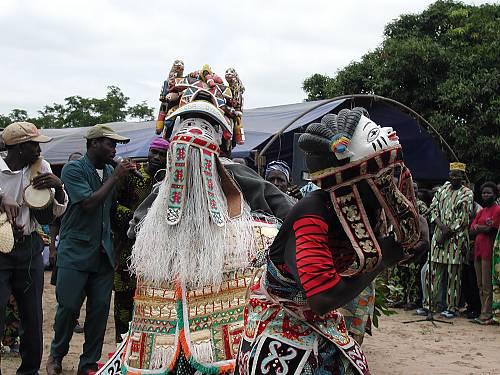
The daytime performance is more vibrant and visual. Masqueraders appear in elaborate costumes, dancing gracefully to the rhythm of drums and songs. The atmosphere is celebratory, drawing crowds from near and far.
Though the performers are male, they embody feminine energy, moving with elegance and restraint to reflect the essence of womanhood and spiritual balance.
The Masks: Art, Symbol, and Story
At the heart of Gẹlẹdẹ are its iconic masks and headpieces. These are carved from wood and painted in bright colors, often depicting:
* Market scenes * Animals and birds * Social roles and professions * Moral lessons and symbolic imagery
Each mask tells a story. Some celebrate motherhood and fertility, while others offer commentary on societal issues.
The artistry involved is remarkable. Skilled carvers transform wood into moving sculptures, turning each masquerader into a living canvas of Yoruba philosophy and creativity.
Social and Spiritual Functions
Gẹlẹdẹ serves multiple roles within the community.
It is spiritual, as it seeks to honor and appease powerful feminine forces believed to influence life’s outcomes.
It is educational, as it passes down knowledge, values, and history through performance and storytelling.
It is also corrective, using satire and symbolism to address wrongdoing and encourage better behavior within society.
In this way, Gẹlẹdẹ becomes a form of cultural governance, guiding the community without direct confrontation.
Gẹlẹdẹ in Contemporary Society
Today, the Gẹlẹdẹ masquerade continues to thrive, though it has adapted to modern realities. Festivals are sometimes organized as cultural showcases, attracting tourists, researchers, and younger generations eager to reconnect with their roots.
Despite these changes, the core values remain intact. The respect for women, the emphasis on balance, and the connection to spiritual heritage continue to define the tradition.
Communities and cultural organizations are also working to preserve Gẹlẹdẹ, ensuring that it is not lost to time.
Conclusion
The Gẹlẹdẹ Masquerade stands as a powerful reminder of the depth and sophistication of Yoruba culture. It is a celebration of art, a reflection of belief, and a system of social harmony woven into performance.
Through its recognition by UNESCO, the world has come to appreciate what Yoruba communities have long known.
That culture is not only preserved in objects or texts, but in living traditions that move, speak, dance, and continue to shape the identity of a people.
Gẹlẹdẹ is not just heritage. It is life, expressed through rhythm, color, and meaning.