Introduction
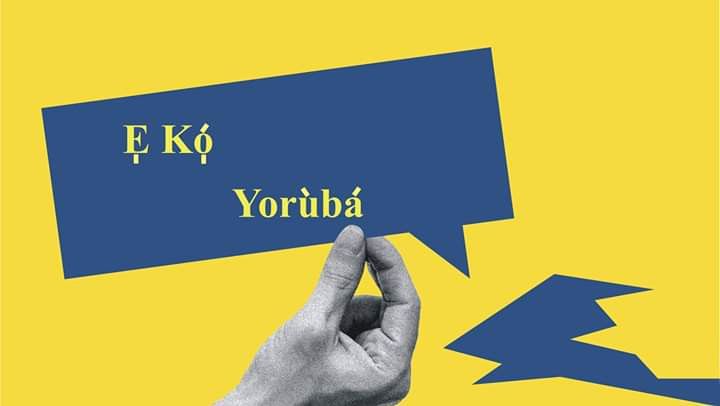
For many years, there has been concern that younger generations, particularly those growing up outside Yorubaland, were gradually losing the ability to speak their ancestral language. Today, however, a noticeable revival is taking place.
Across Nigeria and the Yoruba diaspora, more children, young people and adults are deliberately choosing to learn Yorùbá. Online schools, universities, private tutors and cultural organisations are making the language accessible to learners across different continents. The revival is part of a wider global movement to preserve and strengthen indigenous languages.
The Diaspora Is Driving New Interest
For many Yoruba families living in countries such as the United Kingdom, United States and Canada, language has become an important connection to identity.
Parents who may have grown up speaking Yoruba are increasingly looking for ways to ensure their children do not lose that connection. Programmes such as Yorùbá Basics provide online language and cultural education specifically designed for younger members of the African diaspora.
The goal is not simply to memorise vocabulary. Learners are also introduced to greetings, tones, etiquette, stories, proverbs and Yoruba cultural traditions.
Technology Has Made Yoruba Global
Perhaps the greatest change has come through technology.
A person living thousands of kilometres away from Nigeria can now learn Yoruba through live video classes, private tutoring, digital flashcards, audiobooks, podcasts and online communities.
Platforms such as LedeYoruba and Lingawa are examples of modern services designed to connect learners with Yoruba language education from different parts of the world. Lingawa reports serving thousands of diaspora learners, while other platforms focus on flexible tutoring and live classes.
Technology has effectively removed one of the biggest barriers to language learning:
You no longer have to live in Yorubaland to begin learning Yoruba.
Universities Are Keeping Yoruba Alive Academically
The global interest in Yoruba is also visible in formal education.
SOAS University of London’s Yorùbá Beginners Course offers structured instruction covering speaking, listening, reading and writing, alongside Yoruba cultural context.
In Nigeria, the Yorùbá Language Centre at the University of Ibadan offers programmes specifically designed for foreigners, heritage learners and second language learners, including programmes aimed at learners in Europe, Asia and Latin America.
This is a powerful development because it shows that Yoruba is increasingly being approached not only as a language people inherit at birth but also as a language that people around the world can deliberately study.
Young People Are Changing the Image of Yoruba
For some young Nigerians, speaking Yoruba was once unfairly associated with being old fashioned, while English was sometimes treated as the language of modernity and success.
That attitude is gradually being challenged.
A new generation is bringing Yoruba into:
* Social media. * Podcasts. * Music. * Comedy. * Film. * Digital education. * Fashion. * Technology.
Young people are discovering that embracing a global future does not require abandoning an indigenous identity.
You can build websites, create digital products, travel internationally and participate in modern technology while still saying:
Mo jẹ́ ọmọ Yorùbá.
Culture Makes Language More Attractive
Language rarely survives through grammar lessons alone.
People become emotionally connected to a language when they also encounter its culture.
That is why many modern Yoruba programmes combine language learning with:
* Music. * Songs. * Folktales. * Proverbs. * Food. * History. * Traditional greetings. * Festivals.
YorubaChamps, for example, describes programmes that combine speaking, reading and writing with storytelling, songs and cultural games for learners in Nigeria and the diaspora.
Heritage Learners Are Reclaiming Their Language
One of the most important groups involved in this revival is known as heritage learners.
These are often people whose parents or grandparents speak Yoruba but who did not grow up speaking it fluently themselves.
Many understand simple Yoruba conversations but struggle to respond.
Others know greetings and familiar expressions but cannot hold a complete conversation.
Modern language programmes are increasingly designed specifically for these learners. The University of Ibadan's Yoruba Language Centre, for example, offers proficiency programmes for heritage children as well as second language learners.
For many people, learning Yoruba is therefore not simply learning a foreign language.
It is reconnecting with something that was almost lost.
The Revival Is Also About Identity
Language carries more than vocabulary.
When someone learns Yoruba, they also gain access to:
* Òwe, Yoruba proverbs. * Oríkì, praise poetry. * Traditional greetings. * Family expressions. * Oral history. * Songs. * Indigenous knowledge.
Some ideas lose part of their meaning when translated directly into English.
Learning the language allows people to encounter Yoruba philosophy and cultural expression in a more direct form.
That is why language revival is closely connected to cultural revival.
The Challenge of Tone
One of the biggest challenges for new learners is Yoruba's tonal system.
A learner must understand that how a word is pronounced can affect what it means.
Modern courses therefore increasingly use audio, live tutoring and pronunciation practice rather than relying entirely on written lessons. SOAS, for example, includes structured teaching across speaking, listening, reading and writing, while several online programmes emphasise tone and pronunciation practice.
This is where digital learning has a major advantage: learners can hear the language rather than simply reading it.
A Worldwide Movement
The Yoruba language is now being learned by people across continents.
The University of Ibadan's programmes explicitly include language proficiency initiatives aimed at learners in Europe, Asia and Latin America, demonstrating the increasingly international nature of Yoruba education.
Meanwhile, online learning allows students from different countries to meet in the same virtual classroom.
A child in America, a university student in Europe and an adult learner elsewhere in Africa can potentially study the same language at the same time.
That would have been almost impossible a generation ago.
Why This Revival Matters
The world is becoming increasingly connected, but globalisation can sometimes place pressure on smaller and indigenous languages.
UNESCO's International Decade of Indigenous Languages, running from 2022 to 2032, reflects global concern about the need to preserve, revitalise and promote indigenous languages.
The revival of Yoruba learning fits into this wider movement.
Preserving a language is not about rejecting English or refusing to participate in the modern world.
It is about recognising that multilingualism is a strength.
A young person can speak English and Yoruba.
They can understand global culture while understanding their own heritage.
They do not have to choose one identity at the expense of the other.
The Future Is Digital and Cultural
The future of Yoruba learning will likely depend heavily on how successfully the language enters modern spaces.
That means:
* Better online courses. * Educational videos. * Digital dictionaries. * Podcasts. * Children's content. * Language learning applications. * AI tools. * Social media communities.
The Yoruba language must not exist only inside classrooms or traditional ceremonies.
For it to remain strong, it must also live where young people spend their time.
On phones. Online. In music. In films. In conversations. In technology.
Conclusion
The global revival of learning Yoruba represents something bigger than a growing interest in language classes.
It is a movement of reconnection.
Across Nigeria and the diaspora, people are rediscovering that Yoruba is not merely something spoken by previous generations. It is a living language capable of travelling across borders and adapting to the digital age.
The internet has made Yoruba more accessible than ever before, while universities, cultural organisations and independent educators are helping learners reconnect with the language.
The message of this revival is simple:
A language survives when people choose to speak it.
And today, across the world, more people are choosing to say:
Ẹ káàbọ̀ sí ayé Yorùbá.
Welcome to the world of Yoruba.