Introduction
Few figures in Yoruba history and literature have inspired as much discussion as Ẹlẹ́ṣin Ọba, literally meaning "the King's Horseman." Unlike many famous Yoruba heroes, Ẹlẹ́ṣin Ọba is not remembered for conquering kingdoms or founding cities. Instead, his significance lies in his unwavering devotion to duty, honour, and the spiritual responsibilities attached to the Oyo monarchy.
The story of Ẹlẹ́ṣin Ọba occupies a unique place in Yoruba culture because it is rooted in traditional beliefs surrounding kingship and the transition of an Alaafin from the world of the living to the realm of the ancestors. It is also known worldwide through the acclaimed play Death and the King's Horseman by Wole Soyinka, which was inspired by a historical event that took place in Oyo in 1946.
It is important, however, to distinguish between the historical institution of the king's horseman and Soyinka's fictionalised dramatic character. The play is a work of literature rather than a historical record.
Who Was Ẹlẹ́ṣin Ọba?
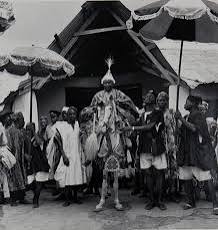
In the Oyo Kingdom, the title Ẹlẹ́ṣin Ọba referred to an important royal official rather than a single individual.
The king's horseman served the Alaafin in several capacities, including:
* Accompanying the king during important ceremonies. * Participating in royal processions. * Representing the dignity of the monarchy. * Performing significant ceremonial responsibilities. * Upholding the traditions of the royal court.
The office demanded courage, discipline, loyalty, and a deep understanding of Yoruba customs.
The Sacred Duty of the King's Horseman
According to Oyo tradition, when an Alaafin died, the king's horseman had a sacred responsibility connected to the royal transition.
Within the traditional belief system, this duty was understood as helping ensure the proper passage of the deceased ruler into the ancestral realm and maintaining the spiritual balance of the kingdom.
This responsibility reflected the Yoruba understanding that the wellbeing of the community depended on harmony between the physical and spiritual worlds.
These beliefs formed part of the traditional religious and political institutions of the Oyo Kingdom and should be understood in their historical and cultural context.
Loyalty Above Personal Desire
The story of Ẹlẹ́ṣin Ọba highlights values that were highly respected in Yoruba society:
* Loyalty to one's responsibilities. * Commitment to the community. * Respect for tradition. * Courage in fulfilling difficult duties. * Personal integrity.
These ideals explain why the office of the king's horseman was regarded as one of great honour and trust.
The 1946 Oyo Incident
The modern prominence of Ẹlẹ́ṣin Ọba stems largely from a historical incident in 1946, when the British colonial administration intervened to prevent the king's horseman from carrying out his traditional duty following the death of an Alaafin.
The intervention created a profound conflict between Yoruba customary practice and British colonial law and values. The event has since become one of the most discussed episodes in Nigeria's colonial history because it highlighted the tensions that often arose when indigenous institutions encountered colonial rule.
It later inspired Wole Soyinka's Death and the King's Horseman, which explores these themes through fictional characters and dramatic interpretation rather than as a documentary account.
The Meaning Behind the Story
Beyond its historical background, the story of Ẹlẹ́ṣin Ọba explores broader philosophical questions.
It invites reflection on:
* The meaning of duty. * The relationship between the individual and society. * The importance of honour. * The preservation of cultural traditions. * The challenges of cultural misunderstanding.
These themes continue to resonate with readers, historians, and students of African philosophy.
Ẹlẹ́ṣin Ọba in Yoruba Literature
Through Wole Soyinka's play, Ẹlẹ́ṣin Ọba has become an internationally recognised symbol of Yoruba philosophy and culture.
The play has been studied in universities around the world because it examines:
* Cultural identity. * Colonialism. * Moral responsibility. * Leadership. * The consequences of misunderstanding another society's beliefs.
While inspired by history, the play also adds fictional elements and dramatic symbolism to deepen its exploration of these themes.
Lessons from Ẹlẹ́ṣin Ọba
The story of Ẹlẹ́ṣin Ọba continues to offer valuable lessons.
It reminds us that:
* Leadership involves responsibility as well as privilege. * Every culture should be understood within its own historical context. * Honour and integrity have long been central values in Yoruba society. * Dialogue is essential when different cultures encounter one another. * Literature can preserve and illuminate historical experiences.
These lessons remain relevant in today's increasingly interconnected world.
Conclusion
The story of Ẹlẹ́ṣin Ọba is not primarily one of military conquest or political power but of duty, honour, and the responsibilities that sustained the institutions of the Oyo Kingdom. As the king's horseman, he represented unwavering loyalty to the Alaafin and to the traditions that shaped Yoruba concepts of kingship, community, and the relationship between the living and the ancestors.
The historical events surrounding the office of Ẹlẹ́ṣin Ọba, together with their literary interpretation in Death and the King's Horseman, have made this one of the most influential stories in African literature and history. They remind us that understanding the past requires respect for cultural context, careful historical inquiry, and an appreciation of the diverse ways societies have sought to give meaning to life, leadership, and tradition.
Historical Note: The office of Ẹlẹ́ṣin Ọba was a real institution in the Oyo Kingdom. However, many of the events and characters in Death and the King's Horseman are fictionalised by Wole Soyinka for dramatic purposes. The play should therefore be appreciated as literature inspired by history rather than as a literal historical account