Introduction
Among the great Yoruba kingdoms that shaped the political and economic history of pre-colonial West Africa, the Ìjẹ̀bú Kingdom stands out for its remarkable organisation, commercial intelligence, and cultural depth. Located in the forested southwest region of present-day Nigeria, the Ìjẹ̀bú people built one of the most sophisticated trading societies in Yorubaland.
Their history is not only one of kings and warriors, but also of merchants, road networks, diplomacy, and long-standing traditions that continue to influence modern Nigeria.
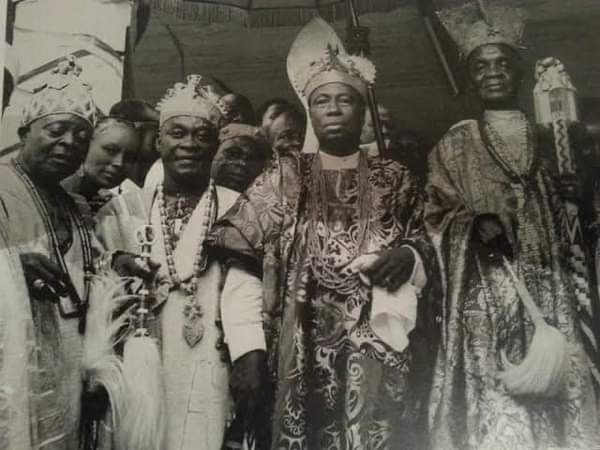
At the centre of this civilisation stands the throne of the Awujale, the paramount ruler of the Ìjẹ̀bú people.
To understand the Ìjẹ̀bú Kingdom is to understand a people who mastered commerce, governance, and cultural continuity long before colonial contact.
Origins of the Ìjẹ̀bú People
Like many Yoruba sub-groups, the Ìjẹ̀bú trace their origins to Oduduwa, the ancestral figure associated with the founding of Yoruba civilisation in Ile-Ife.
According to oral traditions, descendants of Odùduwà migrated from Ifẹ̀ and established various settlements across Yorubaland. Among these groups were the ancestors of the Ìjẹ̀bú, who settled in the forested regions east of the Yoruba heartland.
Over time, they developed their own distinct identity, shaped by geography, trade, and political organisation.
Dense forests influenced their settlement patterns.
Rivers and lagoons shaped their economy.
Their proximity to coastal trade routes would later become a defining advantage.
The Formation of a Kingdom
The Ìjẹ̀bú developed a structured political system headed by the Awujale, supported by a network of chiefs and councils.
Unlike highly centralised empires such as Oyo, Ìjẹ̀bú governance was known for its complex and balanced system of authority.
Power was distributed among different institutions, ensuring that no single authority acted unchecked.
This system created stability and continuity, even during periods of external pressure.
The Awujale served as both political and spiritual leader, symbolising unity among the Ìjẹ̀bú people.
Over time, the kingdom became known for its disciplined administration and strong cultural identity.
The Rise of Ìjẹ̀bú Commerce
One of the most defining features of Ìjẹ̀bú history is its economic system.
The kingdom became a central hub in regional trade networks linking the coast, forest, and savannah regions of West Africa.
Ìjẹ̀bú merchants were known for their organisation and discipline.
They controlled key trade routes connecting:
* The coastal regions of the Atlantic * The Yoruba interior kingdoms * Northern trade networks
Key commodities included:
* Kola nuts * Palm oil * Cloth and textiles * Agricultural produce * Salt and imported goods
Ìjẹ̀bú traders developed strict systems of trade regulation, ensuring order and security along commercial routes.
This economic strength made the kingdom wealthy and influential.
The Famous Ìjẹ̀bú Trade Routes
One of the most legendary aspects of Ìjẹ̀bú history is its control of major forest trade routes leading to the coast.
These routes were carefully managed through toll systems and local enforcement structures.
Travellers passing through Ìjẹ̀bú territory often had to pay duties, which contributed significantly to the kingdom’s wealth.
This system demonstrated a high level of administrative sophistication.
It also reflects how African kingdoms developed structured economic policies long before European colonial systems.
However, these regulations occasionally created tension with neighbouring states and foreign traders, especially during the colonial era when British expansion challenged local authority.
Culture and Identity of the Ìjẹ̀bú People
The Ìjẹ̀bú are culturally rich and deeply rooted in Yoruba traditions.
Their identity is expressed through festivals, language, religion, and social organisation.
Important cultural elements include:
* Respect for elders and structured hierarchy * Rich oral traditions and storytelling * Masquerade festivals such as Egungun celebrations * Strong communal values * Deep spiritual connection to Yoruba religion and ancestral worship
Festivals often serve as moments of unity, where history is remembered and cultural pride is renewed.
Music, drumming, and dance play a central role in these celebrations.
The Awujale Institution
The institution of the Awujale remains one of the most respected traditional leadership structures in Yorubaland.
The Awujale is not only a political figure but also a cultural custodian.
Historically, the ruler played a key role in:
* Maintaining law and order * Overseeing trade regulations * Preserving spiritual traditions * Representing the unity of the Ìjẹ̀bú people
Even in modern Nigeria, the Awujale continues to hold significant influence as a bridge between tradition and contemporary governance.
Colonial Encounter and Change
In the late nineteenth century, the Ìjẹ̀bú Kingdom encountered British colonial expansion.
Tensions arose over trade control and movement through Ìjẹ̀bú territory.
These tensions eventually led to conflict, culminating in British military action in 1892, often referred to as the Ijebu expedition.
The outcome resulted in the integration of Ìjẹ̀bú into the colonial administration of Nigeria.
Despite this, the kingdom retained strong cultural identity and traditional leadership structures.
The Awujale institution survived and continues to play a vital role today.
The Modern Ìjẹ̀bú Identity
Today, the Ìjẹ̀bú people remain one of the most influential Yoruba sub-groups in Nigeria.
Their most famous cultural celebration is Ojúde Ọba, a vibrant festival held annually in honour of the Awujale.
The festival brings together:
* Age-grade groups * Cultural troupes * Religious communities * Diaspora visitors
It showcases the unity of tradition and modern identity.
Ìjẹ̀bú descendants across Nigeria and the diaspora continue to celebrate their heritage with pride.
Conclusion
The history of the Ìjẹ̀bú Kingdom is a story of intelligence, organisation, and cultural resilience.
From its origins among the descendants of Odùduwà to its rise as a major commercial power in West Africa, the kingdom developed systems that balanced governance, trade, and tradition.
Its legacy lives on through the Awujale institution, cultural festivals, and the enduring identity of the Ìjẹ̀bú people.
In the wider story of Yoruba civilisation, the Ìjẹ̀bú stand as a reminder that power is not only measured in conquest, but also in commerce, structure, and cultural endurance.
Their history continues to speak across generations, telling a story of a people who mastered the art of survival, adaptation, and identity.