Introduction
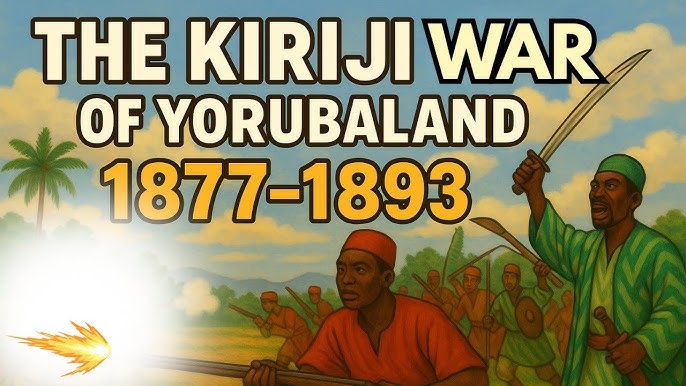
The Kiriji War, also known as the Ekiti Parapo War, was one of the most significant and devastating conflicts in Yoruba history. Fought between 1877 and 1893, it lasted for approximately sixteen years, making it the longest major civil war in Yorubaland.
The war was more than a military confrontation. It was a struggle over power, political independence, regional dominance, and the future of Yoruba society during a period of profound change. Entire communities were displaced, economies were disrupted, and thousands of lives were affected.
At the same time, the conflict demonstrated the resilience of the Yoruba people and marked the final chapter of the prolonged wars that followed the decline of the old Oyo Empire.
The Collapse of the Oyo Empire
To understand the Kiriji War, it is necessary to understand the collapse of the Oyo Empire.
For centuries, Oyo had been the most powerful Yoruba state, exercising influence over large areas of present day southwestern Nigeria. Through military strength, trade, and political organization, the empire maintained stability across much of Yorubaland.
However, during the early nineteenth century, internal political struggles, external pressures, and the activities of the Fulani-led jihad that transformed parts of northern Nigeria weakened Oyo's authority.
As the empire declined, various Yoruba states and military powers emerged, each seeking influence and autonomy. This created an environment of rivalry and frequent warfare.
The Rise of Ibadan
One of the strongest powers to emerge from the post-Oyo era was Ibadan.
Originally established as a military settlement, Ibadan grew rapidly into a formidable military state. Its experienced generals and warriors successfully expanded its influence across large parts of Yorubaland.
Many smaller kingdoms, particularly in Ekiti, Ijesa, and other eastern Yoruba regions, found themselves under varying degrees of Ibadan control.
While Ibadan leaders viewed this influence as necessary for regional stability, many subject communities regarded it as domination and increasingly sought independence.
Formation of the Ekiti Parapo Alliance
Growing dissatisfaction with Ibadan's authority eventually led several eastern Yoruba groups to unite.
These communities formed the Ekiti Parapo Confederation, a coalition that included:
* Ekiti kingdoms * Ijesa communities * Igbomina groups * Other allies opposed to Ibadan dominance
The alliance sought political autonomy and freedom from external control. Their determination laid the foundation for the conflict that would become known as the Kiriji War.
Why Was It Called the Kiriji War?
The name "Kiriji" is believed to have originated from the loud explosive sound produced by advanced firearms and artillery used during the conflict.
According to oral traditions, the thunderous noise of cannon fire created a sound resembling "Kiriji! Kiriji!"
This reflected an important change in warfare. Earlier Yoruba conflicts had relied heavily on traditional weapons such as spears, swords, and bows. During the Kiriji War, however, imported firearms and artillery played increasingly significant roles.
As a result, the war represented one of the most technologically advanced military conflicts in nineteenth-century Yorubaland.
Major Battles and Stalemate
Unlike many earlier wars that were decided relatively quickly, the Kiriji War became a prolonged struggle.
Both sides possessed capable commanders, strong defensive positions, and determined fighters. As a result, neither coalition could achieve a decisive victory.
The conflict evolved into a lengthy series of campaigns, sieges, raids, and defensive operations. Communities endured years of uncertainty, while agricultural production and trade suffered greatly.
The prolonged stalemate exhausted both sides and increased the desire for a negotiated settlement.
Human and Economic Consequences
The effects of the war extended far beyond the battlefield.
Many towns experienced:
* Population displacement * Economic decline * Agricultural disruption * Loss of life * Political instability
Trade routes became unsafe, affecting commerce throughout the region. Families were separated, and numerous communities struggled to recover from years of conflict.
The war demonstrated how prolonged internal divisions could weaken even culturally connected societies.
British Mediation and the Peace Treaty
By the late nineteenth century, British influence along the coast had expanded considerably.
Recognizing that continued warfare benefited no one, various parties supported peace negotiations. In 1893, a formal treaty was signed, bringing the conflict to an end.
The agreement helped reduce hostilities among the warring states and marked the conclusion of the major Yoruba civil wars that had dominated much of the nineteenth century.
Although peace was welcomed, it also coincided with increasing British political involvement in the region, which would eventually lead to colonial rule.
Legacy of the Kiriji War
The Kiriji War occupies a unique place in Yoruba history.
Its legacy includes:
* The affirmation of regional autonomy among several Yoruba states * The end of prolonged nineteenth-century inter-state warfare * Important lessons about unity and political cooperation * The transition from indigenous political struggles to the colonial era
Today, the conflict is remembered through historical studies, monuments, oral traditions, and cultural commemorations.
One notable reminder is the Kiriji War Relic Museum, which preserves artifacts and historical information connected to the conflict.
The Kiriji War and Yoruba Identity
The Kiriji War illustrates both the strengths and challenges of nineteenth-century Yoruba society. It reveals the determination of communities to defend their independence while also highlighting the costs of prolonged internal conflict.
In many ways, the war serves as a reminder that the Yoruba people shared a common cultural heritage even when political rivalries divided them.
The eventual peace demonstrated the importance of dialogue, compromise, and cooperation in maintaining stability among closely related communities.
Conclusion
The Kiriji War was the longest and one of the most consequential civil wars in Yoruba history. Lasting from 1877 to 1893, it emerged from the political struggles that followed the decline of the Oyo Empire and transformed the course of Yorubaland.
The conflict involved powerful states, ambitious leaders, and determined communities seeking autonomy and security. While it brought hardship and destruction, it also reshaped the political landscape of southwestern Nigeria.
Today, the Kiriji War remains a crucial chapter in Yoruba history, offering valuable insights into leadership, resistance, diplomacy, and the enduring quest for peace. Its story continues to remind future generations of both the costs of division and the power of reconciliation.