Introduction
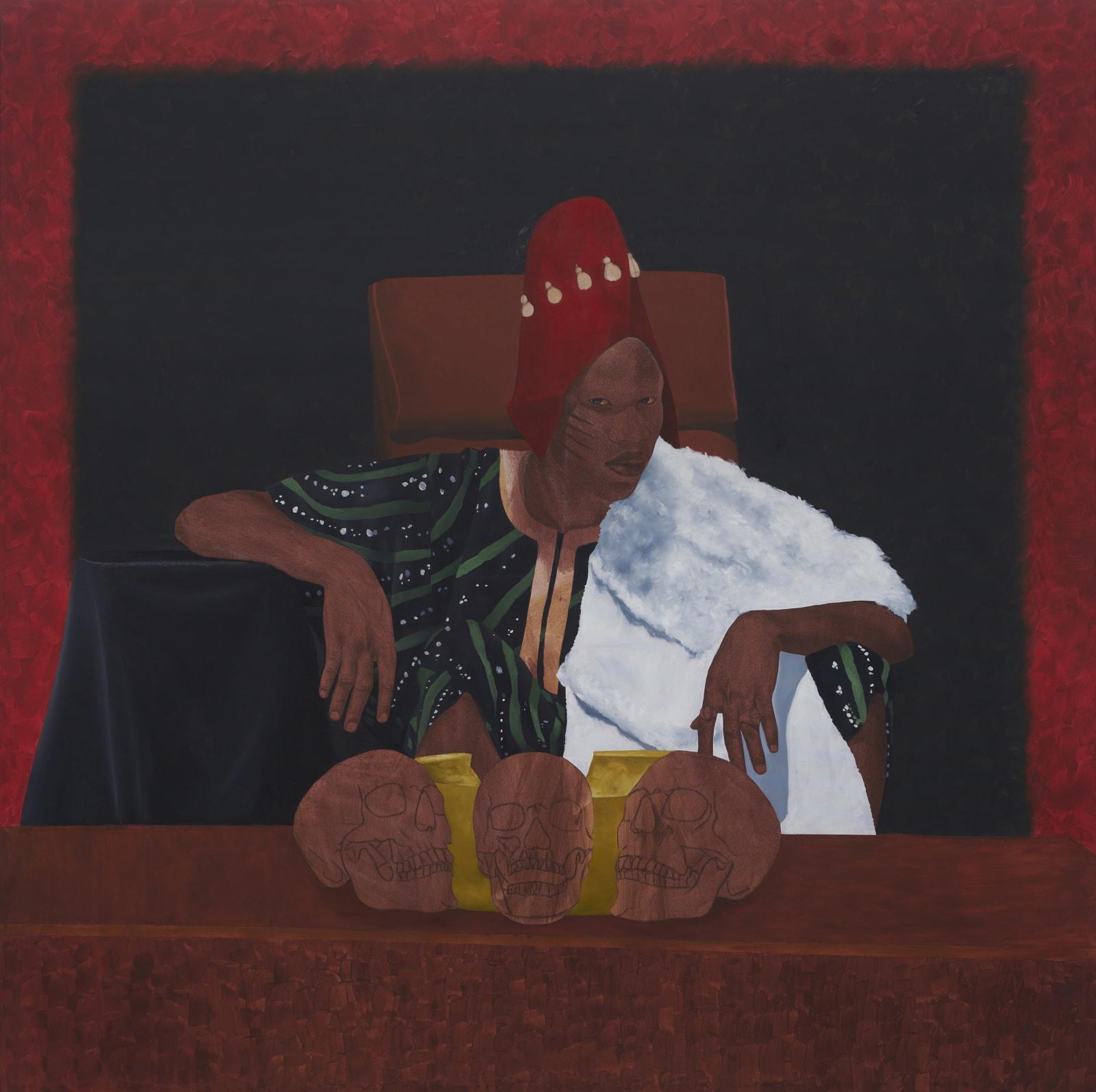
Few figures in Yoruba history evoke as much fascination, fear, and controversy as Bashorun Gaa. To some, he was a brilliant political strategist who understood the machinery of government better than anyone of his time. To others, he was the embodiment of unchecked ambition, a man whose thirst for power plunged the Oyo Empire into instability and bloodshed.
Centuries after his death, his name still carries weight in Yoruba conversations. Parents invoke it as a warning against tyranny. Historians examine his career to understand the strengths and vulnerabilities of pre-colonial political institutions. Storytellers recount his rise and fall as one of the greatest dramas in Yoruba history.
The story of Basọ̀run Gáà is not simply the tale of one man.
It is the story of power.
Of how political systems can both restrain and enable ambition.
Of how even the mightiest figures eventually face the consequences of their actions.
Above all, it is a story about the politics of the Oyo Empire.
The Oyo Empire: A Kingdom of Checks and Balances
Before understanding Gáà, one must first understand the world in which he lived.
The Oyo Empire was one of the most sophisticated political systems in pre-colonial West Africa. At its height, it stretched across vast territories and exerted influence over neighbouring states through trade, diplomacy, and military power.
Unlike absolute monarchies, Oyo operated through a system of shared authority.
At the centre stood the Alaafin, the king and symbolic head of the empire.
However, the Alaafin's power was not unlimited.
He governed alongside the Oyo Mesi, a council of seven principal chiefs who represented the interests of the kingdom and served as a check upon royal authority.
The head of this council bore the title Basọ̀run.
It was one of the most powerful offices in the empire.
And it was the office Gáà would eventually occupy.
The Rise of Gáà
Little is known with certainty about Gáà's early life.
Much of what survives comes through oral traditions passed down by palace historians and praise singers.
What these traditions consistently describe is a man of exceptional intelligence, political skill, and determination.
He understood people.
He understood influence.
Most importantly, he understood how institutions functioned.
When Gáà became Basọ̀run, he acquired authority that extended far beyond ceremonial duties.
As leader of the Oyo Mesi, he played a crucial role in selecting and advising kings.
He stood at the intersection of royal power and aristocratic interests.
Few positions offered greater opportunity for political manoeuvring.
Gáà intended to use that opportunity fully.
The Kingmaker
One of the most remarkable aspects of Gáà's career was his influence over succession.
According to Yoruba tradition, the Oyo Mesi possessed the authority to compel an Alaafin to abdicate if he was judged unfit to rule.
This power served as a safeguard against tyranny.
In theory, it protected the kingdom.
Under Gáà, however, this constitutional mechanism became a political weapon.
Tradition holds that he orchestrated the removal of several Alaafins.
Some accounts claim that as many as four kings lost their thrones during his period of dominance.
Whether every detail can be historically verified remains debated among scholars.
What is clear is that Gáà became feared as a kingmaker.
Kings ruled with the awareness that their survival depended, in part, upon maintaining his support.
The balance intended to preserve justice began to tilt dangerously towards one individual.
The Politics of Fear
As Gáà's influence expanded, so too did stories of his ruthlessness.
Oral traditions describe an atmosphere in which opposition carried serious risks.
Rivals feared his authority.
Chiefs hesitated to challenge him.
Even members of the royal household reportedly exercised caution.
Fear became a political tool.
Through it, Gáà maintained control over institutions designed to prevent precisely this kind of concentration of power.
The irony was striking.
The guardian of constitutional order had become its greatest threat.
The Rise of Alaafin Abiodun
Every political era eventually encounters resistance.
For Gáà, that resistance emerged in the person of Alaafin Abiodun.
Abiodun ascended the throne during a period of uncertainty.
Unlike some of his predecessors, however, he proved unwilling to remain under Gáà's shadow.
He recognised that the authority of the monarchy had been severely weakened.
If the empire was to regain stability, the cycle of fear and manipulation had to end.
A struggle for the soul of Oyo began.
It was not merely a contest between two men.
It was a conflict over the nature of governance itself.
Would institutions serve the common good?
Or would they remain instruments of personal ambition?
The Fall of Gáà
The confrontation ultimately ended in Gáà's downfall.
Tradition recounts that Alaafin Abiodun rallied support against the Basọ̀run and moved decisively to dismantle his network of influence.
The once untouchable statesman found himself isolated.
The power he had accumulated over many years evaporated with astonishing speed.
He was captured and executed.
His dramatic end sent a powerful message throughout the empire.
No individual, regardless of influence or achievement, stood above the laws and institutions of the kingdom.
The kingmaker had fallen.
Lessons from Basọ̀run Gáà's Story
The story of Basọ̀run Gáà continues to resonate because it speaks to universal truths about politics and human nature.
It teaches that:
* Institutions are only as strong as the people entrusted to uphold them. * Checks and balances can be manipulated if vigilance is lost. * Power without accountability often leads to abuse. * Fear may secure obedience, but rarely earns loyalty. * No political figure remains invincible forever.
These lessons remain relevant in every age.
History and Oral Tradition
Modern historians approach the story of Gáà with both respect and caution.
Many details originate from oral traditions that blend historical memory with dramatic storytelling.
The precise number of kings affected by his actions remains uncertain.
Some episodes may have been shaped by generations of retelling.
Yet the consistency of the broader narrative is significant.
Across different traditions, Gáà emerges as a gifted statesman whose extraordinary abilities became overshadowed by his pursuit of dominance.
Whether viewed through the lens of history or folklore, his story remains one of the most compelling political narratives in Yoruba civilisation.
The Enduring Legacy of Gáà
Today, Basọ̀run Gáà occupies a unique place in Yoruba memory.
He is neither celebrated as a hero nor dismissed as a simple villain.
Instead, he stands as a cautionary figure.
His life reminds society that intelligence and talent, when separated from restraint and ethical responsibility, can become destructive.
At the same time, his story highlights the sophistication of Yoruba political thought.
The Oyo Empire recognised that rulers required oversight and that concentrated power posed dangers.
Long before modern constitutional theories gained prominence elsewhere, Yoruba institutions wrestled with questions of accountability, legitimacy, and governance.
Conclusion
The life of Basọ̀run Gáà and the politics of Oyo reveal one of the most dramatic chapters in Yoruba history.
Rising from relative obscurity to become the most powerful chief in the empire, Gáà shaped the destinies of kings and influenced the course of a great civilisation. Yet the very powers entrusted to him eventually contributed to his downfall.
His story is not merely about ambition.
It is about the fragile balance between authority and accountability.
It is about the responsibilities that accompany leadership.
And it is about the enduring truth that no individual, however powerful, should stand above the institutions designed to protect the common good.
Centuries after his death, the name Basọ̀run Gáà still provokes reflection.
For within his rise and fall lies a timeless lesson: power can build kingdoms, but wisdom and restraint are what sustain them.