Introduction
If there is one value that lies at the heart of Yoruba culture, it is respect.
Known in Yoruba as ìbọ̀wọ̀, respect is more than good manners or social etiquette. It is a moral principle, a cultural expectation, and a way of preserving harmony within the family and the wider community. From childhood, Yoruba children are taught that the manner in which they speak, greet others, behave in public, and treat people around them reflects not only their upbringing but also their character.
Among the Yoruba, respect is considered one of the foundations of civilisation. A person may be wealthy, educated, influential, or talented, but without respect, such achievements are often regarded as incomplete.
Respect shapes relationships between parents and children, husbands and wives, rulers and subjects, teachers and students, and even the living and the ancestors. It is woven into everyday life so deeply that it influences language, gestures, customs, and identity itself.
To understand Yoruba culture is to understand why respect occupies such a sacred place within it.
What Does Respect Mean in Yoruba Culture?
In Yoruba thought, respect goes beyond obedience or fear of authority.
It means recognising the dignity and worth of others and behaving in ways that promote harmony and mutual honour.
Respect involves:
* Acknowledging age and experience * Speaking courteously * Demonstrating humility * Observing proper conduct * Showing consideration for others * Recognising social responsibilities
Respect is both given and earned. While younger people are expected to respect elders, elders are also expected to behave honourably and serve as examples worthy of admiration.
Thus, respect operates as a two-way moral obligation.
Respect Begins with Greetings
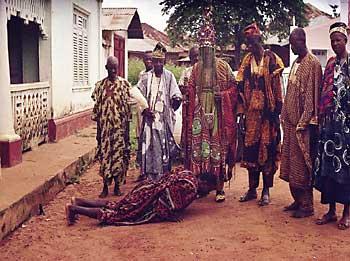
Perhaps nowhere is Yoruba respect more visible than in the practice of greeting.
Among the Yoruba, failing to greet someone, especially an elder, is considered a serious breach of etiquette.
Traditional forms of greeting include:
Young men prostrating fully before elders (dobálẹ̀*) Young women kneeling (ìkúnlẹ̀*) * Offering verbal greetings appropriate to the time of day * Using respectful language and tone
Greetings are not rushed formalities.
They are expressions of goodwill, acknowledgement, and community belonging.
A child who greets properly is often praised as being well brought up.
The Yoruba Language of Respect
The Yoruba language itself reflects the importance of respect.
Unlike English, Yoruba has distinct forms of address that indicate honour and courtesy.
For example:
* "Ìwọ" is the informal singular "you". * "Ẹ" is the respectful form used when addressing elders, superiors, or multiple people.
Children are taught from an early age to use respectful expressions such as:
Ẹ káàárọ̀* – Good morning Ẹ káàsán* – Good afternoon Ẹ kúlẹ́yìn iṣẹ́* – Well done after work Ẹ ṣé* – Thank you
The use of respectful language reinforces social values and reminds individuals of their obligations towards others.
Respect for Elders
Elders occupy a highly respected position in Yoruba society.
This respect stems not merely from age but from the belief that age often brings:
* Experience * Wisdom * Historical knowledge * Spiritual insight * Responsibility
The Yoruba proverb says:
> "Àgbà kì í wà l'ọ́jà kí orí ọmọ tuntun wọ." > > An elder cannot be present in the marketplace while a child's head hangs awkwardly.
The proverb means that elders are expected to provide guidance and protection, ensuring that younger generations do not lose their way.
Respect for elders, therefore, is intertwined with trust in their experience and concern for communal wellbeing.
Respect and Good Character
In Yoruba philosophy, respect cannot be separated from ìwà, meaning character.
The famous Yoruba saying:
> "Ìwà l'ẹ̀wà." > > Character is beauty.
teaches that outward appearance means little without moral integrity.
Respectful individuals are expected to demonstrate qualities such as:
* Honesty * Patience * Humility * Kindness * Self-control * Responsibility
A person who behaves arrogantly or insults others may be described as lacking proper upbringing, regardless of social status.
Good character gives meaning to respect.
Respect Within the Family
The family is the first school of respect.
Children learn by observing how adults interact with one another.
Within Yoruba homes:
* Children respect parents and older siblings. * Parents nurture and protect their children. * Husbands and wives are expected to honour one another. * Extended family members maintain bonds through courtesy and mutual support.
Respect strengthens family relationships and contributes to social stability.
It teaches individuals that they belong to something greater than themselves.
Respect for Community and Authority
Yoruba culture also extends respect to community institutions.
Traditional rulers, chiefs, teachers, and religious leaders are often treated with honour because of the responsibilities they bear.
However, authority is not meant to exist without accountability.
Leaders are expected to demonstrate:
* Fairness * Wisdom * Justice * Compassion * Service to the people
Respect is therefore linked not only to position but also to conduct.
Those who misuse authority risk losing public esteem.
Respect for the Spiritual World
Yoruba respect extends beyond human relationships.
Traditional beliefs emphasise reverence towards:
* Olodumare * The Òrìṣà * Ancestors * Sacred spaces * Ritual practices
This reverence reflects an understanding that human beings are part of a larger spiritual order.
Respect, therefore, becomes both social and sacred.
Respect in Modern Yoruba Society
Modernisation, urbanisation, and global influences have transformed aspects of Yoruba life.
Today, not every young person kneels or prostrates in the same way previous generations did. Communication styles have evolved, and social relationships have become less formal in some settings.
Yet the underlying value of respect remains remarkably resilient.
Many Yoruba families continue to teach:
* Proper greetings * Courtesy in speech * Care for elders * Gratitude * Humility * Responsibility towards others
Even as customs adapt, the principle behind them endures.
Conclusion
Respect is one of the defining pillars of Yoruba culture.
It is expressed through greetings, language, family life, moral conduct, leadership, and spiritual practice. It reminds individuals that dignity must be recognised in others and that community thrives when people treat one another with honour and consideration.
For the Yoruba, respect is not weakness, blind submission, or mere tradition for tradition's sake.
It is a discipline of character.
It teaches humility without diminishing self-worth, obedience without abandoning justice, and courtesy without sacrificing truth.
In a rapidly changing world where civility is sometimes overlooked, the Yoruba understanding of respect offers a timeless lesson: societies flourish not simply through wealth or power, but through the everyday acts of honour that bind people together.
To greet sincerely, to listen attentively, to speak kindly, to honour age and experience, and to treat others with dignity is, in the Yoruba worldview, one of the highest expressions of humanity itself.