Introduction
Among the Yoruba, few objects carry as much cultural, political, and spiritual significance as the Adé, the royal crown. More than a beautiful piece of craftsmanship, the Adé is the highest symbol of kingship, legitimacy, authority, and the sacred bond between a ruler, the ancestors, and the people.
For centuries, Yoruba crowns have represented the continuity of royal dynasties, the wisdom of leadership, and the responsibility entrusted to traditional rulers. Whether worn by the Ooni of Ile-Ife, the Alaafin of the Old Oyo Empire, or other Yoruba monarchs, the crown signifies not personal privilege but the duty to govern with justice, humility, and honour.
What Is the Adé?
The Yoruba word Adé simply means "crown," but within the context of kingship, it refers to a sacred royal object reserved for legitimate rulers.
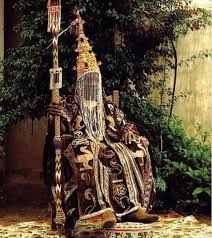
A traditional Yoruba royal crown typically consists of:
* A woven or leather framework. * Thousands of colourful glass beads. * A distinctive beaded veil that covers the ruler's face. * Decorative bird motifs at the top. * Symbolic patterns unique to each royal dynasty.
Each crown is carefully crafted and often preserved as a treasured heirloom passed down through generations.
A Symbol of Legitimate Authority
In Yoruba tradition, a person does not become a king simply by belonging to a royal family.
A prince becomes a recognised monarch only after completing the traditional rites of installation and receiving the Adé.
The crown therefore represents:
* Legitimate authority. * Continuity of the royal dynasty. * Acceptance by the people. * Recognition by traditional institutions. * Responsibility to uphold justice.
Without the proper installation rites, a claimant could not fully exercise the authority of the throne.
Why the King's Face Is Covered
One of the most distinctive features of the Yoruba royal crown is its beaded veil.
Rather than concealing the king out of secrecy, the veil symbolises the sacred nature of kingship.
Traditional interpretations suggest that it:
* Distinguishes the king from ordinary citizens. * Represents dignity and restraint. * Emphasises the spiritual character of the office. * Protects the sacred authority associated with the monarch.
Different Yoruba kingdoms may explain the symbolism in slightly different ways, but the veil consistently reflects the unique status of the ruler.
The Bird at the Top of the Crown
Many Yoruba crowns feature one or more stylised birds rising from the top.
In Yoruba art and tradition, birds are often associated with:
* Wisdom. * Spiritual awareness. * Authority. * Communication between the visible and spiritual worlds.
Scholars note that the precise symbolism can vary between kingdoms and artistic traditions, but the bird consistently serves as a reminder that leadership requires insight beyond ordinary vision.
The Sacred Nature of the Crown
The Adé is regarded as a sacred object rather than ordinary royal clothing.
Traditionally:
* It is carefully protected. * It is worn only during important ceremonies. * It is treated with great respect. * It is preserved within the royal palace. * Specific customs govern its handling and use.
Because the crown represents the institution of kingship rather than the individual ruler, it remains an enduring symbol even as different monarchs ascend the throne.
The Craftsmanship Behind the Adé
Creating a royal crown requires exceptional skill.
Master artisans combine:
* Fine beadwork. * Weaving techniques. * Leather craftsmanship. * Symbolic design. * Traditional artistic knowledge.
Yoruba beadwork is internationally recognised for its beauty and precision, and royal crowns represent some of the finest achievements of this artistic tradition.
Crowns in Different Yoruba Kingdoms
Although all Yoruba royal crowns share common features, each kingdom has developed distinctive styles and traditions.
Examples include the crowns worn by:
* The Ooni of Ile-Ife. * The Awujale of Ijebu Ode. * The Owa Obokun of Ilesa. * The Deji of Akure.
Each reflects the history, identity, and artistic heritage of its royal house.
The Adé in Festivals and Ceremonies
The crown appears during important occasions such as:
* Coronations. * Annual festivals. * Royal anniversaries. * Public blessings. * Traditional state ceremonies.
One of the most celebrated examples is the annual Olojo Festival, during which the Ooni wears the sacred crown in ceremonies that attract visitors from around the world.
The Crown in Contemporary Yoruba Society
Today, the Adé remains one of the most recognisable symbols of Yoruba identity.
Although traditional rulers no longer govern as they did before colonial rule, the crown continues to represent:
* Cultural continuity. * Historical legitimacy. * Community leadership. * Moral responsibility. * The preservation of Yoruba heritage.
It is also celebrated in museums, festivals, academic research, and contemporary art, reflecting its enduring importance.
Beyond Royal Power
The Yoruba understanding of the Adé extends beyond political authority.
The crown reminds both rulers and subjects that leadership is a sacred trust. A king is expected to govern with wisdom, fairness, humility, and compassion, recognising that the honour of wearing the crown comes with the obligation to serve the people.
This philosophy has helped sustain the prestige of Yoruba traditional institutions for centuries.
Conclusion
The Adé is far more than a royal ornament. It is a sacred emblem of kingship, legitimacy, history, and responsibility that has defined Yoruba leadership for generations. Through its intricate beadwork, symbolic veil, and distinctive artistic features, the crown reflects the deep connection between political authority, spirituality, and cultural identity.
Whether worn by the Ooni of Ile-Ife, the rulers of the Old Oyo Empire, or other traditional monarchs across Yorubaland, the Adé remains a powerful reminder that true leadership is measured not by privilege, but by service, integrity, and dedication to the well-being of the people.