Introduction
Hidden within the ancient city of Osogbo in southwestern Nigeria lies one of the most spiritually significant cultural landscapes in Africa, the Osun-Osogbo Sacred Grove.
More than a forest, the grove is a sacred sanctuary where spirituality, history, art, and nature exist together in remarkable harmony. Recognized as a UNESCO World Heritage Site, the Osun Osogbo Sacred Grove remains one of the last surviving sacred forests of the Yoruba people and a living center of traditional worship dedicated to the river goddess Osun.
For centuries, the grove has stood as a symbol of Yoruba spirituality, cultural resilience, and the enduring relationship between humanity and nature.
The Origins of the Sacred Grove
According to Yoruba oral tradition, the origins of Osogbo are closely connected to the river goddess Osun.
It is believed that early settlers arrived in the area while searching for a suitable place to establish a community. During this journey, they encountered the Osun River and received spiritual guidance from the goddess herself. In return for protection, fertility, and prosperity, the people agreed to honor and preserve the sacred forest surrounding the river.
This agreement formed the spiritual foundation of Osogbo and established the grove as a holy space where the divine and human worlds could meet.
Osun: Goddess of Fertility, Love, and Fresh Waters
In Yoruba spirituality, Osun is one of the most revered orishas. She is associated with:
* Fertility * Love and beauty * Healing * Fresh water * Prosperity and harmony
Devotees believe that Osun possesses nurturing and protective powers, especially for women, children, and families seeking blessings.
The river that flows through the grove is considered sacred, and many visitors come to pray, seek healing, or offer sacrifices and gifts in hopes of receiving favor from the goddess.
The Sacred Grove as a Spiritual Landscape
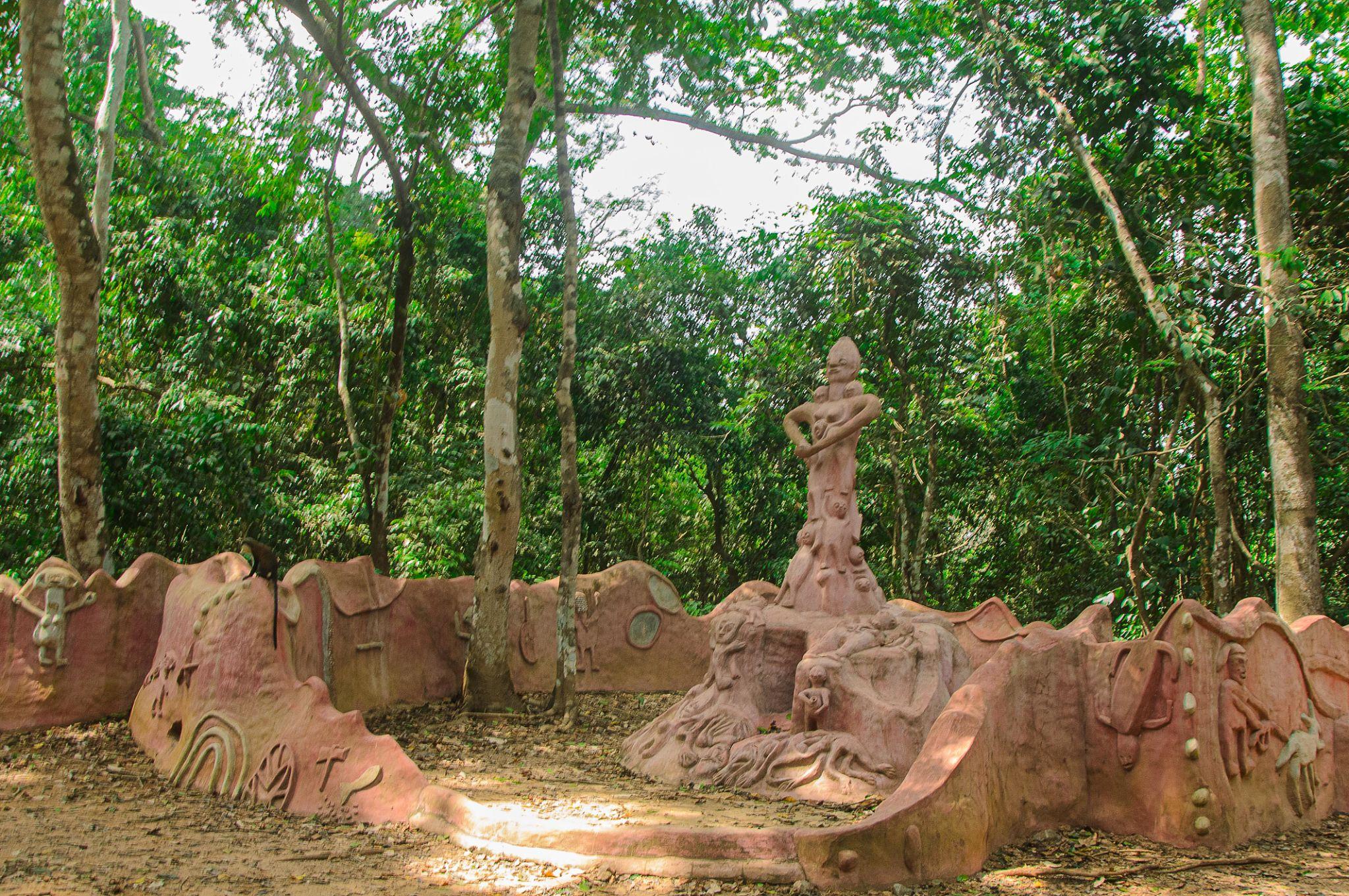
The Osun Osogbo Sacred Grove covers a large forested area along the banks of the Osun River. Within the grove are shrines, sculptures, sanctuaries, and sacred spaces dedicated to different Yoruba deities and spiritual forces.
One of the most distinctive features of the grove is its monumental artwork. Many of the sculptures found there were created in the twentieth century through the efforts of artists and spiritual devotees, including Susanne Wenger, who became deeply involved in preserving the grove and Yoruba spiritual traditions.
These sculptures blend traditional Yoruba symbolism with expressive artistic forms, transforming the forest into both a spiritual sanctuary and an open air gallery.
The Osun Osogbo Festival
Every year, thousands of people gather in Osogbo for the famous Osun-Osogbo Festival. This annual celebration, usually held in August, is one of the most important cultural and spiritual events in Yorubaland.
The festival lasts for several days and includes:
* Traditional prayers and rituals * Music and drumming * Dancing and processions * Offerings to the goddess Osun * Cultural performances and gatherings
One of the most symbolic moments is the procession led by the Arugba, a young virgin chosen to carry a sacred calabash containing offerings to the river. This act represents purity, sacrifice, and the spiritual connection between the community and the goddess.
The festival attracts worshippers, tourists, scholars, and cultural enthusiasts from around the world.
UNESCO Recognition and Preservation
In 2005, the Osun Osogbo Sacred Grove was designated a UNESCO World Heritage Site by UNESCO.
UNESCO recognized the grove for its cultural, spiritual, and artistic importance, as well as its role as one of the last remaining sacred Yoruba forests.
This recognition has helped increase global awareness of the grove and encouraged efforts to preserve it against threats such as urbanization, environmental degradation, and modernization.
Nature, Spirituality, and Cultural Identity
The Osun Osogbo Sacred Grove reflects a Yoruba worldview in which nature and spirituality are inseparable. Rivers, trees, forests, and animals are not merely physical elements but part of a larger sacred order.
Protecting the grove is therefore not only about preserving land. It is about preserving memory, identity, and spiritual connection.
In a rapidly changing world, the grove remains a powerful reminder that culture can live within nature, and that sacred spaces continue to shape the lives of communities.
Conclusion
The Osun Osogbo Sacred Grove is more than a tourist destination or historical site. It is a living symbol of Yoruba spirituality, creativity, and resilience.
From its sacred river and ancient shrines to the vibrant annual festival, the grove continues to connect generations to their heritage and beliefs.
Its survival across centuries stands as a testament to the enduring power of culture and the importance of protecting places where history, faith, and nature come together.