Introduction
The story of the Oyo Empire is one of brilliance, military strength, political sophistication, trade expansion, and eventual collapse. Long before colonial powers arrived in West Africa, the Oyo Empire stood as one of the most influential and organized kingdoms in African history. At its peak, Oyo controlled vast territories across present-day southwestern Nigeria and parts of the Republic of Benin, shaping the political and economic landscape of the region for centuries.
Today, the legacy of Oyo still echoes throughout Yorùbá culture, traditional institutions, language, warfare history, and governance systems.
The Origins of the Oyo Empire
The Oyo Empire emerged from the larger Yorùbá civilization, whose spiritual and cultural center was Ile-Ife. According to Yorùbá oral traditions, the empire traced its origins to descendants of Oduduwa, the legendary progenitor of the Yorùbá people. One of his descendants, Oranmiyan, is often credited with founding the early Oyo Kingdom.
Located in the savannah region north of the dense forests of Yorùbáland, Oyo enjoyed strategic advantages. Unlike many forest kingdoms, the open grasslands allowed the use of cavalry, which later became one of the empire’s greatest military strengths.
Rise of a Military Power
In its early years, Oyo faced threats from neighboring kingdoms such as Nupe and Borgu. During the 16th century, Oyo was temporarily subdued by these northern powers. However, the kingdom later rebuilt itself through strategic leadership and military reforms.
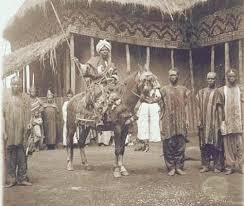
One of the major turning points came under Alaafin Orompoto, who strengthened Oyo’s military and expanded its influence. The empire developed a powerful cavalry force, a rare advantage in much of West Africa due to the region’s terrain and climate. Horses allowed Oyo armies to move rapidly, dominate trade routes, and overwhelm rival states.
By the 17th and 18th centuries, Oyo had transformed into one of the greatest empires in West Africa. Its influence stretched from the Niger River to parts of present-day Benin Republic.
The Political Structure of Oyo
One remarkable aspect of the Oyo Empire was its advanced political system. Unlike absolute monarchies where kings ruled alone, Oyo developed a balance of power between the Alaafin (king) and influential councils.
The Alaafin
The Alaafin was the supreme ruler and symbol of authority. He controlled military campaigns, diplomacy, and administration. However, his powers were not unlimited.
The Oyo Mesi
The Oyo Mesi was a council of seven leading chiefs headed by the Bashorun. This council acted as a check on the Alaafin’s authority. If a ruler became tyrannical or ineffective, the Oyo Mesi could compel him to abdicate or even commit ritual suicide.
The Ogboni Society
Another important institution was the Ogboni society, a group of respected elders and spiritual leaders who represented religious authority and public opinion.
This system of shared governance made Oyo politically stable for many generations and helped maintain order across a vast empire.
Trade and Economic Prosperity
Oyo’s location gave it access to major trade routes linking the forest regions to the savannah and the Atlantic coast. The empire traded kola nuts, leather, cloth, salt, horses, and agricultural products.
As European traders expanded activities along the West African coast, Oyo became deeply involved in Atlantic commerce. The empire controlled important trade routes leading to coastal ports such as Ajase (Porto-Novo).
Unfortunately, part of this trade included participation in the trans-Atlantic slave trade, which became economically significant during the empire’s height. Oyo supplied captives obtained through warfare and expansion campaigns to coastal traders.
Expansion Across West Africa
Through military strength and diplomacy, Oyo established dominance over many neighboring states. Some kingdoms paid tribute to Oyo, while others became vassal territories.
One of Oyo’s most notable victories was over the Kingdom of Dahomey, located in present-day Benin Republic. Dahomey became a tributary state after a series of military campaigns during the 18th century.
At its peak, the empire controlled an estimated 150,000 square kilometers, making it one of the largest political entities in pre-colonial West Africa.
Culture and Society in the Oyo Empire
The Oyo Empire was not only a military and political power; it was also a vibrant center of Yorùbá culture.
Religion
Traditional Yorùbá spirituality played a central role in daily life. Worship of oriṣa (deities) such as Ṣàngó, Ogun, Ọbatala, and Ọ̀rúnmìlà shaped social and spiritual practices.
Ṣàngó, the legendary Alaafin who later became deified as the god of thunder and lightning, remains one of the most celebrated figures in Yorùbá religious history.
Art and Architecture
Oyo cities featured organized urban planning, palace compounds, marketplaces, and artistic traditions involving bronze works, carvings, textiles, and beadwork.
Language and Oral Tradition
The Yorùbá language flourished through praise poetry, oral history, drumming traditions, and storytelling. Professional historians known as akéwì and griots preserved the empire’s memory through generations.
The Beginning of Decline
Despite its greatness, the Oyo Empire eventually began to weaken during the late 18th century.
Several factors contributed to the decline:
Internal Political Conflicts
Power struggles emerged between the Alaafin and political elites. Rivalries weakened central authority and created instability within the empire.
Economic Changes
Some rulers focused heavily on trade and wealth accumulation while neglecting military strength. This weakened Oyo’s ability to control distant territories and defend trade routes.
Provincial Rebellions
Tributary states and military commanders began asserting independence. Regions once loyal to Oyo slowly broke away.
External Pressures
The rise of militant Fulani forces from the north created severe pressure on Oyo territories during the early 19th century. The Fulani jihads destabilized several West African states, including Oyo.
The Fall of Oyo
One of the most significant events in Oyo’s collapse was the rise of Ilorin. Originally an Oyo provincial town, Ilorin became a center of rebellion under Afonja, a powerful military commander.
Afonja allied with Fulani Islamic scholars and fighters, but the alliance eventually turned against Oyo itself. The internal conflict weakened the empire beyond recovery.
By the early 19th century, the old capital, Oyo-Ile, was abandoned after repeated attacks. The empire fragmented into smaller Yorùbá states such as Ibadan, Ijaye, Egba, and others.
The once-mighty empire that had dominated West Africa for centuries had fallen.
Legacy of the Oyo Empire
Although the empire collapsed politically, its cultural and historical influence remains enormous.
The legacy of Oyo can still be seen in:
* The continued importance of the Alaafin institution * Yorùbá political traditions * Military organization in later Yorùbá states * Religious practices across Nigeria and the African diaspora * Language, music, drumming, and oral traditions
The history of Oyo also challenges outdated stereotypes about pre-colonial Africa. The empire demonstrated sophisticated governance, military strategy, urban organization, diplomacy, and economic systems long before European colonization.
Today, historians continue to study Oyo as one of Africa’s most remarkable civilizations.
Conclusion
The Oyo Empire was more than just a kingdom; it was a symbol of Yorùbá resilience, intelligence, and statecraft. From its rise through cavalry warfare and strategic trade to its political sophistication and eventual decline, Oyo left a lasting mark on West African history.
Its story reminds us that African civilizations possessed powerful institutions, rich cultures, and complex political systems that shaped the continent long before colonial rule.
The rise and fall of Oyo remains one of the greatest historical narratives in African history — a tale of ambition, power, prosperity, conflict, and enduring cultural legacy.