Introduction
The political history of the Yoruba is distinguished by a network of independent kingdoms that shared a common language, culture, and ancestral traditions while maintaining their own systems of government. Rather than forming a single, unified empire for most of their history, the Yoruba developed what historians often describe as a collection of interconnected kingdoms or confederacies. These states cooperated in matters of diplomacy, trade, defence, and culture while preserving their political independence.
The political structure of these confederacies was characterised by decentralised authority, consultation, and a balance of power between monarchs, councils of chiefs, military leaders, and community institutions. This flexible system enabled the Yoruba to maintain a shared cultural identity despite the existence of numerous autonomous kingdoms.
What Is a Confederacy?
A confederacy is an association of independent states or communities that cooperate for common interests while retaining their own governments.
Among the Yoruba, kingdoms often worked together to:
* Maintain regional peace. * Promote trade. * Defend against external threats. * Resolve disputes. * Celebrate shared cultural traditions. * Strengthen diplomatic relationships.
Each kingdom continued to govern its own territory according to its customs and institutions.
Independent Kingdoms Within a Shared Civilisation
Yorubaland included many influential kingdoms, including:
* Ile-Ife * Oyo * Ijebu Ode * Owo * Akure * Ilesa * Abeokuta (formed in the nineteenth century)
Each kingdom had its own monarch, chiefs, laws, and administrative institutions, yet all shared many cultural and historical traditions.
The Role of the Monarch
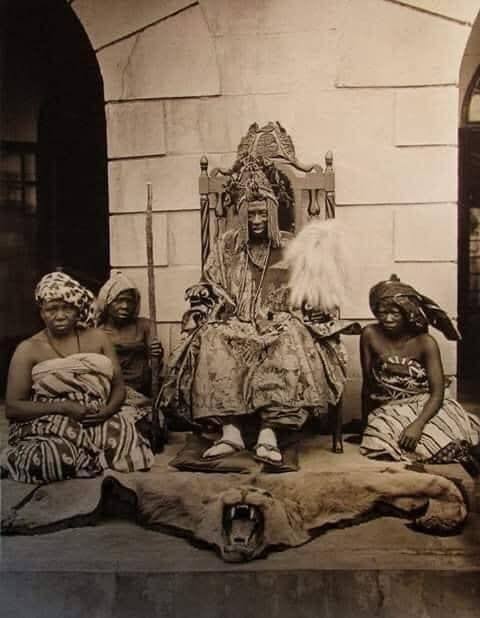
The king served as the head of government and symbol of the kingdom's unity.
His responsibilities included:
* Providing leadership. * Presiding over major ceremonies. * Maintaining justice. * Protecting the kingdom. * Promoting diplomacy. * Preserving customs and traditions.
Although highly respected, the monarch's authority was generally balanced by established political institutions.
Councils of Chiefs
One of the defining features of Yoruba governance was the council of chiefs.
These councils:
* Advised the monarch. * Participated in policymaking. * Supervised succession. * Represented different communities. * Settled disputes. * Ensured adherence to customary law.
Important decisions were often reached through consultation rather than unilateral royal authority.
The Example of the Old Oyo Empire
The Old Oyo Empire provides one of the clearest examples of sophisticated Yoruba political organisation.
Its government included:
* The Alaafin as monarch. * The Oyo Mesi, a council of senior chiefs. * Military commanders responsible for defence. * Provincial administrators overseeing distant territories.
This structure distributed political responsibilities among several institutions and reduced the concentration of power in a single office.
Local Government and Community Administration
Political authority extended beyond the royal palace.
Towns and villages were administered through:
* Local chiefs. * Quarter heads. * Councils of elders. * Family leaders. * Community associations.
These institutions managed local affairs while maintaining communication with the central government.
Diplomacy Between Kingdoms
Yoruba kingdoms maintained diplomatic relations with one another through:
* Royal marriages. * Peace agreements. * Trade alliances. * Exchange of envoys. * Shared festivals. * Conflict mediation.
These relationships helped maintain stability even when individual kingdoms remained politically independent.
Military Cooperation
When faced with significant external threats, some Yoruba kingdoms cooperated militarily.
Examples include alliances formed during the nineteenth-century conflicts that reshaped Yorubaland, particularly in response to regional wars and invasions.
Such cooperation reflected the practical value of confederate relationships while preserving each kingdom's autonomy.
Economic Integration
Trade strengthened political relationships among Yoruba states.
Commercial networks linked markets across the region, allowing merchants to exchange:
* Agricultural products. * Salt. * Kola nuts. * Iron tools. * Textiles. * Beads. * Livestock.
Economic cooperation encouraged peaceful relations and mutual prosperity.
Shared Culture, Independent Governments
Despite political independence, Yoruba kingdoms shared many cultural foundations, including:
* The Yoruba language. * Oral traditions. * Respect for ancestral lineages. * Festivals. * Artistic traditions. * Systems of kingship. * Common historical narratives centred on Ile-Ife.
This shared heritage fostered a sense of identity that transcended individual kingdoms.
Legacy in Modern Nigeria
Although modern Nigeria operates under a constitutional system of government, many traditional institutions continue to play important cultural and advisory roles.
Yoruba monarchs and councils of chiefs remain influential in:
* Preserving customary law. * Promoting cultural heritage. * Mediating community disputes. * Supporting development initiatives. * Representing traditional institutions.
Their continued relevance reflects the resilience of Yoruba political traditions.
Conclusion
The political structure of the Yoruba confederacies was built upon cooperation rather than centralisation. Independent kingdoms governed themselves through monarchs, councils of chiefs, local administrators, and community institutions, while maintaining strong cultural, economic, and diplomatic ties with one another.
This balanced system encouraged consultation, accountability, and shared responsibility, allowing Yoruba civilisation to flourish across a wide region without the need for a single permanent central government. Its legacy demonstrates the sophistication of indigenous African political systems and highlights how the Yoruba combined unity of culture with diversity in governance, creating one of the most enduring political traditions in African history.