Introduction
The reign of Alaafin Abíọdún occupies a significant place in Yoruba history. Remembered as one of the most influential rulers of the Oyo Empire, Abíọdún presided over a period marked by prosperity, commercial expansion, artistic development, and relative peace. His reign represented a departure from the militaristic traditions that had dominated much of Oyo's earlier history and ushered in an era in which trade and economic growth became priorities.
Although his policies brought wealth and cultural advancement to the empire, they also produced long-term consequences that would eventually contribute to the weakening of Oyo's military strength. His reign therefore stands as both a period of remarkable achievement and a turning point in the history of one of Africa's greatest precolonial empires.
The Oyo Empire Before Abíọdún
Before Abíọdún ascended the throne, the Oyo Empire had established itself as one of the most powerful states in West Africa.
Through military expansion and the famous Oyo cavalry, successive Alaafins had extended the empire's influence across much of present-day southwestern Nigeria and beyond.
The empire controlled extensive trade routes and exercised authority over numerous subordinate states.
However, the political environment preceding Abíọdún's reign was characterised by internal struggles and rivalries among influential chiefs and royal factions.
Abíọdún emerged during this turbulent period and eventually secured the throne after a contest for succession.
His Rise to Power
Historical traditions indicate that Abíọdún ascended the throne in the latter part of the eighteenth century after overcoming opposition from rival claimants.
His accession followed a period of instability, and his success in securing the kingship helped restore political order.
Once established as Alaafin, he began to pursue policies that differed from those of many of his predecessors.
Rather than emphasising conquest and warfare, Abíọdún believed that prosperity could be better achieved through commerce, diplomacy, and peaceful relations.
This approach would define his reign.
The Shift from War to Trade
One of the most important features of Abíọdún's reign was his commitment to trade.
He encouraged commercial activity and strengthened economic ties with neighbouring regions.
Under his rule:
* Markets flourished. * Trade routes became more secure. * Craft production increased. * Agricultural activities expanded. * Wealth circulated more widely throughout the empire.
Merchants prospered, and Oyo's strategic position enabled it to benefit from regional commerce.
Economic growth became a defining characteristic of the era.
Cultural and Artistic Development
The relative peace enjoyed during Abíọdún's reign created favourable conditions for cultural development.
Artisans, craftsmen, musicians, and praise singers found opportunities to flourish.
Yoruba traditions of sculpture, weaving, beadwork, and oral poetry continued to evolve.
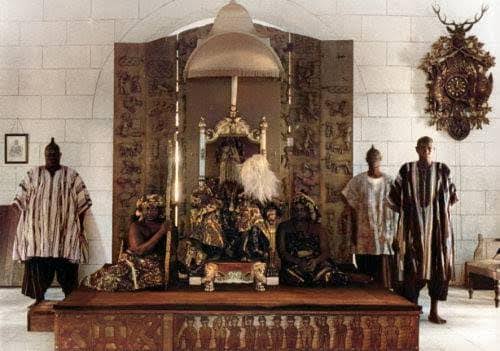
Royal ceremonies became expressions of the wealth and sophistication of the empire.
The prosperity of the period strengthened Oyo's reputation as a centre of culture and civilisation.
This era demonstrated that great empires are remembered not only for military achievements but also for their contributions to art and learning.
Relations with Chiefs and Nobles
Like every Alaafin, Abíọdún ruled within a political system that involved powerful chiefs, particularly the members of the Oyomesi.
Maintaining harmony among these influential figures required diplomacy and careful leadership.
Although his reign was generally stable, political tensions occasionally emerged.
Balancing royal authority with the influence of the nobility remained one of the challenges of governance.
Nevertheless, Abíọdún succeeded in maintaining relative unity for much of his time on the throne.
The Decline of Military Strength
While Abíọdún's emphasis on peace brought economic benefits, historians have noted that it also had unintended consequences.
Because less attention was devoted to military affairs:
* The once formidable cavalry gradually weakened. * Discipline among military forces declined. * Some frontier territories became difficult to control. * Rival powers gained opportunities to challenge Oyo's authority.
Although these weaknesses did not immediately threaten the empire, they would become increasingly significant after his reign.
Later generations would face challenges that earlier military traditions might have helped prevent.
Thus, Abíọdún's legacy remains complex.
His policies created prosperity but also contributed indirectly to vulnerabilities that future rulers inherited.
A Period of Prosperity
Despite these long-term issues, many traditions remember Abíọdún's reign as one of abundance.
His period on the throne was associated with:
* Economic expansion. * Political stability. * Commercial prosperity. * Cultural flowering. * Relative peace.
People experienced increased opportunities, and Oyo's prestige remained high throughout much of his reign.
For many subjects, the era represented a golden age of prosperity.
Historical Legacy
The reign of Alaafin Abíọdún illustrates an important lesson in governance.
Strength alone cannot sustain an empire.
Neither can prosperity be by itself.
Successful leadership requires balancing:
* Economic development with security. * Peace with preparedness. * Prosperity with long-term stability.
Abíọdún demonstrated remarkable vision in recognising the importance of commerce and culture.
Yet history also reveals the need for maintaining institutions that protect achievements from future threats.
How Historians View His Reign
Modern historians generally regard Abíọdún as one of the notable rulers of the Oyo Empire.
He is remembered for:
* Encouraging trade and economic growth. * Promoting peaceful policies. * Supporting cultural development. * Presiding over a prosperous era.
At the same time, scholars acknowledge that the weakening of military structures during his reign contributed to the gradual decline that later affected the empire.
His reign therefore, represents both the height of prosperity and the beginning of important structural changes.
Conclusion
The reign of Alaafin Abíọdún was one of the most remarkable periods in the history of the Oyo Empire. By shifting emphasis from warfare to commerce, he brought prosperity and cultural advancement to his people. Markets expanded, arts flourished, and peace enabled society to thrive.
However, the same policies that created wealth also weakened the military foundations that had sustained Oyo's power for generations. His reign thus stands as a reminder that leadership involves balancing immediate success with long-term security.
Today, Alaafin Abíọdún is remembered as a ruler whose vision transformed the Oyo Empire into a centre of wealth and culture, leaving behind a legacy that continues to occupy an important place in Yoruba historical memory.