Introduction
In traditional Yoruba society, knowledge was not merely acquired; it was entrusted. Communities depended upon individuals whose wisdom, discipline, and years of training enabled them to guide others through life's uncertainties. Among the most respected of these figures was the Babaláwo.
The word Babaláwo comes from the Yoruba expression "Bàbá awo," often translated as "father of secrets," "father of mysteries," or "father of wisdom." Far more than a fortune teller or ritual specialist, the Babaláwo served as a philosopher, counsellor, historian, healer, educator, and guardian of one of Africa's most sophisticated indigenous knowledge systems: Ifá.
For centuries, Babaláwo have played a central role in preserving Yoruba civilisation, transmitting knowledge from one generation to the next, and helping individuals and communities navigate the complexities of human existence.
Who Is a Babaláwo?
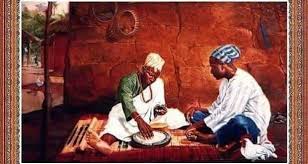
A Babaláwo is a trained practitioner of the Ifá Divination System, the vast body of oral literature and wisdom associated with Orunmila.
Becoming a Babaláwo requires years of study and apprenticeship. During this process, the student learns to:
* Memorise Ifá verses and narratives * Understand symbolic interpretation * Develop ethical judgement * Master ritual procedures * Advise individuals and communities * Preserve oral traditions
The title is therefore earned through dedication and intellectual discipline rather than inherited automatically by birth.
In some Yoruba communities, female practitioners also exist and are known as Ìyánífá, demonstrating that spiritual scholarship has not always been exclusively male.
Custodians of Ifá Knowledge
Perhaps the most important responsibility of the Babaláwo is the preservation of Ifá.
The Ifá corpus consists of 256 Odù, each containing numerous verses, stories, songs, proverbs, and teachings addressing virtually every aspect of life.
These teachings include reflections on:
* Ethics and morality * Leadership and governance * Marriage and family * Health and wellbeing * Agriculture and ecology * Trade and economics * Conflict resolution * Spiritual development
Before written documentation became widespread, Babaláwo ensured that this knowledge survived through disciplined memorisation and oral transmission.
In many ways, they functioned as living libraries.
Advisers and Counsellors
In Yoruba society, people sought the guidance of Babaláwo during moments of uncertainty.
Consultations were requested concerning matters such as:
* Marriage decisions * Naming ceremonies * Career and livelihood choices * Family disputes * Journeys and travel * Community challenges * Major life transitions
Contrary to popular stereotypes, the role of the Babaláwo was not simply to predict events.
Through stories, proverbs, and interpretation, they encouraged reflection and helped people make informed decisions.
Their work often resembled a combination of counselling, mediation, and ethical guidance.
Interpreters of Destiny
Yoruba philosophy teaches that every individual possesses an Orí, the inner spiritual essence that carries one's destiny.
Because people do not consciously remember the destiny chosen before birth, they may seek guidance through Ifá.
Babaláwo assists by helping individuals explore questions such as:
* What obstacles may be affecting my progress? * How can I align with my purpose? * What lessons should I learn from current experiences? * What actions may improve my situation?
The Babaláwo does not create destiny.
Instead, he seeks insight into how a person might navigate it wisely and responsibly.
Healers and Custodians of Indigenous Knowledge
Historically, many Babaláwo possessed extensive knowledge of medicinal plants and indigenous healing practices.
This knowledge included understanding:
* The uses of specific herbs * Preventive health practices * Environmental observations * The symbolic dimensions of healing * The relationship between well-being and lifestyle
It is important to recognise that traditional healing practices vary widely and are shaped by generations of observation and experience.
Not every Babaláwo functioned as a healer, but many communities valued their practical knowledge of health and nature.
Teachers of Ethics and Character
Ifá consistently emphasises the importance of Ìwà, meaning character.
The Yoruba proverb:
> "Ìwà l'ẹ̀wà."\ > Character is beauty.
captures this ideal.
Babaláwo taught that success without integrity ultimately leads to instability.
They encouraged virtues such as:
* Honesty * Patience * Humility * Respect * Compassion * Responsibility * Self-discipline
Their influence therefore, extended beyond ritual practice into the moral education of society.
Advisers to Kings and Leaders
In many pre-colonial Yoruba kingdoms, rulers sought the counsel of Babaláwo before making important decisions.
They were consulted regarding:
* Coronation rites * Warfare and diplomacy * Community welfare * Agricultural concerns * Public ceremonies * Responses to crises
Their role was advisory rather than executive.
Although they did not govern directly, their wisdom often influenced political and social decision-making.
This relationship reflected the Yoruba belief that leadership should be guided by both practical judgement and ethical reflection.
Misconceptions About Babaláwo
Modern portrayals have sometimes reduced Babaláwo to caricatures of mysticism or superstition.
These stereotypes overlook their broader social functions.
Historically, Babaláwo were:
* Educators * Intellectuals * Cultural custodians * Mediators * Philosophers * Community advisers
Recognising these dimensions provides a more balanced understanding of their place within Yoruba civilisation.
It also challenges outdated assumptions about indigenous African knowledge systems.
Babaláwo in Contemporary Society
Today, the role of the Babaláwo continues to evolve.
Some remain deeply rooted in traditional communities, while others engage with wider audiences through:
* Cultural education * Academic research * Diaspora spiritual communities * Heritage preservation initiatives
The UNESCO recognition of the Ifá Divination System as an element of the Intangible Cultural Heritage of Humanity has further highlighted the importance of preserving these traditions.
Across Nigeria, Benin Republic, Togo, Brazil, Cuba, and other parts of the world influenced by Yoruba heritage, Babaláwo continue to transmit knowledge to new generations.
Conclusion
The Babaláwo occupies one of the most significant positions within Yoruba society.
As custodians of Ifá, they preserved an extraordinary body of knowledge encompassing philosophy, ethics, history, healing, and spiritual insight. They advised rulers, counselled families, taught values, and helped communities navigate the uncertainties of life.
To view the Babaláwo merely as a diviner is to miss the breadth of their contribution.
They were scholars without universities, historians without archives, counsellors without clinics, and teachers whose classrooms extended across entire communities.
Their enduring legacy reminds us that wisdom takes many forms. It can be found not only in books and institutions, but also in memory, dialogue, lived experience, and the dedication of those entrusted to carry knowledge across generations.
Through the work of the Babaláwo, the intellectual and spiritual heritage of the Yoruba people continues to illuminate the past while guiding the future.