Introduction
The history of Abeokuta is often told through the bravery of its warriors, military commanders, and traditional rulers. Yet hidden within that story is another remarkable chapter: the courage, resilience, and determination of the women who helped defend the city during some of its darkest moments.
Throughout the nineteenth century, Abeokuta faced repeated military threats as neighbouring powers competed for influence in Yorubaland. During these conflicts, women were far more than spectators. They became organisers, providers, intelligence gatherers, spiritual supporters, and, when necessary, defenders of their homes and families.
Their contributions helped ensure the survival of Abeokuta and demonstrated that the defence of a community is a responsibility shared by all its people.
Why Abeokuta Became a Target
Abeokuta was founded in the early nineteenth century as a refuge for the Egba people and other groups fleeing the collapse of the Old Oyo Empire and the widespread conflicts that followed.
Its location around Olumo Rock provided natural protection, while the growing town became an important political and commercial centre.
As Abeokuta prospered, it attracted the attention of rival states, including Dahomey (in present-day Benin), whose rulers launched several military expeditions against the city during the nineteenth century.
Women as the Backbone of the City
Long before war reached Abeokuta, women were central to the city's prosperity.
They:
* Controlled much of the local trade. * Produced food and textiles. * Managed households. * Raised families. * Supported religious and community life. * Organised market networks across Yorubaland.
When conflict erupted, these same organisational skills became essential to the city's defence.
Supporting the Defenders
During periods of siege and warfare, women played vital support roles.
Historical accounts describe women who:
* Prepared food for defenders. * Transported water and supplies. * Cared for the wounded. * Gathered essential materials. * Encouraged fighters through songs and prayers. * Helped maintain communication within the community.
These efforts ensured that those defending the city could continue resisting prolonged attacks.
Gathering Intelligence
Because many women were traders who travelled between towns and markets, they often became valuable sources of information.
Their journeys enabled them to:
* Observe changing political conditions. * Hear reports of troop movements. * Carry important messages. * Warn community leaders of possible threats.
Although these activities were not always formally organised, they contributed to Abeokuta's ability to prepare for approaching danger.
Courage During the Dahomey Wars
The most famous attacks on Abeokuta came from the Kingdom of Dahomey, particularly during the reign of Ghezo and later Glele.
Historical records describe fierce battles in which the Egba successfully defended their city.
While most frontline combat was carried out by trained warriors, women also demonstrated extraordinary courage by remaining in the city under dangerous conditions, sustaining the defence effort, and helping communities recover after each attack.
Some oral traditions also recount instances of women taking up arms when circumstances demanded, though the details vary among different historical accounts and should be understood within the context of local traditions.
Spiritual Strength and Community Leadership
Women also provided spiritual and emotional leadership.
They organised:
* Community prayers. * Traditional ceremonies. * Songs of encouragement. * Support for grieving families. * Care for displaced children and elders.
These acts strengthened morale and reinforced the sense of unity that was essential for Abeokuta's survival.
The Legacy of Egba Women's Leadership
The tradition of strong female leadership did not end with the nineteenth-century wars.
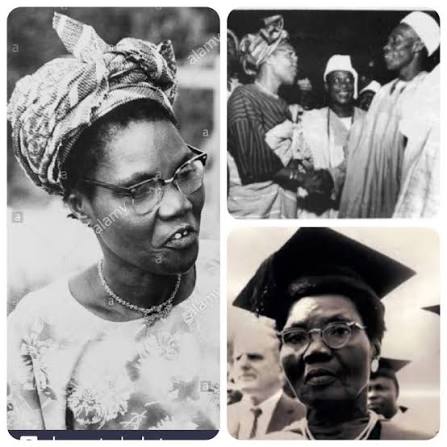
In the twentieth century, Abeokuta became home to remarkable women such as Funmilayo Ransome-Kuti, who led peaceful campaigns for women's rights, political participation, and social justice through the Abeokuta Women's Union.
Although separated by many decades, these movements reflected the same spirit of courage, organisation, and commitment to protecting the wellbeing of the community.
Why Their Story Matters
The women who defended Abeokuta remind us that history is not made only by kings and soldiers.
Their story teaches that:
* Communities survive through collective effort. * Leadership takes many forms. * Courage is found both on and behind the battlefield. * Women have always played vital roles in Yoruba history. * Preserving these stories creates a fuller understanding of the past.
Their contributions deserve recognition alongside those of the military leaders who fought to protect the city.
Conclusion
The defence of Abeokuta was a collective achievement in which women played indispensable roles. While warriors defended the city in battle, women sustained the community through trade, logistics, intelligence gathering, caregiving, spiritual leadership, and unwavering resilience. Their efforts helped ensure that Abeokuta withstood repeated invasions and emerged as one of the most enduring centres of Yoruba civilisation.
Although historical records often focus on military commanders and rulers, the women of Abeokuta were equally important to the city's survival. Their courage, resourcefulness, and dedication continue to inspire new generations, reminding us that the strength of a people lies not only in those who bear arms, but also in those who preserve hope, unity, and the spirit of a community in times of crisis.