Introduction
Trade and commerce were among the most important foundations of civilization in ancient Yoruba kingdoms. Long before colonial rule and the introduction of modern banking systems, Yoruba societies had already developed sophisticated economic networks built on local markets, regional trade routes, craftsmanship, agriculture, and international commerce.
From the bustling markets of Oyo and Ibadan to the coastal trade centers of Lagos and Ijebu, commerce shaped politics, urban development, diplomacy, and cultural exchange throughout Yorubaland. Yoruba traders, merchants, artisans, and market leaders helped create one of the most vibrant economic systems in pre-colonial West Africa.
The Economic Foundations of Yoruba Society
The economy of ancient Yoruba kingdoms was based on several interconnected activities:
* Agriculture * Local and long-distance trade * Craft production * Animal husbandry * Ironworking * Textile production * Tribute systems * Market exchange
Agriculture formed the backbone of the economy. Farmers cultivated crops such as:
* Yam * Cassava * Maize * Millet * Beans * Plantain * Palm produce
These agricultural goods supplied local populations and supported trade between towns and kingdoms. (britannica.com)
In addition to farming, Yoruba craftsmen produced goods that became highly valued in regional trade networks.
Major Trade Centers in Yorubaland
Several Yoruba cities became famous commercial centers due to their strategic locations and political influence.
Old Oyo
The Oyo Empire controlled important trade routes connecting the forest regions of southern Yorubaland to the savannah and trans-Saharan networks in the north. This allowed Oyo to grow wealthy through taxes, tribute, and commerce. (en.wikipedia.org)
Ijebu Kingdom
The Ijebu people became powerful middlemen in regional trade because of their control over routes between the interior and the coast.
Ijebu merchants managed trade involving:
* Salt * Cloth * Ivory * Kolanuts * Imported goods * European products
Their economic strength made the Ijebu Kingdom one of the wealthiest states in Yorubaland. (en.wikipedia.org)
Lagos
As coastal trade expanded, Lagos became an important commercial center connecting Yoruba merchants to Atlantic trade networks.
European traders exchanged goods such as:
* Textiles * Firearms * Alcohol * Mirrors * Beads
for local products including:
* Palm oil * Ivory * Pepper * Agricultural produce
Ibadan
During the nineteenth century, Ibadan emerged as both a military and commercial center. Its strategic position connected various trade routes across Yorubaland. Traders from different regions gathered there to exchange goods and establish business partnerships. (en.wikipedia.org)
The Yoruba Market System
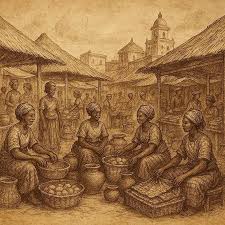
Markets were central to Yoruba economic and social life.
Almost every Yoruba town had organized market spaces where people bought and sold goods regularly. Some markets operated daily, while others followed periodic schedules such as every four or eight days.
Markets served not only economic purposes but also:
* Social interaction * Political communication * Cultural exchange * Information sharing * Religious activities
Large urban markets attracted traders from distant kingdoms and neighboring ethnic groups.
Market Leadership
Women played especially important roles in Yoruba commerce.
Many markets were supervised by influential female leaders known as the Iyaloja, meaning “Mother of the Market.” The Iyaloja coordinated market affairs, resolved disputes, and represented traders in political matters.
The position carried significant authority and respect within Yoruba society. (en.wikipedia.org)
Trade Goods in Ancient Yorubaland
Ancient Yoruba commerce involved both local products and imported goods.
Locally Produced Goods
Common Yoruba trade products included:
* Adire cloth * Aso Oke textiles * Pottery * Iron tools * Leather products * Kolanuts * Palm oil * Food crops * Carved artworks * Beads
Yoruba artisans became famous for their craftsmanship, especially in textile production, bronze casting, wood carving, and beadwork.
Imported Goods
Through long-distance trade, Yoruba kingdoms gained access to:
* Horses * Firearms * Salt * Glass beads * Silk * Mirrors * Metal products
These imported items often became symbols of wealth and prestige among elites.
Long-Distance Trade Networks
Yoruba trade extended far beyond local markets.
Trans-Saharan Connections
Northern trade routes linked parts of Yorubaland to Hausa cities and wider trans-Saharan commercial systems.
Through these routes, Yoruba merchants interacted with traders from:
* Hausaland * Mali * Songhai territories * North Africa
Goods such as horses and salt entered Yorubaland through northern commercial networks. (britannica.com)
Atlantic Trade
From the fifteenth century onward, European contact expanded commercial opportunities along the Atlantic coast.
Portuguese, British, Brazilian, and other European traders established relationships with coastal Yoruba states.
Palm oil later became one of the most important exports during the nineteenth century because of growing industrial demand in Europe. (en.wikipedia.org)
Currency and Exchange Systems
Before modern currency systems, Yoruba commerce relied heavily on barter and cowrie shells.
Cowrie Shells
Cowries became one of the most widely used forms of currency in Yorubaland.
They were valued because they were:
* Portable * Durable * Recognizable * Easy to count
Large quantities of cowries were often used for major transactions, taxes, and tribute payments. (en.wikipedia.org)
Barter Exchange
In many local communities, direct exchange of goods also remained common. Farmers, hunters, fishermen, and craftsmen traded products based on mutual needs.
Craftsmanship and Guild Systems
Specialized craftsmanship contributed greatly to Yoruba economic prosperity.
Artisan groups often organized themselves into professional guilds that preserved technical knowledge and regulated production standards.
Prominent crafts included:
* Bronze casting * Blacksmithing * Weaving * Dyeing * Wood carving * Bead making
Cities such as Ile-Ife became internationally respected for artistic excellence, especially in bronze and terracotta works. (en.wikipedia.org)
The Role of Women in Commerce
Women were central figures in Yoruba trade and commerce.
Many women became wealthy merchants who controlled large trading networks and influenced economic decisions. Female traders often specialized in:
* Food distribution * Textile sales * Craft trade * Regional commerce
Their economic influence gave women notable social and political visibility compared to many other societies of the period.
Trade, Politics, and Power
Commerce strengthened political authority in Yoruba kingdoms.
Rulers taxed trade routes, collected tribute, and controlled strategic markets. Wealth from commerce supported:
* Palace administration * Military expansion * Infrastructure development * Religious institutions * Diplomatic relations
Economic success often translated into military and political power.
The Oyo Empire, for example, used wealth generated from trade to maintain cavalry forces and expand imperial influence across West Africa. (en.wikipedia.org)
Challenges to Yoruba Commerce
Despite its strength, ancient Yoruba trade also faced disruptions such as:
* Inter-kingdom wars * Slave raids * Political instability * European colonial expansion * Changes in trade routes
The nineteenth-century Yoruba civil wars significantly affected trade networks across the region. Some commercial centers declined, while others adapted to changing political realities.
Legacy of Ancient Yoruba Commerce
The commercial traditions of ancient Yoruba kingdoms continue to influence modern Yoruba society today.
Many famous markets in southwestern Nigeria trace their origins to pre-colonial trading systems. Yoruba entrepreneurship, craftsmanship, textile production, and market culture remain globally recognized.
Modern commercial cities such as Lagos, Ibadan, Abeokuta, and Ijebu-Ode still reflect the historical importance of trade within Yoruba civilization.
Conclusion
Trade and commerce were essential pillars of ancient Yoruba civilization. Through organized markets, regional trade routes, skilled craftsmanship, and international exchange networks, Yoruba kingdoms built prosperous economies long before colonial rule.
Their commercial systems demonstrated remarkable sophistication, connecting local communities to wider African and global economies. From cowrie currencies to bustling marketplaces and long-distance merchants, Yoruba trade history reveals a civilization deeply rooted in enterprise, innovation, and economic organization.
The legacy of these ancient commercial traditions continues to shape Yoruba culture, business practices, and urban life across Nigeria and the wider Yoruba diaspora today.