Introduction
Long before wristwatches, wall clocks and smartphones, Yoruba communities had their own ways of understanding and organising time. Time was not necessarily measured by precise minutes and seconds. Instead, people observed the movement of the sun, phases of the moon, changes in nature, daily activities and recurring community events.
Traditional Yoruba timekeeping was therefore closely connected to everyday life. People did not need to ask, "What is 2:35 pm?" They could understand time through what was happening around them.
1. The Movement of the Sun
The sun was one of the most obvious natural indicators of time.
People could observe its position in the sky to distinguish between different parts of the day.
Morning, midday and afternoon could be recognised through the changing position and intensity of sunlight.
Shadows were also useful. As the sun moved, the length and direction of shadows changed, providing a practical indication of the passing hours.
This was particularly useful for farmers, travellers and people working outdoors.
2. Dawn and the Beginning of the Day
The appearance of daylight naturally marked the beginning of daily activities.
People could recognise early morning through:
* The first light. * The sounds of birds. * Changes in temperature. * The beginning of household activities. * The start of farm work.
Time was therefore understood through a combination of environmental signs rather than one mechanical device.
3. The Position of the Sun
As the day progressed, the position of the sun provided increasingly useful information.
Someone experienced in observing the sky could estimate whether it was:
* Early morning. * Late morning. * Around midday. * Afternoon. * Near sunset.
This was not equivalent to the precision of a modern clock, but it was sufficiently practical for many everyday activities.
4. Sunset and Evening
Sunset provided another important boundary.
As daylight disappeared, activities changed.
Farmers returned from fields.
Markets began to close.
Families prepared for the evening.
People could therefore organise their routines according to the natural transition between daylight and darkness.
5. The Moon and Night Time
The moon provided another way of understanding time.
The changing appearance of the moon helped communities recognise longer periods.
The lunar cycle could be used to understand approximately:
* The passage of weeks. * The progression of months. * Seasonal religious observances. * Important ceremonial dates.
The moon was particularly useful because its appearance changed in a predictable cycle.
6. Stars as Natural Guides
At night, stars could provide information about direction and seasonal changes.
People familiar with their environment could use the night sky as part of navigation.
However, it is important not to assume that every modern astronomical interpretation was part of traditional Yoruba practice. Much of indigenous astronomical knowledge was transmitted through observation and oral tradition rather than modern scientific notation.
7. Natural Sounds as Time Signals
Nature itself could provide signals.
Birds and other animals changed their behaviour at different times of the day.
Certain sounds could therefore help people recognise particular periods.
For communities living closely with their environment, these observations were practical sources of information.
Time was not only something people looked at.
It was also something they heard and experienced.
8. Human Activities Marked Time
People also measured time through activities.
Instead of saying:
"Meet me at 10:00."
someone might describe a meeting in relation to a familiar activity or period of the day.
Market opening, farming, meals, ceremonies and other regular activities created shared reference points.
This made time social as well as natural.
9. Market Cycles
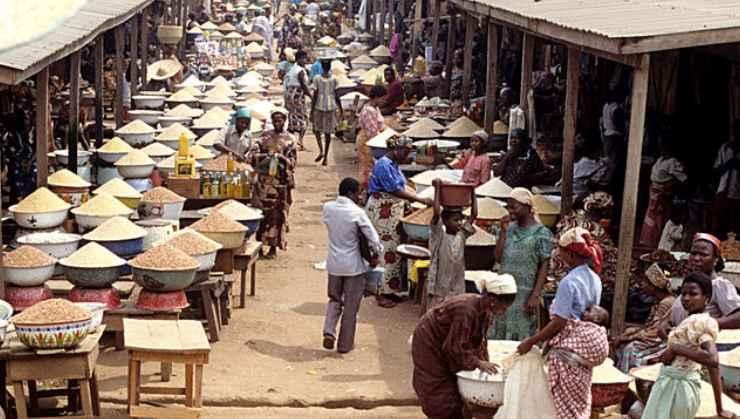
Traditional Yoruba markets operated according to recurring cycles.
The well known Yoruba four day market cycle associated with days such as:
* Ọ̀sẹ̀ Ifá * Ọ̀sẹ̀ Òrìṣà * Ọ̀sẹ̀ Jakuta * Ọ̀sẹ̀ Ọbàtálá
provided a recurring framework for organising commercial and social activities.
Different communities could have their own market arrangements and names, so these traditions should not be treated as completely uniform across all of Yorubaland.
The important point is that recurring market days helped people organise time beyond the daily cycle.
10. The Yoruba Calendar
The traditional Yoruba understanding of time also included longer cycles.
Time could be organised around:
* Days. * Market cycles. * Months. * Seasons. * Festivals. * Agricultural periods.
Traditional calendars were therefore closely connected with the natural and social environment.
Agricultural communities especially needed to understand seasonal changes because planting and harvesting depended heavily on them.
11. Festivals as Markers of Time
Festivals provided another important form of long term timekeeping.
Once people knew that a particular festival occurred at a particular point in the yearly cycle, its approach became a marker of the passage of time.
Festivals therefore helped communities remember not only when something happened, but also what the community was celebrating or remembering.
12. Agriculture and the Seasons
Farmers had particularly strong reasons to observe time.
They needed to understand:
* Rainfall patterns. * Dry periods. * Planting seasons. * Harvest periods. * Changes in vegetation.
This knowledge was developed through generations of observation.
It was practical environmental knowledge rather than clock based timekeeping.
13. Water and Other Natural Clues
Changes in rivers, streams, plants and weather could also provide clues about seasonal progression.
For example, changes in rainfall could indicate a transition between major seasonal periods.
Such observations helped communities make decisions about farming, travel and other activities.
14. Time Was More Flexible Than Modern Clock Time
One major difference between traditional and modern timekeeping is precision.
A modern clock divides the day into exact units.
Traditional timekeeping generally focused more on meaningful periods:
dawn → morning → midday → afternoon → sunset → night
This was perfectly practical for many activities.
If someone needed to begin farming at first light, knowing the exact minute was unnecessary.
Conclusion
Before modern clocks, Yoruba communities did not live without a sense of time. They understood it through the sun, moon, stars, natural sounds, seasons, farming cycles, market days, festivals and daily activities.
Their system was deeply connected to the environment.
The sun told people when the day was progressing. The moon helped mark longer cycles. Seasons guided agriculture. Market cycles organised commerce. Festivals connected communities to annual rhythms.
Modern clocks have given humanity extraordinary precision, but traditional timekeeping reminds us that people have always been capable of organising their lives through careful observation of nature.
Before people measured time with clocks, they learned to read it from the world around them.