Introduction
The Yoruba people, one of the largest ethnic groups in West Africa, call southwestern Nigeria, parts of Benin, and Togo home. Their textile tradition stretches back centuries, rooted in ancient cities like Oyo, Ife, Ijebu, and Iseyin. Long before colonial borders were drawn, these cities were thriving centers of weaving and dyeing, producing fabrics that became symbols of royalty, respect, and spiritual identity. Fashion here was never governed by seasonal trends. It was governed by tradition, honor, and the weight of the occasion.
The Foundation Fabrics: Aso Oke and Adire
Aso Oke: Cloth Fit for a King
Say the words Aso Oke (ah-SHOW-kay) to any Yoruba person and watch their face light up. Short for Aso Ilu Oke, meaning "cloth from the countryside," this handwoven textile is produced on vertical looms by master weavers in towns like Iseyin, Oyo, and Ilorin. Its history reaches deep into the ancient kingdoms of Oyo, Ife, and Ijebu, where it was once reserved for the elite and for moments that mattered most.
Aso Oke comes in several distinguished types, each carrying its own cultural weight:
Etu is a deep, dark blue cloth with subtle striping. It has long been associated with wisdom and maturity, traditionally worn by elders and those of high social standing.
Sanyan is a beige or light brown cloth with white stripes, woven from wild silk and cotton. It is considered one of the most prestigious types, historically worn by royalty and chiefs.
Alaari is a rich crimson or deep red variant. It symbolizes wealth, vitality, and celebration, making it a favorite for weddings and joyous occasions.
Families often wear coordinated Aso Oke at weddings, funerals, and naming ceremonies. This is not just about looking good together. It is a visual statement of unity, collective identity, and respect for the occasion.
Adire: Patterns That Tell Stories
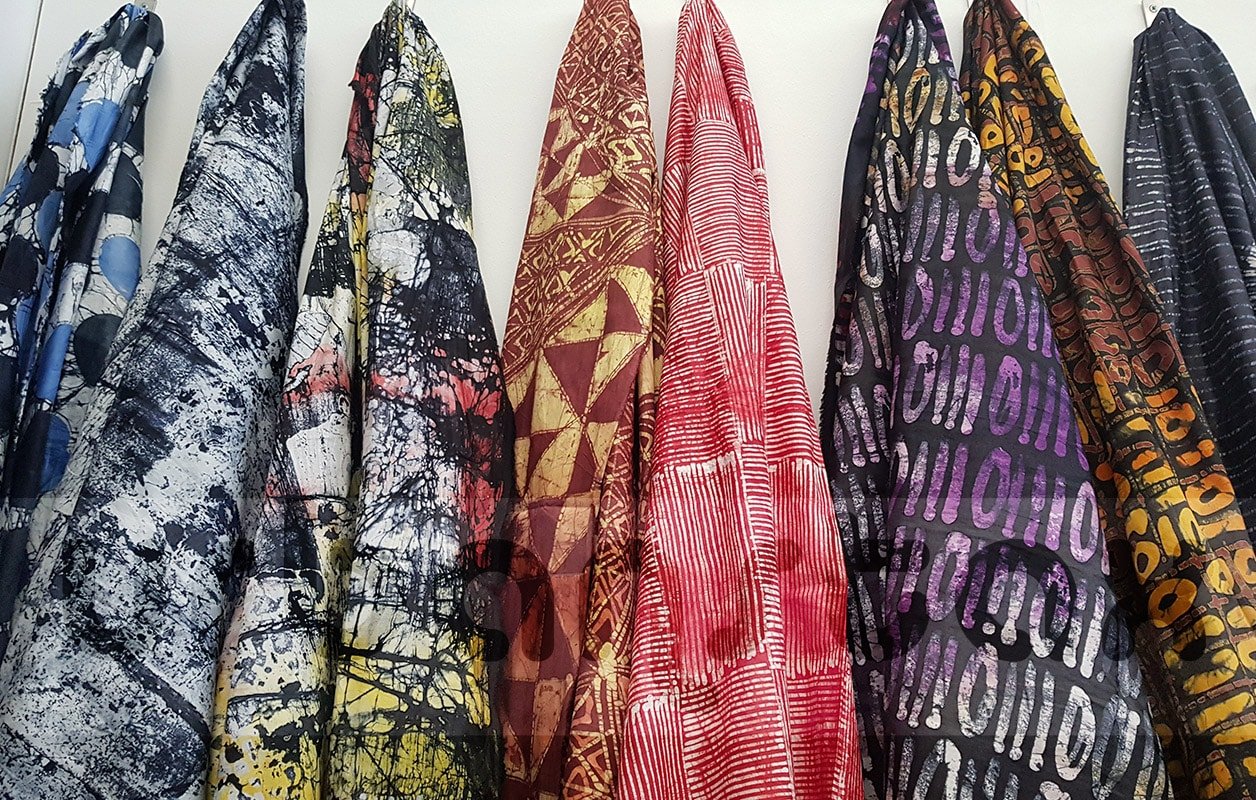
Adire, which literally means "tie and dye," is a resist-dyed cloth traditionally produced by Yoruba women, particularly in Abeokuta and Ibadan. Using techniques like hand-painting with starch (eleko), tie-dye (shibori), and stitching, artisans create intricate geometric and figurative patterns on indigo-dyed cotton.
But these patterns are far from mere decoration. They are a visual language, a lexicon of Yoruba cosmology, proverbs, and history. You might see the tortoise (ijapa), symbolizing wisdom and cunning from beloved folklore. The calabash represents abundance and fertility. Geometric grids reference cosmic order and social structure. Every motif has a meaning.
Adire was historically used for both everyday wear and ritual purposes. Its revival in the 1960s, particularly through the "Oleku" fashion movement, cemented its place as a symbol of cultural pride and artistic innovation.
Men's Traditional Attire: Dignity in Every Fold
Agbada: The Robe of Kings
Walk into a room wearing an Agbada and the room notices. This flowing, ankle-length outer robe is worn over a three-piece ensemble: the awotele (undergarment), the awosoke or buba (middle shirt), the agbada itself, and the sokoto (trousers).
Made from luxurious fabrics like Aso Oke, lace, or heavily embroidered Ankara, the Agbada is reserved for the big moments: weddings, chieftaincy ceremonies, funerals, and religious festivals. Its voluminous silhouette and intricate embroidery communicate wealth, power, and high social standing. The wider the sleeves and the richer the fabric, the more commanding the presence. In Yoruba culture, the Agbada is not just clothing. It is armor made of prestige.
Buba and Sokoto: Everyday Elegance
The Buba (a loose-fitting shirt) and Sokoto (trousers) form the foundational attire for Yoruba men. Simple in structure, yes, but the fabric choice elevates this combination from casual wear to ceremonial dress. A Buba and Sokoto made from Aso Oke or lace, paired with a matching Fila (cap), signals respectability and deep cultural awareness.
Fila: The Cap That Speaks
The Fila is not just a hat. It is a nuanced indicator of age, status, and even mood. The primary styles tell their own stories:
Gobi is a tall, rounded cap often worn by younger men and the fashion-forward.
Abeti Aja, literally "dog-eared," features flaps that can be raised or lowered. It is traditionally worn by elders, chiefs, and those in positions of authority.
Kufi is a simple, brimless cap worn for religious and formal occasions, signifying piety and dignity.
The way a man wears his Fila can signal his disposition or social role within a gathering. It is a small detail with a loud voice.
Women's Traditional Attire: Grace, Identity, and Artistry
Iro and Buba: A National Treasure
The Iro and Buba is the quintessential Yoruba women's ensemble. It consists of the Iro (a large wrap-around skirt tied at the waist, the word literally means "the act of wrapping"), the Buba (a voluminous, loose-fitting blouse), the Ipele or Iborun (a shawl or sash draped over the shoulder or waist), and the Gele (the elaborately tied headwrap).
This combination has been worn for generations, evolving through fabric trends. In the 1950s and 60s, cotton and Aso Oke dominated. Later decades brought lace, damask, brocade, satin, and organza. The Iro and Buba were so central to Nigerian identity that they made a grand appearance at Buckingham Palace when Mrs. Victoria Gowon wore them on a state visit.
Gele: The Crown of the Yoruba Woman
The Gele is far more than a headscarf. It is a sculptural statement of elegance, creativity, and cultural identity. Tying a Gele is considered a high art form. Different styles, heights, and angles communicate the wearer's sophistication and social status. The size, color, and material are carefully chosen to complement the overall outfit, adding a regal, almost architectural dimension to the wearer's appearance.
Worn at weddings, religious ceremonies, and significant celebrations, the Gele represents beauty, grace, and pride in heritage. In contemporary fashion, Gele tutorials have gone viral globally, with Yoruba women and enthusiasts sharing tying techniques across social media platforms. A well-tied Gele does not just sit on the head. It crowns it.
The Oleku Revolution
In the late 1990s, Tunde Kelani's classic movie Oleku (1997) sparked a major fashion revival. Oleku is a Yoruba word meaning "too hot" or "to die for," and it describes a modernized version of the Iro and Buba featuring a shorter, cropped Buba and a mini-length Iro. This style echoed the daring fashion of the 1960s and brought the Iro and Buba back into vogue among younger generations who had previously associated it with older women.
Designers like Ituen Basi further popularized vibrant Oleku styles, and the trend has since evolved into countless contemporary variations: fitted blouses, off-shoulder necklines, velvet wrappers, and silk bows. What was once considered traditional became undeniably cool.
The Semiotics of Color and Pattern
In Yoruba traditional attire, colors and patterns are never chosen by accident. Each hue carries specific cultural and spiritual weight:
White (funfun) is associated with purity, spirituality, and peace. It is often worn for religious observances and naming ceremonies.
Red and crimson (pupa) symbolize love, passion, vitality, and strength. Alaari Aso Oke, with its deep red tones, is a favorite for celebratory events.
Blue and indigo (dudu) represent wisdom, depth, and stability. Etu Aso Oke and Adire both harness this color for its dignified associations.
Beige and brown (pupa-iya) are earth tones that connect the wearer to the land, ancestry, and humility.
Black can signify mystery, power, or mourning, depending on the context and fabric.
Patterns on Adire and embroidered Agbadas also carry meaning, from proverbs and historical references to spiritual protection and wishes for prosperity. The clothing is a conversation, and every color is a word.
Evolution and Global Influence
Yoruba traditional clothing has proven remarkably resilient and adaptive. Deeply rooted in centuries of tradition, it continuously reinvents itself. The Komole collection by designer Deola Sagoe (2012) introduced an innovative fusion of Aso Oke with contemporary gown silhouettes, setting off a wave of reinvention in the Aso Oke industry. Today, Aso Oke is fused with sequins, lace, and metallic threads. Children are often seen in "mini-Agbadas" paired with modern sneakers.
Nollywood films, Afrobeat music videos, and international fashion runways have all amplified Yoruba fashion globally. The Iro and Buba has transcended ethnic boundaries, worn by non-Yoruba Nigerians and celebrated across the African diaspora as a symbol of pan-African elegance.
Wearing Heritage
Traditional Yoruba clothing is far more than aesthetic expression. It is a living archive of history, values, and social philosophy. Every stitch of Aso Oke carries the memory of ancient looms in Iseyin. Every pattern in Adire encodes the wisdom of generations of women dyers. Every fold of a Gele proclaims the dignity and creativity of its wearer.
In a rapidly globalizing world, these garments serve as vital anchors of cultural identity. They remind us that fashion can be both beautiful and deeply meaningful.
To wear Yoruba traditional attire is to participate in a centuries-old conversation about who you are, where you come from, and what you value. It is, in essence, to wear your heritage with pride.