Introduction
Hair has always been an important part of Yoruba appearance, identity and cultural expression. Across generations, Yoruba people developed creative ways of styling, braiding and decorating hair, turning the head into a space where beauty, age, status and personal identity could be expressed.
Traditional Yoruba hairstyles were never simply about looking attractive. Hairstyles could communicate aspects of a person's stage of life, social position, marital status, occupation or participation in particular occasions. However, meanings were not always universal. A hairstyle could have different significance in different Yoruba communities and historical periods.
Hair as Cultural Expression
For many Yoruba communities, the appearance of the hair was part of proper personal presentation. Hair was carefully maintained and styled, often requiring considerable time and skill.
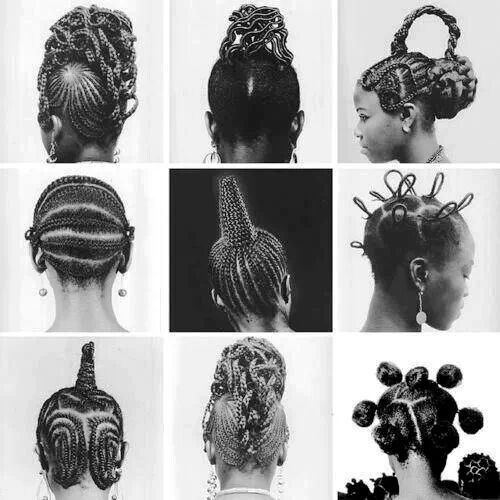
Women traditionally created intricate braided patterns using the natural hair. Some styles involved raised sections, carefully arranged braids and sculptural forms. These designs demonstrated the creativity of the person styling the hair.
Hairdressing was therefore also a form of craftsmanship. Knowledge of how to divide, braid and arrange hair could be passed from older women to younger generations.
The Art of Braiding
Braiding became one of the most recognisable features of traditional Yoruba hairstyling.
The hair could be divided into sections and braided close to the scalp or arranged into larger raised forms. The patterns could be simple or highly elaborate.
Different communities developed their own preferences, and styles could change over time. What makes traditional Yoruba hairstyling particularly remarkable is the combination of precision and creativity involved in producing these designs without modern styling equipment.
The braider needed to understand the texture of the hair, the desired pattern and the amount of tension that could safely be applied.
Sùkú and Sculptural Styles
Sùkú is one of the Yoruba hairstyles that has become widely recognised beyond Nigeria. It generally involves hair being arranged towards the crown of the head, creating a distinctive raised form.
However, it is important not to assume that the name describes only one unchanging hairstyle. Traditional Yoruba hairstyles often had variations, and modern hairstylists have continued to reinterpret older forms.
Other traditional styles similarly created sculptural shapes by gathering or raising sections of hair. These designs demonstrated that Yoruba hairstyling was not merely functional. It could be highly artistic.
Hairstyles and Social Identity
Hair could communicate social information.
Age was particularly important. Children, young women, married women and older women could follow different expectations concerning dress and personal presentation.
Hairstyles could also be associated with ceremonies and special occasions. Weddings, festivals, religious events and other important gatherings provided opportunities for elaborate grooming.
This meant that a person's hairstyle could change according to the occasion.
It is therefore better to think of traditional Yoruba hairstyles as part of a wider system of appearance rather than as permanent labels attached to individuals.
Hairstyles and Marriage
Hair has historically been connected with marriage and womanhood in many Yoruba communities.
Certain hairstyles could be worn by women at particular stages of life or during ceremonies connected with marriage. Grooming could form part of preparations for important social events.
However, claims that a particular hairstyle always meant that a woman was married should be treated carefully. Yoruba communities were diverse, and the meaning of hairstyles could change according to location, period and circumstance.
Cultural symbols rarely have only one meaning across an entire society.
Hair and Yoruba Festivals
Festivals provided another opportunity for elaborate hairstyles.
During important celebrations, people could combine carefully arranged hair with traditional clothing, beads, jewellery and head coverings. The overall appearance created a visual expression of cultural identity.
The hairstyle was therefore only one element of a larger artistic composition.
This remains visible today at Yoruba cultural festivals, weddings and other ceremonies, where contemporary hairstyles frequently combine modern techniques with traditional forms.
Natural Materials and Hair Care
Traditional hair care relied largely on materials available within the local environment.
Vegetable oils and other natural substances could be used in grooming. Hair was carefully washed, moisturised, combed and maintained before braiding.
The exact materials and practices varied between communities and households.
This knowledge was practical and often passed through families. Mothers, grandmothers and experienced hairdressers could teach younger generations how to care for and style hair.
The Role of the Hairdresser
Traditional Yoruba hairdressing was a skilled occupation.
Creating complicated patterns required patience, concentration and experience. A skilled stylist had to maintain consistent sections and tension while following the intended design.
Hairdressing could therefore become an important social and economic activity, particularly among women.
The stylist was not simply someone who made hair look neat. They were also preserving knowledge about patterns, techniques and cultural presentation.
Hairstyles in Yoruba Art
The importance of hair can also be seen in Yoruba visual art.
Historical Yoruba sculptures, particularly works from Ilé Ifẹ̀, provide valuable evidence about how people were represented with carefully arranged hairstyles and elaborate forms of personal adornment.
The famous naturalistic heads associated with medieval Ilé Ifẹ̀ demonstrate the attention artists paid to human appearance. Hairstyles, facial features, crowns, scarification and other forms of adornment could all contribute to the representation of identity and status.
Museums such as the British Museum and The Metropolitan Museum of Art preserve Yoruba artworks that help researchers study historical forms of dress, adornment and representation.
Hair and Spiritual Life
Hair could also have significance within Yoruba religious and spiritual traditions.
The human body has an important place in Yoruba thought, and hair could appear in religious practices, artistic representations and ritual contexts.
However, spiritual interpretations should be treated with care. Not every traditional hairstyle was a religious symbol, and not every hairstyle carried a hidden spiritual meaning.
Some hairstyles were simply expressions of beauty, social presentation and creativity.
Colonialism and Changing Hairstyles
Colonialism and increased contact with European institutions introduced significant changes to Yoruba society.
Education, Christianity, urbanisation, photography, new fashions and imported grooming products influenced how people presented themselves.
Traditional hairstyles did not disappear, but they increasingly existed alongside new styles.
Over time, Yoruba hairstyling became a mixture of continuity and change. Older techniques remained while new materials, tools and patterns were introduced.
The Modern Revival
Today, traditional Yoruba hairstyles continue to influence Nigerian fashion and African beauty culture.
Modern hairstylists recreate older patterns, adapt them for contemporary fashion and combine them with techniques such as extensions and other modern styling methods.
Social media has also made it easier for traditional African hairstyles to reach audiences around the world.
A style that was once mainly known within a particular community can now inspire people across Africa and throughout the African diaspora.
Preserving the Knowledge
Traditional hairstyling is an important form of intangible cultural heritage.
Photographs, oral histories, interviews with experienced hairdressers and documentation of Yoruba terminology can help preserve knowledge about older hairstyles.
It is particularly important to record the names of hairstyles and the communities in which they were used. Without this information, future generations may recognise the appearance of a hairstyle while losing the cultural knowledge behind it.
Young Yoruba people can help preserve this heritage by learning traditional braiding techniques, documenting older styles and supporting artisans who continue to practise them.
More Than Beauty
Traditional Yoruba hairstyles reveal the creativity and knowledge of generations of people.
A braid could be carefully planned. A raised hairstyle could become a sculptural work of art. A ceremonial hairstyle could complement clothing, beads and other forms of adornment.
Through these practices, hair became part of Yoruba visual culture.
The history of Yoruba hairstyles is therefore not simply a history of fashion. It is a history of identity, craftsmanship, social expression and cultural memory.
From the intricate hairstyles represented in historical Yoruba art to the traditional patterns being recreated by modern hairstylists, Yoruba hair culture continues to evolve while retaining connections with the past.
For younger generations, learning about these hairstyles offers more than an appreciation of beauty. It provides another way of understanding the creativity, skill and cultural knowledge that have been carried across generations.