Introduction
Marriage in traditional Yoruba society is far more than the union of two individuals. It is a sacred covenant that joins families, lineages, ancestors, and communities together. Traditional Yoruba marriage rites are deeply rooted in respect, spirituality, culture, morality, and communal responsibility.
For centuries, these ceremonies have served not only as celebrations of love and companionship but also as cultural institutions that preserve Yoruba identity, social values, and ancestral traditions. Every stage of the marriage process carries symbolic meaning, reflecting Yoruba beliefs about family, honor, fertility, unity, and the continuity of life.
Although modern weddings have introduced contemporary influences, many Yoruba families still preserve important traditional rites because of their spiritual and cultural significance.
Marriage in Traditional Yoruba Society
In Yoruba culture, marriage is considered a communal institution rather than a purely private affair.
Traditionally, marriage involved:
* The couple * Extended families * Elders * Ancestors * Community witnesses
A successful marriage was believed to strengthen social harmony, preserve lineage continuity, and ensure the survival of family heritage.
Important qualities traditionally valued in marriage included:
* Good character (Ìwà) * Respect * Responsibility * Fertility * Patience * Family honor
The Yoruba saying:
> “Ìwà l’ẹwà” > > Character is beauty
applies strongly to marriage traditions.
The Process of Courtship and Family Investigation
Traditionally, Yoruba marriages did not begin suddenly. Families often conducted careful inquiries before approving a union.
This process involved investigating:
* Family reputation * Moral conduct * Health background * Character * Social behavior * Lineage history
The purpose was not merely social status but ensuring compatibility, stability, and honorable family relationships.
Elders believed that marriage united entire families, not only individuals.
The Introduction Ceremony (Mọ́-Mí-In-Mọ́-E)
One of the earliest formal stages of Yoruba marriage is the family introduction ceremony.
During this event:
* The groom’s family officially visits the bride’s family * Intentions are declared * Families become acquainted * Preliminary discussions begin
This stage symbolizes transparency, respect, and proper family involvement.
Traditionally, elders played major roles in communication because respect for seniority is central in Yoruba culture.
The Role of the Alárinà
In many Yoruba communities, a mediator known as the Alárinà traditionally helped facilitate marriage negotiations.
The Alárinà acted as:
* Messenger * Negotiator * Cultural guide * Relationship intermediary
This role helped maintain respect and avoid unnecessary tension between families during discussions.
The presence of mediators reflects the Yoruba emphasis on diplomacy, patience, and communal harmony.
Bride Price and Symbolic Gifts
One of the best-known aspects of Yoruba marriage rites involves the presentation of gifts and bride price items.
These may include:
* Kola nuts * Alligator pepper * Honey * Salt * Yam * Palm wine * Fabrics * Money * Suitcases * Food items
Contrary to misunderstanding, the bride price was traditionally not viewed as purchasing a woman. Instead, it symbolized:
* Gratitude * Commitment * Respect for the bride’s family * Seriousness of intention
Each item often carried symbolic meaning.
Symbolism of Common Marriage Items
| Item | Symbolic Meaning | | ---------------- | -------------------------- | | Honey | Sweetness in marriage | | Salt | Preservation and endurance | | Kola nut | Prayer and unity | | Alligator pepper | Fertility and longevity | | Yam | Prosperity and abundance |
These symbols expressed hopes for a successful and harmonious union.
Prostration and Respect
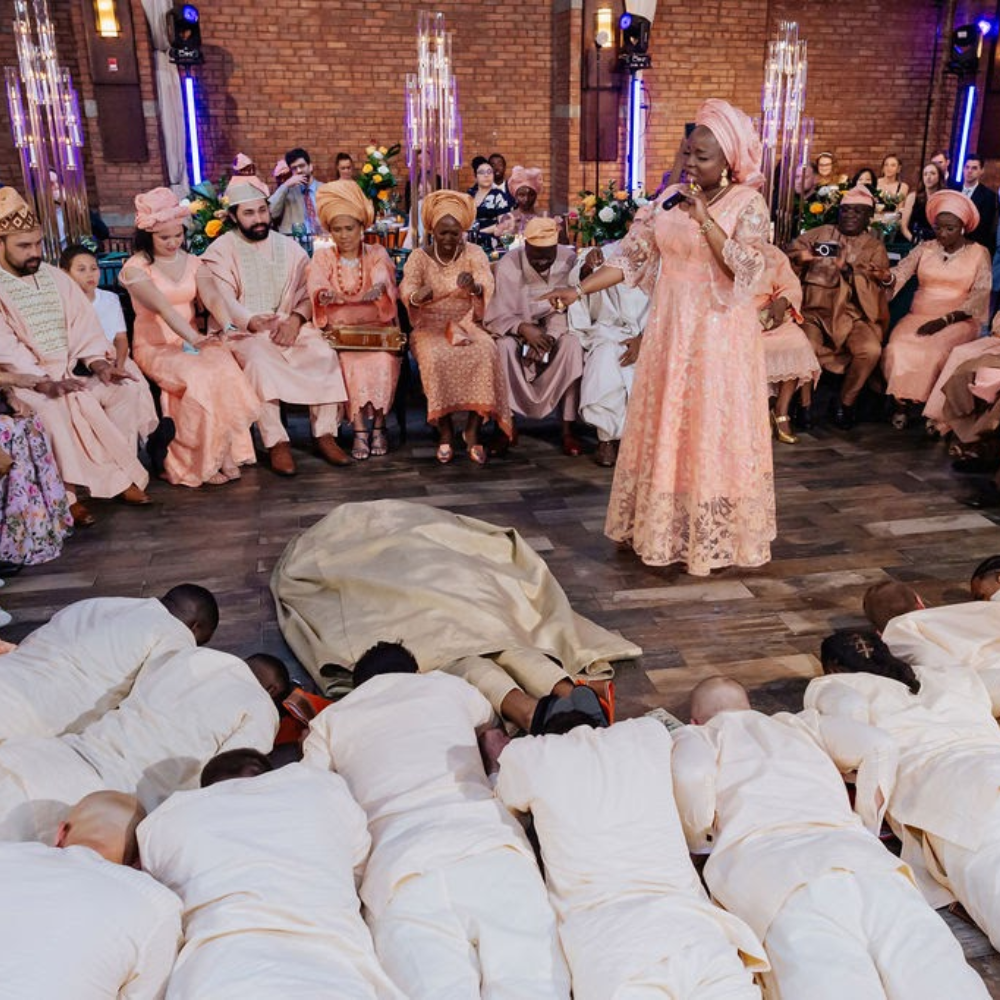
One of the most iconic Yoruba marriage customs is the groom’s prostration before the bride’s family.
The groom and his friends traditionally lie flat on the ground to greet the bride’s parents and elders.
This act symbolizes:
* Humility * Respect * Responsibility * Appreciation
The bride also kneels before the groom’s family as a sign of respect.
These gestures reflect the Yoruba value placed on honoring elders and maintaining family dignity.
The Engagement Ceremony
The traditional engagement ceremony is often the central public aspect of Yoruba marriage rites.
The event usually includes:
* Prayers * Music * Dance * Family blessings * Exchange of gifts * Cultural performances
An elder or master of ceremony often explains the symbolic meaning of various rituals to attendees.
Traditional attire such as:
* Aso Oke * Gele * Agbada * Iro and Buba
plays an important role in expressing cultural identity and elegance.
Spiritual Dimensions of Marriage
Traditionally, Yoruba marriage also carried spiritual significance.
Marriage was believed to involve not only the living but also ancestral approval and divine blessing.
Families often offered prayers for:
* Fertility * Protection * Peace * Prosperity * Healthy children * Longevity
In some cases, divination through Ifá was consulted to determine compatibility or favorable ceremonial timing.
Marriage was viewed as part of destiny and communal continuity.
The Symbolism of Food and Sharing
Food plays an important symbolic role in Yoruba marriage ceremonies.
Communal eating represents:
* Unity * Hospitality * Shared prosperity * Family bonding
Guests are treated generously because hospitality is highly valued in Yoruba culture.
The abundance of food during ceremonies symbolizes prayers for abundance within the marriage itself.
Music, Dance, and Celebration
Music and dance are essential parts of Yoruba weddings.
Traditional drumming, especially talking drums, praise singing, and dance performances, create joyful communal participation.
Praise singers may celebrate:
* Family history * Ancestral lineage * Achievements * Good character
Dance symbolizes joy, vitality, unity, and communal blessing.
The Role of Women in Marriage Traditions
Women occupy highly respected roles within Yoruba marriage traditions.
Mothers, grandmothers, aunts, and female elders often guide:
* Marriage preparations * Cultural instruction * Domestic advice * Family diplomacy
Brides are traditionally encouraged to cultivate:
* Patience * Wisdom * Responsibility * Respect * Good character
However, Yoruba women historically also maintained important economic and social influence within family structures.
Marriage as Community Building
Traditional Yoruba marriage strengthened wider community relationships.
Weddings created alliances between families, towns, and lineages. These relationships could support:
* Trade * Political cooperation * Social stability * Mutual assistance
Marriage therefore contributed to the broader structure of Yoruba society.
Modern Changes and Continuity
Modern Yoruba weddings often combine:
* Traditional rites * Religious ceremonies * Contemporary fashion * Western wedding customs
Despite modernization, many families continue preserving traditional engagement rites because they represent cultural pride and ancestral continuity.
Social media and global Nigerian culture have also helped popularize Yoruba weddings internationally.
Conclusion
Traditional Yoruba marriage rites represent far more than ceremonial customs. They embody deep cultural values involving respect, spirituality, family unity, communal responsibility, and ancestral continuity.
From prostration and symbolic gifts to prayers, music, and communal celebration, every aspect of the marriage process carries meaning rooted in Yoruba philosophy and social organization.
Even in the modern world, these traditions continue to preserve Yoruba identity and remind communities that marriage is not simply a personal relationship but a sacred bond connecting generations past, present, and future.