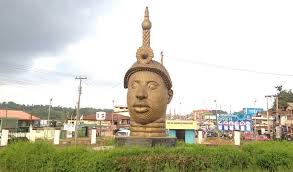
Introduction
Among the Yoruba people, there is a saying that echoes through generations:
"Ilé-Ifẹ̀ ni ibi tí ọjọ́ ti mọ̀."\ "Ilé-Ifẹ̀ is where the dawn first broke."
To outsiders, Ilé-Ifẹ̀ may appear to be an ordinary town in present-day Osun State, Nigeria. But to millions of Yoruba people across Nigeria and the diaspora, it is far more than that. It is a sacred city. A place where myth and history intertwine. A spiritual homeland and a symbol of identity.
It is for these reasons that Ile-Ife is widely known as the Cradle of Yoruba Civilization.
But why has this city earned such an extraordinary title?
Is it because of religion? History? Archaeology? Oral tradition?
The answer is all of these and more.
The Sacred Beginning of the Yoruba World
According to Yoruba cosmology, Ilé-Ifẹ̀ is where creation itself began.
Traditional accounts tell of a time when the world was covered entirely by water. The Supreme Being, Olódùmarè, desired that dry land should emerge so that life could flourish.
In many versions of the story, Oduduwa descended from the heavens carrying a snail shell filled with earth, a five-toed hen, and a palm nut.
The earth was poured upon the waters.
The hen scattered it across the surface.
Land appeared.
That sacred ground became known as Ilé-Ifẹ̀.
From there, humanity prospered.
Other traditions emphasise the role of Obatala, who moulded human beings from clay under Olódùmarè's instruction.
While details vary, the central message remains the same.
Ilé-Ifẹ̀ is regarded as the place where earthly existence began.
For believers, it is not merely a city.
It is holy ground.
The Home of Odùduwà
Beyond creation stories, Ilé-Ifẹ̀ occupies a central place in Yoruba historical consciousness because it is regarded as the seat of Odùduwà.
Odùduwà is remembered as the founding ancestor of many Yoruba royal dynasties.
According to oral traditions, his children and descendants travelled from Ifẹ̀ to establish kingdoms across Yorubaland, including:
* Oyo * Ijebu * Ketu * Owu * Ondo * Benin, according to traditions shared between Yoruba and Benin historians
These ruling houses traced their legitimacy back to Ilé-Ifẹ̀.
As a result, the city became the symbolic source of political authority.
Many Yoruba kings acknowledged their ancestral connections to Ifẹ̀.
To be linked to Ilé-Ifẹ̀ was to be connected to the origins of kingship itself.
The Ooni of Ife and Spiritual Authority
At the heart of Ilé-Ifẹ̀ stands the institution of the Ooni of Ife.
The Ooni is regarded as one of the most respected traditional rulers in Yorubaland.
Historically, the Ooni's significance extended beyond politics.
The position carried profound spiritual importance.
As custodian of sacred traditions and rituals, the Ooni symbolised continuity between the past and the present.
Even today, Yoruba communities throughout the world continue to regard the throne of Ifẹ̀ with immense reverence.
Its prestige reflects the city's enduring role as a spiritual centre.
Archaeology and the Evidence of a Great Civilization
Ilé-Ifẹ̀'s reputation is not based solely on oral tradition.
Archaeology has provided remarkable evidence of its historical significance.
Beginning in the twentieth century, archaeologists uncovered extraordinary artistic treasures in and around the city.
Among the most famous discoveries were the celebrated Ife bronze and terracotta heads.
These masterpieces astonished scholars around the world.
Their realism, technical sophistication, and artistic quality challenged outdated colonial assumptions about African societies.
Dating between the twelfth and fifteenth centuries, the sculptures demonstrated that Ifẹ̀ had been home to a highly developed urban civilisation.
The discoveries confirmed what oral traditions had long maintained.
Ilé-Ifẹ̀ was a centre of creativity, craftsmanship, and intellectual achievement.
A Centre of Art and Innovation
The artistic achievements of Ifẹ̀ rank among the greatest in world history.
Craftsmen working in the city mastered:
* Bronze casting * Terracotta sculpture * Bead production * Metalworking * Decorative arts
The naturalistic style of Ifẹ̀ sculpture remains one of Africa's most celebrated artistic traditions.
Historians believe that the techniques developed in Ifẹ̀ influenced neighbouring regions, including the Kingdom of Benin.
Through art, the people of Ifẹ̀ communicated ideas about kingship, spirituality, beauty, and identity.
Their legacy continues to inspire artists across the globe.
Ilé-Ifẹ̀ and the Yoruba Diaspora
The significance of Ilé-Ifẹ̀ extends far beyond Nigeria.
Through the transatlantic slave trade, millions of Africans were forcibly transported to the Americas.
Among them were Yoruba people who carried their beliefs, languages, and cultural practices into new environments.
In countries such as:
* Cuba * Brazil * Trinidad and Tobago * The United States
Elements of Yoruba spirituality survived and evolved.
Many practitioners of traditions influenced by Yoruba religion continue to recognise Ilé-Ifẹ̀ as an ancestral homeland.
For members of the global Yoruba diaspora, the city represents cultural continuity and spiritual belonging.
Why the Cradle Matters
To call Ilé-Ifẹ̀ the cradle of Yoruba civilisation is not simply to identify an ancient settlement.
It is to acknowledge its unique role in shaping identity.
Ilé-Ifẹ̀ represents:
* The spiritual origins of the Yoruba world. * The ancestral source of numerous royal dynasties. * A centre of artistic excellence. * A repository of sacred traditions. * A symbol of unity for Yoruba communities worldwide.
Whether approached through faith, archaeology, history, or cultural memory, its importance remains undeniable.
History and Belief: Understanding Both
Modern historians distinguish between mythology and verifiable historical evidence.
Creation narratives belong to the realm of belief and sacred tradition.
Archaeological findings belong to historical inquiry.
For many Yoruba people, however, these perspectives are not contradictory.
One speaks to spiritual truth.
The other reveals material evidence.
Together, they provide a richer understanding of Ilé-Ifẹ̀'s significance.
Recognising this distinction allows us to respect both cultural heritage and scholarly investigation.
Conclusion
Why is Ilé-Ifẹ̀ called the Cradle of Yoruba Civilization?
Because within its soil lie the stories that define a people.
It is the city where creation traditions place the beginning of human life. It is the home of Odùduwà, the ancestral figure from whom many Yoruba dynasties trace their origins. It is the seat of the Ooni, a centre of spiritual authority, and the birthplace of artistic achievements that astonished the world.
Its influence stretches from ancient Yorubaland to diaspora communities thousands of miles away.
Ilé-Ifẹ̀ is more than a geographical location.
It is memory.
It is heritage.
It is identity.
And for millions of Yoruba people across generations and continents, it remains the sacred heart from which their civilisation first emerged.