Introduction
Yorùbá is a tonal language, meaning that the pitch used when pronouncing a syllable can change its meaning. This is one of the most distinctive features of the language and an important reason why spoken Yoruba can sound very different from English, even when written words appear similar.
Yoruba traditionally recognises three basic tones:
* High tone: marked with an acute accent, á * Mid tone: normally left unmarked, a * Low tone: marked with a grave accent, à
Changing the tone can change the meaning of a word. In other words, tone is not merely about sounding expressive. It is part of the grammar and vocabulary of Yoruba.
What Does "Tonal Language" Mean?
In English, pitch can communicate emotion or emphasis, but it usually does not change the basic dictionary meaning of a word.
For example, saying something with a higher pitch in English generally does not create an entirely different word.
In Yoruba, however, pitch can distinguish words.
Consider:
à — low tone\ a — mid tone\ á — high tone
The marks tell the reader which pitch pattern to use.
This means that Yoruba writing without tone marks can sometimes be ambiguous, especially for learners.
The Three Basic Yoruba Tones
1. High Tone — Á
The high tone is represented by an acute accent:
á é í ó ú
The voice is raised relative to the surrounding syllables.
2. Mid Tone — A
The mid tone is normally unmarked:
a e i o u
It occupies the middle level.
3. Low Tone — À
The low tone is represented by a grave accent:
à è ì ò ù
The voice is lowered relative to the surrounding syllables.
These tones can combine to create different patterns across words and phrases.
Tone Can Change Meaning
One of the easiest ways to understand Yoruba tone is to look at words whose meanings depend on their tonal patterns.
For example:
ọ̀kọ́ can mean vehicle or boat, depending on the tonal pattern and context.
Meanwhile, òkò can refer to hoe in Yoruba.
The spelling may look remarkably similar to someone who does not know Yoruba, but the tonal pattern distinguishes the words.
This is why simply memorising Yoruba spelling without learning pronunciation can lead to misunderstandings.
Tone Is Not the Same as Stress
This distinction is important.
English uses stress heavily. We can make one syllable more prominent by giving it greater emphasis.
Yoruba, however, uses tone to distinguish linguistic meaning.
A Yoruba speaker is therefore not simply "stressing" different syllables. They are using different pitch levels and patterns as part of the language itself.
Tone Can Move Across a Sentence
Yoruba tone becomes even more interesting when words are placed into sentences.
The pronunciation of a word can be affected by neighbouring sounds and the natural flow of speech. Yoruba speakers therefore do not necessarily pronounce every syllable as though it were isolated.
Tone interacts with:
* Word structure. * Sentence structure. * Grammatical particles. * Rhythm. * Connected speech.
This gives spoken Yoruba its distinctive melodic quality.
Why Yoruba Sounds So Musical
The tonal nature of Yoruba contributes to its famously melodic sound.
Yoruba speech involves continuous movement between pitch levels. To an unfamiliar listener, this can sound almost musical.
But this does not mean Yoruba speakers are singing when they speak. The pitch differences are part of ordinary pronunciation.
This connection between speech and musical pitch has also contributed to the development of remarkable Yoruba musical traditions.
The Talking Drum Connection
One of the most fascinating examples is the dùndún, commonly known as the Yoruba talking drum.
Some Yoruba talking-drum traditions exploit the tonal characteristics of the language to reproduce patterns associated with spoken phrases.
Because pitch carries linguistic information in Yoruba, a skilled drummer can use changes in drum pitch to evoke speech-like patterns.
This is one reason Yoruba music and oral traditions are so closely connected.
Tone and Yoruba Poetry
Tone also plays an important role in Yoruba oral traditions.
Oríkì, praise poetry and lineage-based praise expressions, relies heavily on sound, rhythm, word choice, repetition, and performance.
A knowledgeable performer can use tonal patterns to deliver language in ways that carry layers of meaning and emotional expression.
This is one reason Yoruba oral literature cannot always be fully appreciated simply by reading a translation.
Tone Marks Are Extremely Important
Modern written Yoruba uses tone marks to represent the tonal system.
For learners, the difference between:
ọ̀\ ọ\ ọ́
is important.
The underlying vowel is the same, but the tone is different.
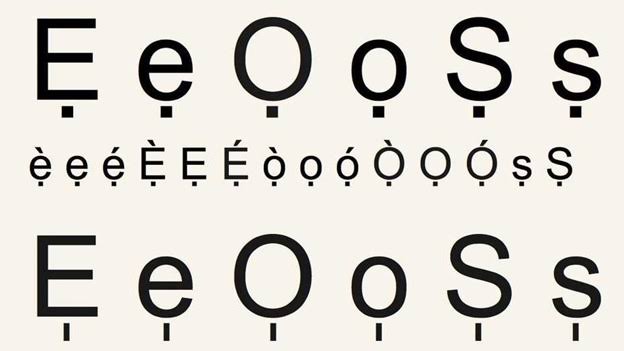
Yoruba also uses other diacritics, such as the dot below in letters including ẹ, ọ, and ṣ, which represent distinct sounds.
So the marks in written Yoruba are not decorative. They carry important linguistic information.
Why Tone Can Be Difficult for English Speakers
English speakers can find Yoruba tones challenging because English does not normally use pitch in the same systematic lexical way.
A learner may pronounce every syllable with approximately the same pitch and still be understood from context, but the pronunciation may sound unnatural or potentially create ambiguity.
Learning Yoruba therefore requires training the ear as much as learning vocabulary.
A useful learner's approach is to:
Yoruba Is Part of a Wider West African Tonal Tradition
Yoruba is not unusual in Africa for being tonal.
Many African languages use tone, particularly across West and Central Africa. Yoruba belongs to the Niger-Congo language family, within the Yoruboid branch.
Other neighbouring languages also have tonal systems, although their specific tone inventories and rules differ.
So Yoruba's tonal nature is part of a much broader linguistic tradition in Africa.
Tone and Yoruba Names
Tone is especially important when pronouncing Yoruba personal names.
A name written without its tone marks may be difficult for someone unfamiliar with Yoruba to pronounce correctly.
For example, Yoruba names often contain meaningful words relating to:
* God. * Destiny. * Family circumstances. * Birth circumstances. * Gratitude. * Hope. * Spiritual beliefs.
Correct pronunciation therefore matters not only linguistically but culturally.
Tone and Yoruba Identity
For Yoruba communities, the tonal system is part of the structure of the language that carries history, literature, names, songs, prayers, proverbs, and everyday conversation.
As Yoruba spreads through the diaspora and is increasingly studied internationally, understanding tone becomes important for preserving accurate pronunciation and meaning.
A Language Designed to Be Heard
One of the most fascinating things about Yoruba is that its written form only tells part of the story.
The full meaning of spoken Yoruba depends on:
words + tones + sounds + context + sentence structure.
This explains why reading a Yoruba sentence without knowing its tonal patterns can sometimes feel incomplete.
The language was fundamentally shaped as a spoken system long before modern writing conventions were developed.
Conclusion
Yoruba is one of Africa's prominent tonal languages because pitch is built into the language itself. Its three basic tone levels, high, mid, and low, combine in intricate patterns to distinguish words and shape spoken expression.
Tone influences ordinary conversation, names, poetry, proverbs, music, and even traditional instruments such as the talking drum.
That is what makes Yoruba particularly fascinating: the melody of the language is not simply decoration. It carries meaning.
Once you understand that, Yoruba stops sounding like a language where people are simply changing their pitch and starts revealing itself as a carefully structured tonal system in which how you say a word can be just as important as the word itself.